
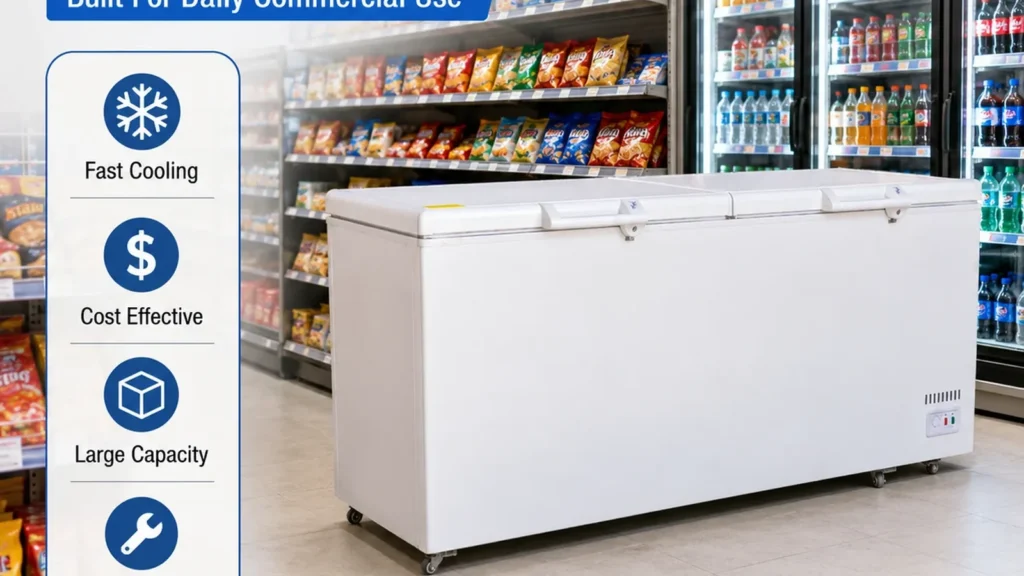
A chest freezer lid gasket should not be ordered from cabinet capacity or an outside length-and-width measurement alone. The service team needs the exact model and serial identity, lid count and position, gasket profile, corner construction, fixing method, measured groove or mounting geometry, and clear photographs of the installed part. If the original label or part number is missing, treat the request as an identification case—not a confirmed match.
The safest quotation is model-bound and batch-confirmed. A supplier can use the evidence pack to identify a current replacement, request more detail, or state that compatibility remains unverified. A similar-looking seal from another capacity or production batch must not be presented as interchangeable without supporting evidence.
Begin With the Exact Cabinet and Lid
The current commercial chest freezer range lists eleven models from 150 L to 1300 L. It includes standard frozen-storage models, a double-temperature configuration, and the IA-1110 deep-freezing model. Cabinet capacity, power, temperature range, external dimensions, lid arrangement, refrigerant, and other fields vary by model and production batch.
Record the full nameplate before removing the seal. Capture:
- model, serial number, and production date or batch if shown;
- rated voltage and frequency as identity cross-checks;
- cabinet capacity and exterior dimensions;
- lid quantity, lid type, and left/right or front/rear position;
- current gasket part number, moulding code, or label if present;
- number of gaskets required;
- service country, delivery address, and requested date.
If a cabinet has more than one lid, number the openings on a wide photograph. Treat both gaskets as unconfirmed until evidence shows they are identical. Record each lid separately and state whether the sample was taken from lid A, lid B, or another named position.
Photograph the Gasket Before It Is Disturbed
Take a wide image of the complete freezer, a full image of the closed lid, and close views of all four corners. Add images of the hinge side, handle side, any joint or weld, and the fixing edge. Put a scale in the same plane as the feature being measured.
The photo set should show:
| View | What it helps identify |
|---|---|
| Full cabinet and nameplate | product and batch identity |
| Closed lid from above | lid position and visible alignment |
| Each corner | moulded, joined, cut, rounded, or damaged corner evidence |
| Cross-section/profile | bulb, lips, barbs, channels, backing and orientation |
| Mounting area | push-in groove, retainer, screw strip, adhesive or other fixing evidence |
| Damage close-up | split, hardening, deformation, missing section or contamination |
Describe the seal as magnetic only when the exact part or a controlled test proves that construction. Appearance alone cannot establish material, food-contact status, temperature rating, colour stability, or service life.
The published chest freezer receiving-inspection workflow can help separate transit damage from later service damage when records are available. Keep that history with the RFQ.
Capture the Profile Without Stretching the Old Seal
An aged gasket can shrink, stretch, harden, or remain compressed. A measurement taken while pulling it straight may not represent the original part. Clean the area using the approved service method, allow the gasket to rest if removed, and record whether each dimension came from the installed part, removed part, lid groove, or supplier drawing.
Useful profile measurements include:
- overall profile width and height in a relaxed condition;
- mounting foot, barb, or tongue width and depth;
- groove opening and depth where accessible;
- distance from the mounting datum to the sealing bulb;
- wall, lip, and cavity features visible in a square cross-section;
- corner radius, joint position, and orientation.
Cutting a sample may permanently damage the gasket. Only do so when the service owner has authorized removal and replacement. If the cabinet must remain operational, use non-destructive photographs and an undamaged end or existing spare. A profile drawing supplied by the manufacturer is stronger evidence than a distorted field section.
Measure the Mounting Path, Not Just the Outside Rectangle
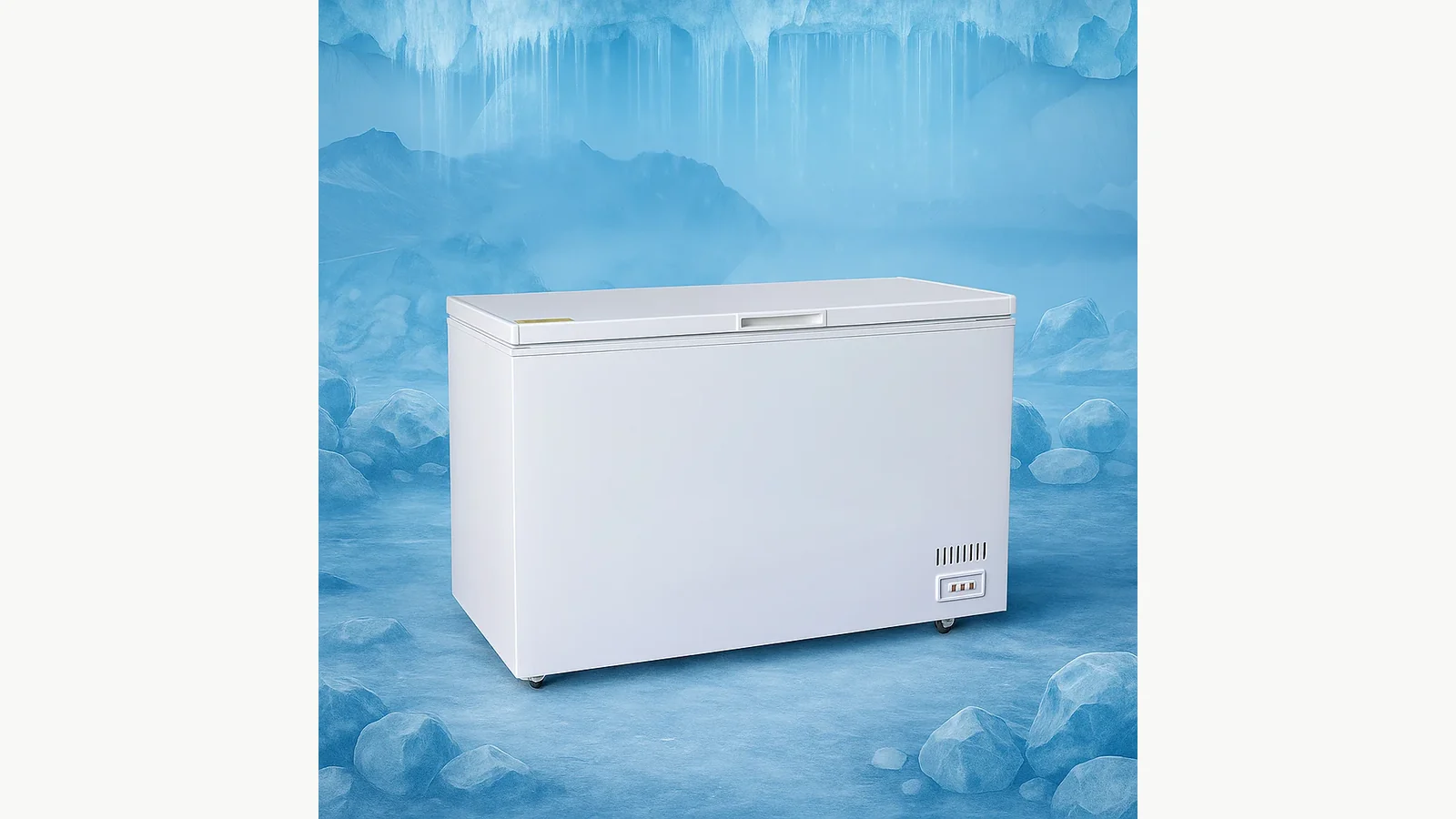
The outside cabinet size is not the gasket cut length. Measure the path where the gasket mounts or seals, following the supplier's requested datum. Record straight sections, corner radii, joint position, and whether the path is continuous. When measuring a removed part, state its condition and whether it was tensioned.
Use a small sketch with named dimensions rather than four numbers in a message. Mark the hinge side, handle side, and photograph direction. If the profile is asymmetric, draw an arrow showing which face points toward the cabinet and which face enters the lid.
For a multi-lid freezer, create one table per lid:
| Field | Required record |
|---|---|
| Lid ID | A/B or left/right with photo reference |
| Mounting path | datum, straight sections, corners and measured perimeter |
| Profile | width, height, fixing foot and orientation |
| Joint | location and visible construction |
| Condition | gaps, tears, compression, stiffness, contamination or previous repair |
| Evidence | photo IDs, drawing revision and removed sample ID |
No universal dimensional tolerance or compression percentage is prescribed here. The exact replacement drawing, service manual, supplier confirmation, and buyer's acceptance plan govern those values.
Diagnose the Cabinet Before Blaming the Seal
A visible gap is not automatic proof that the gasket is the only failed component. Inspect the lid, hinges, alignment, rim, latch if fitted, ice or debris, and any distortion. Record whether the gap moves when the lid is repositioned or whether the cabinet is level. Follow the manufacturer-approved electrical and refrigeration service process; refrigerant or live-electrical changes fall outside a gasket identification check.
The existing lid-closure check after restocking addresses stock interference and closing behaviour. Clear the load line and remove trapped packaging before using a paper, light, or other approved contact test. The test method and acceptance result should come from the service manual or qualified service provider, not a generic online rule.
Ask for a Compatibility Statement
The supplier's response should state one of three outcomes:
- exact replacement confirmed for the recorded model and batch;
- proposed replacement requires drawing or sample approval;
- compatibility cannot be confirmed from the supplied evidence.
For a proposed alternative, request a controlled drawing showing profile, overall size, corner construction, fixing method, material specification if available, and part identification. Compare it with the retained old seal and the lid mounting path. A photograph alone is insufficient for bulk spare-parts approval.
Approve One Part Before Ordering a Service Batch
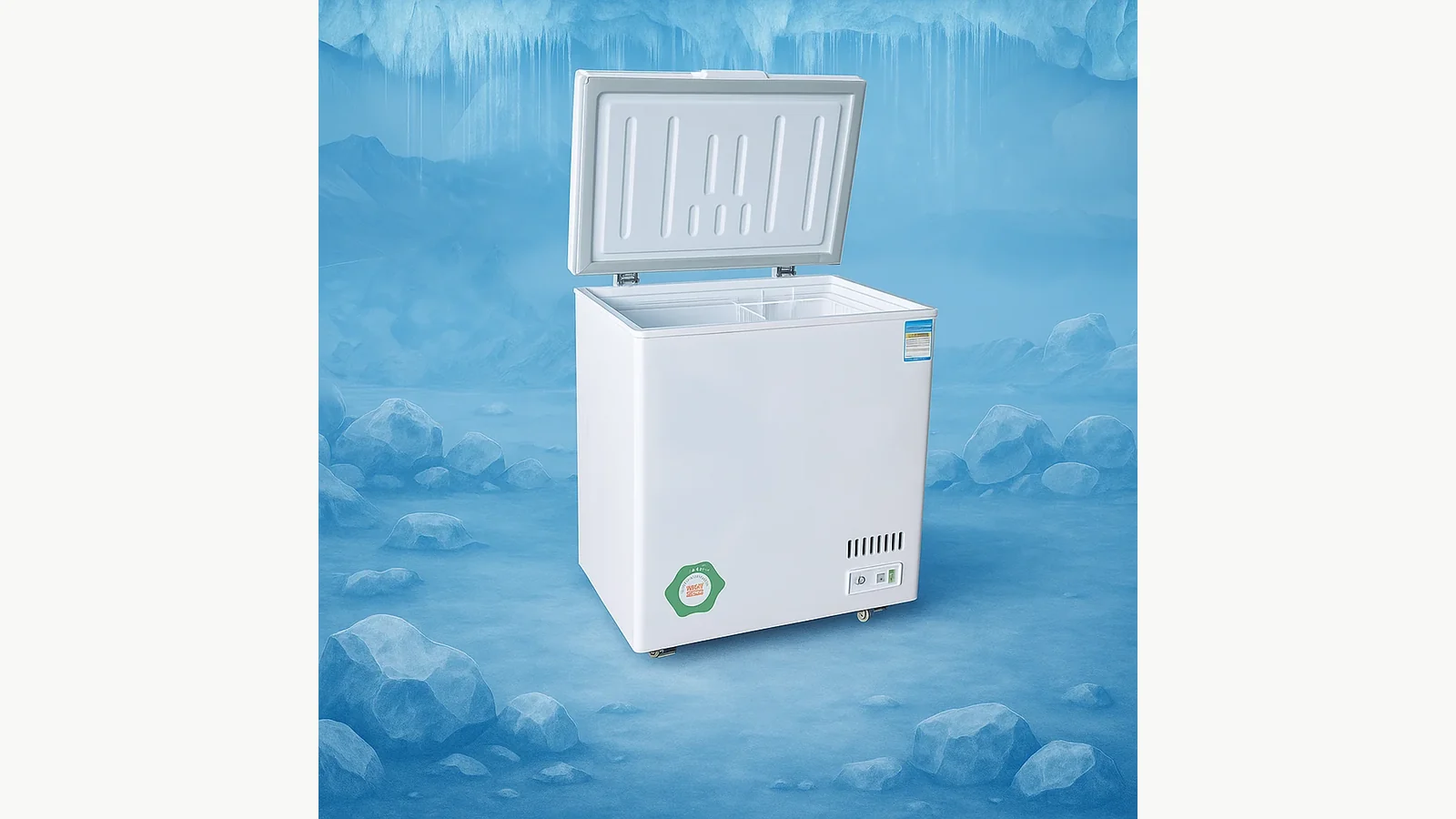
For a fleet or dealer network, identify one pilot cabinet matching the intended model and batch. Install one approved part using the manufacturer's service procedure, then document fit, corner seating, lid movement, contact around the perimeter, and the agreed operating check. Record the installer, date, cabinet identity, replacement part identity, and decision.
The Ghana chest freezer service evidence pack provides a broader fault-reporting structure for dealers, while the batch datasheet approval guide explains why model data must remain attached to a production batch. This replacement request follows the same traceability rule.
Send a Complete Gasket RFQ
Send the model, serial, batch/date, lid ID, gasket quantity, installed and removed-part photographs, profile sketch, mounting-path measurements, fixing method, corner and joint evidence, observed damage, cabinet alignment checks, destination, and requested delivery date. State whether an old sample can be shipped and whether the freezer must remain in service.
Ask ICEAGE to return the part number, confirmed model/batch scope, drawing or critical dimensions, material or construction information available for the part, packing, quantity, lead time, installation reference, and every unresolved compatibility point. That evidence is what separates a defensible spare-parts order from a visual guess.