
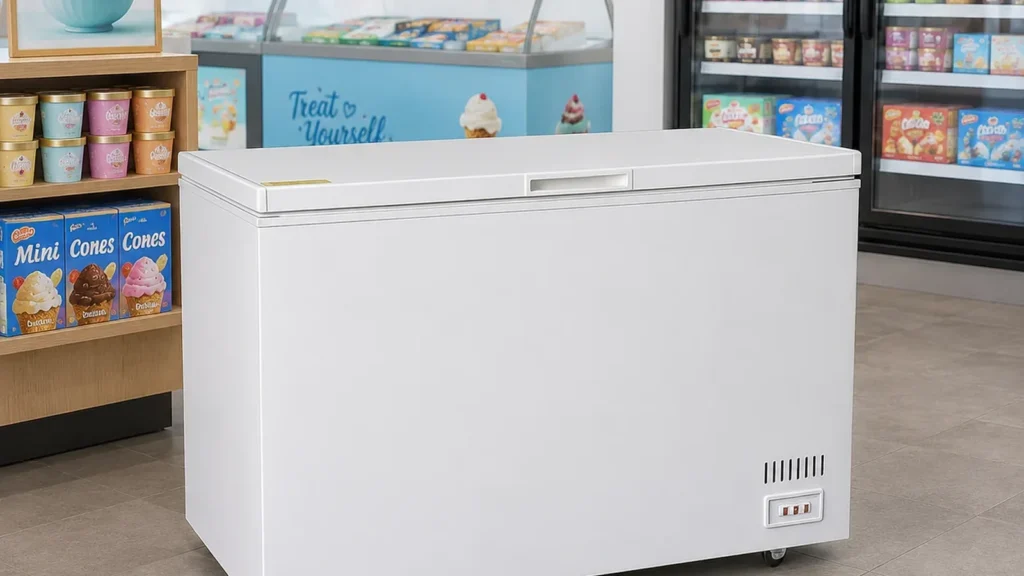
A chest freezer datasheet should identify the exact model and production configuration that an importer is buying. A family brochure is not enough. The current ICEAGE range spans 11 published model rows, 150 to 1300 L, several power ratings, three temperature-range patterns, and dimensions from compact single-lid units to 2500 mm cabinets. One copied number can move a model into the wrong delivery path, electrical plan, or storage requirement.
The product page also warns buyers to request the latest datasheet before quotation because specifications may vary by production batch. Treat that sentence as a control point: approve one dated, revision-identified sheet for the order, link it to the quotation and purchase order, and require a new review when any batch-dependent value changes.
Make Each Model Row Self-Contained
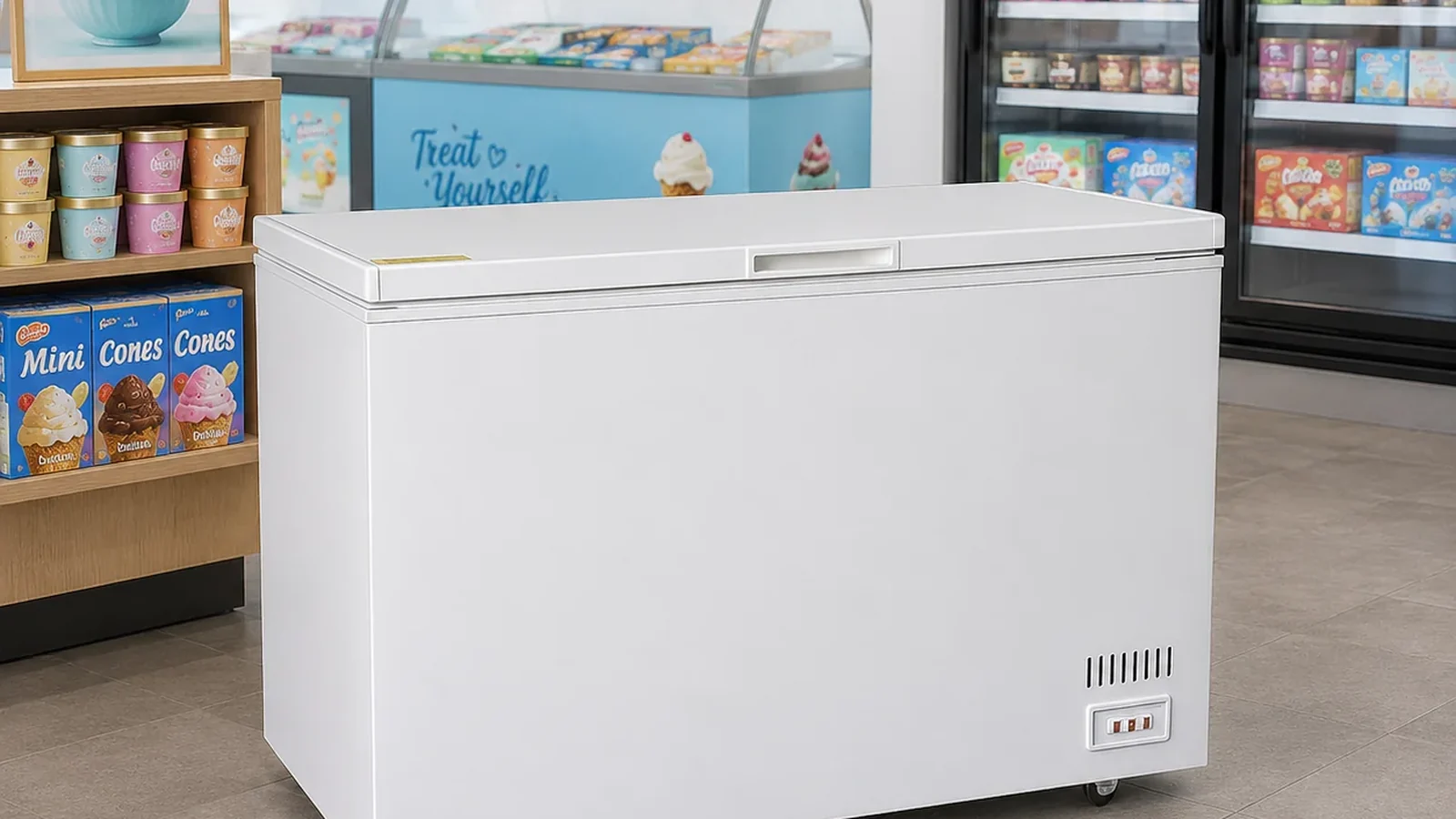
The Commercial Chest Freezer product page lists model, capacity, rated power, temperature range, and external dimensions. Keep those five values on the same row.
| Model group | Models | Published capacity | Published temperature range |
|---|---|---|---|
| Compact | IA-750, IA-990 | 150, 250 L | -20 to 0°C |
| Standard | IA-1105, IA-1460, IA-1760, IA-1960, IA-2000, IA-2200, IA-2500 | 350–1300 L | -24 to 0°C |
| Double temperature | IA-DOUBLE TEMP 1460 | 450 L | -24 to 0°C, double-temperature model |
| Deep-freezing | IA-1110 | 358 L | -40 to 0°C |
This grouping is for review, never for mixing specifications. IA-1105 is 350 L, 95 W, and 1105 × 730 × 900 mm. IA-1110 is 358 L, 170 W, and 1110 × 730 × 900 mm. Similar model numbers cannot make their power or temperature rows interchangeable.
The IA-1105 versus IA-1110 comparison owns that application decision. This article owns the document control after a model is shortlisted: which numbers must be frozen, who confirms changes, and what evidence releases production.
Require a Complete Datasheet Header
Before reviewing technical values, check the document identity. A usable approval copy should show the supplier, product family, exact model, buyer or project, quotation or purchase-order reference, issue date, revision, page count, and status. “Latest” in an email subject is not a stable revision.
Add the selected lid form, colour, branding, plug, and packing identity to the header or linked option schedule. The product record notes glass-top or solid-door choices and customizable voltage, plug, body colour, logo sticker, interior layout, baskets/dividers, and packaging. It does not say every option is available on every model without confirmation.
A mixed-model container needs one controlled row per model and option set. If the same model is ordered with two plug types or two branding packages, give those configurations separate item codes.
Review Capacity, Power, Temperature, and Dimensions Together
The key review is not whether each number appears somewhere on the website. It is whether all numbers belong to the exact model being quoted.
Use a four-way check:
- Compare the supplier datasheet with the published model row.
- Compare the same datasheet with the quotation and purchase order.
- Compare dimensions and weight information with the delivery-path and warehouse plan.
- Compare electrical and temperature information with the intended application and destination review.
Published rated power ranges from 95 W on several smaller rows to 580 W on IA-2500. Those figures are not a site electrical design. Ask for the complete current electrical data, plug, protection, starting characteristics, and installation requirements needed by a qualified local professional. The product record provides a 220 V/50 Hz base statement and customization capability, but the approved order must state the actual destination configuration.
Keep the -40°C Claim on IA-1110
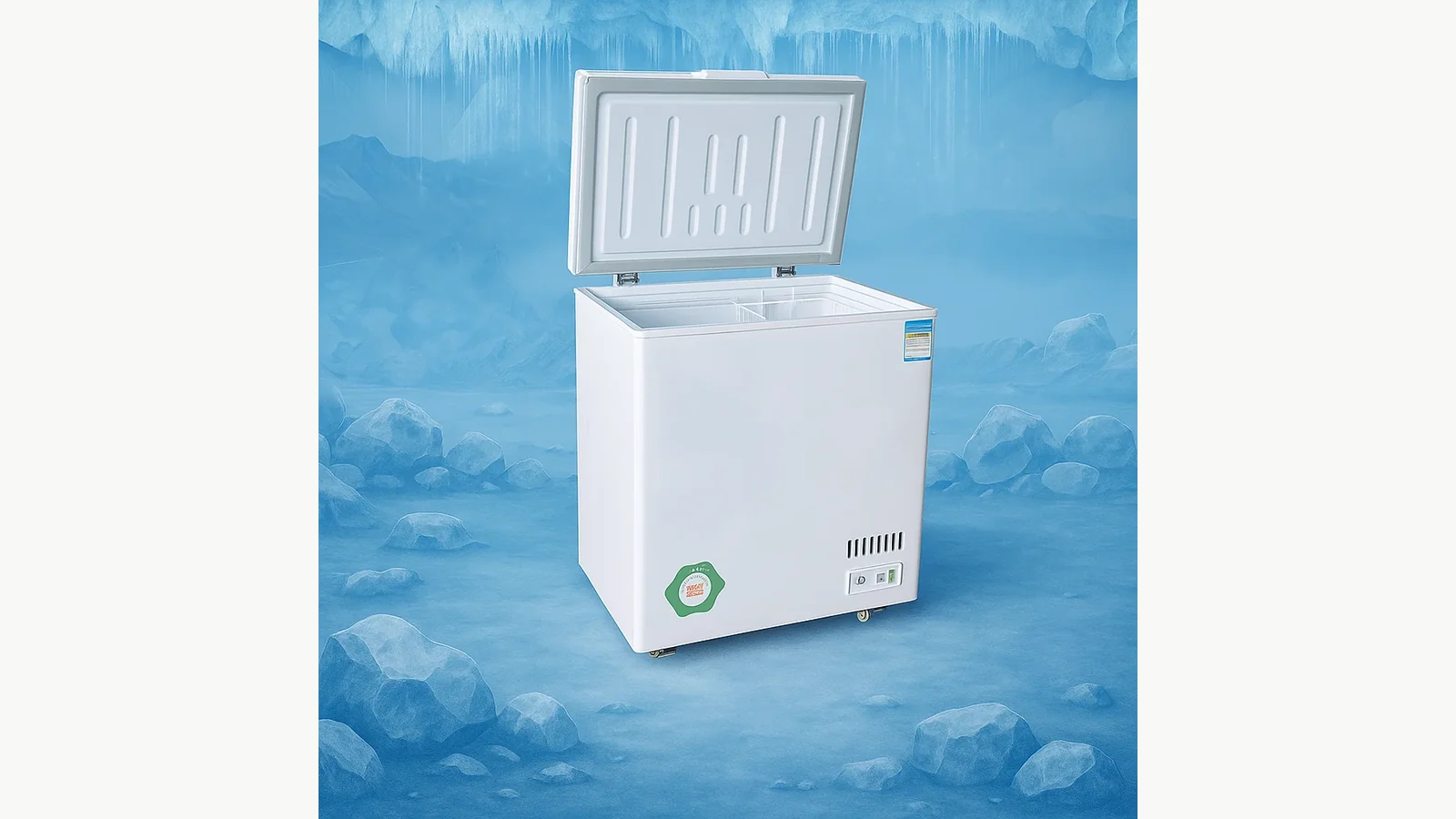
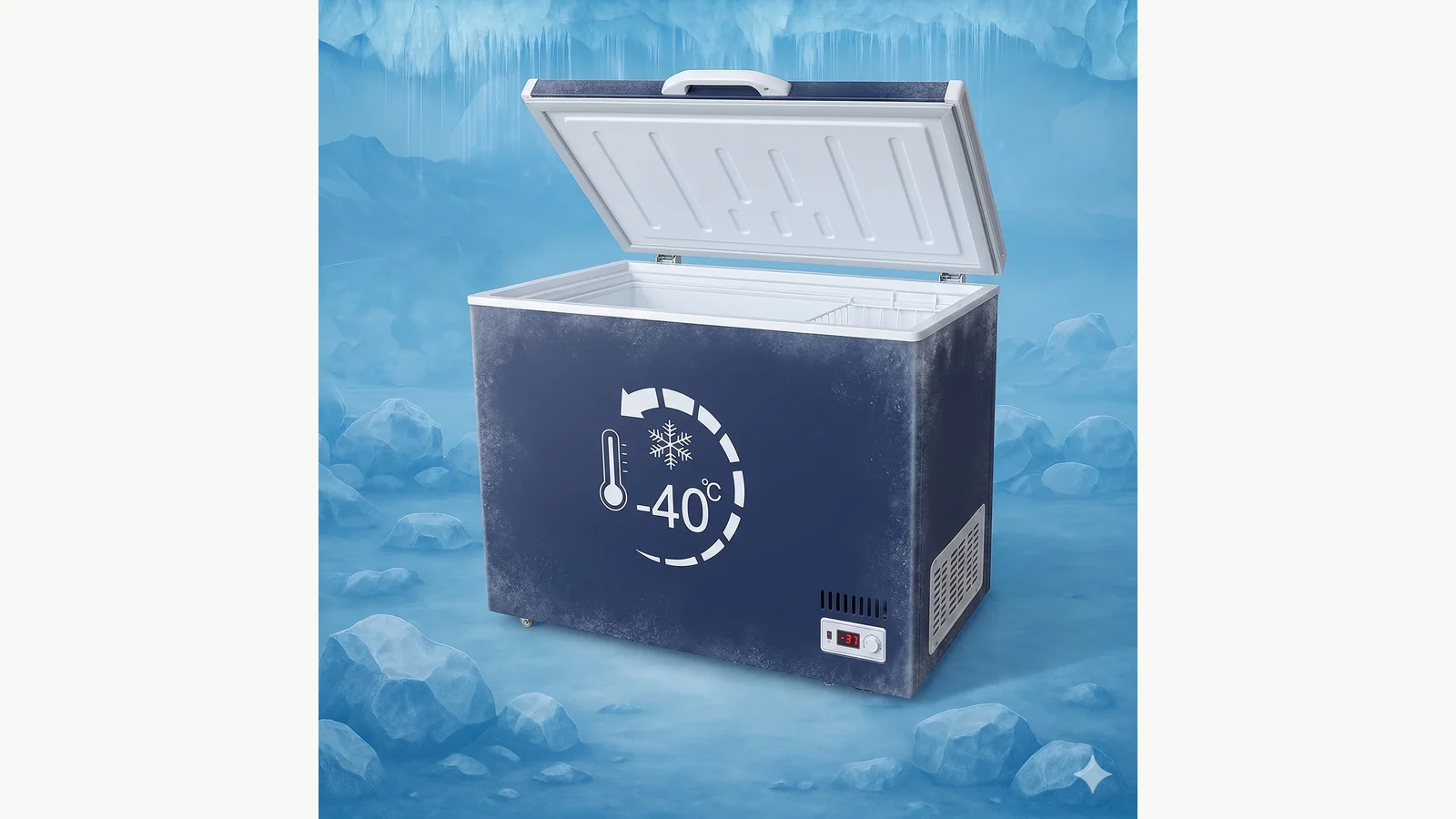
Only IA-1110 carries the published -40 to 0°C range. The standard rows are not “-40°C freezers” because they share the same product family or appear in the same brochure. The datasheet title, model row, label artwork, marketing artwork, and packing list must all preserve that boundary.
For every model, record the stated operating range and the conditions or test basis supplied by the manufacturer. A temperature range alone does not prove pull-down time, daily energy use, recovery under a particular load, or performance at an unspecified ambient. Those values require current test evidence and destination-specific review.
If a buyer needs a performance criterion beyond the published row, write it as an open requirement and agree on a test method. An assumed value from another freezer cannot fill the gap.
Lock Voltage, Frequency, Plug, and Refrigerant
The final datasheet should state voltage, frequency, phase where relevant, plug or connection, rated electrical data, and destination. It should also identify the selected refrigerant. ICEAGE’s current company/product record references R600a and R290; the buyer must confirm which applies to the exact ordered model and production batch.
Refrigerant identity affects markings, shipping information, service preparation, and local compliance review. It is not a generic “green refrigerant” field. Ask the supplier to provide the current label and component documentation for the chosen configuration, then have the importer or appointed professional review destination obligations.
Avoid approving voltage and refrigerant in separate unlinked emails. Put both on the same controlled model row or option schedule so the factory and receiving team can compare one source.
Define Every OEM Option by Scope
“Customized” is not approval by itself. Turn each option into something that can be inspected:
| Option | Approval evidence |
|---|---|
| Body colour | colour reference, sample or approved photograph under stated lighting |
| Logo sticker | final artwork, dimensions, material, location, and revision |
| Lid form | glass-top or solid-door configuration identified on model row and drawing |
| Basket/divider layout | quantity, dimensions where confirmed, and placement sketch |
| Interior layout | approved drawing or marked photograph |
| Plug and cable | destination type and current approved component record |
| Packaging | carton/crate structure, markings, handling labels, and item code |
| Manual | language, model scope, electrical/refrigerant match, and revision |
An option schedule should distinguish included, excluded, and open items. Blank cells invite assumptions. For a repeat order, compare the new schedule with the retained approved copy; “same as last time” is insufficient if the production batch or components have changed.
Use a Change Notice When the Batch Changes
If the supplier proposes a change after approval, issue a written change notice. It should identify the old and new values, affected model and quantity, reason, document revisions, implementation batch, and evidence required for acceptance. The buyer then approves, rejects, or requests a sample/test.
Common controlled changes include dimensions, rated power, temperature control, refrigerant, compressor or controller, lid construction, insulation, cable/plug, label, colour, basket layout, and packaging. This list does not imply that changes are expected; it ensures that a change cannot hide inside a replacement PDF.
Preserve the approved datasheet rather than overwriting it. Archive it, add the new revision, and retain the decision record. If a change affects delivery access, electrical work, compliance, product claim, spare parts, or customer literature, route it to the responsible reviewer before production continues.
Release Production With a Linked Evidence Pack
A disciplined release sequence is:
- Buyer selects the model and application.
- Supplier issues the current datasheet and option schedule.
- Buyer reconciles model, capacity, power, range, dimensions, voltage, plug, refrigerant, lid, branding, accessories, and packing.
- Open values are closed under a new revision.
- Buyer approves the dated revision for a defined order and batch.
- Supplier provides first-unit or pre-shipment label and configuration evidence.
- Packing list and receiving guidance use the same item codes.
For mixed containers, include a model-count matrix and label samples. At receiving, compare the model plate, cabinet identity, lid, plug, accessories, and packing list with the approved row before units are dispersed.
Related Reading
- Chest Freezer Model and Capacity Documentation covers reorder identity after a prior configuration exists.
- Chest Freezer Voltage, Plug, and Packaging Details expands the destination-configuration fields.
- 150 L vs 250 L vs 350 L Chest Freezers supports the small-store model shortlist before datasheet release.
Send the Exact Model and Destination Configuration
Use the ICEAGE inquiry route to send the shortlisted model, quantity, destination, intended frozen product, required temperature range, site electrical supply, plug, refrigerant preference, lid form, colour/logo files, baskets/dividers, interior layout, packing needs, delivery-path limits, and target approval date. Ask for the current model-specific datasheet, option schedule, label proof, and revision note before releasing the production batch.