
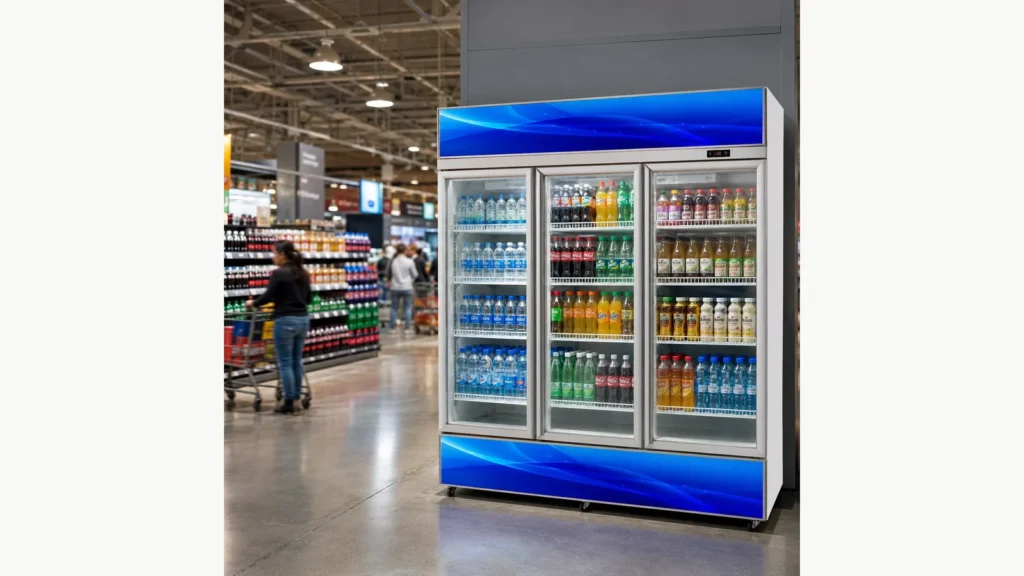
The current Ice Age beverage-cooler product page lists direct cooling for its 400 L single-door, 875 L two-door and 1300 L three-door models. That is the verified configuration for these published rows. An importer asking for an air-cooled version should treat it as a new configuration request that needs written confirmation, a current datasheet and a separate sample or model approval.
This distinction protects both sides of the quotation. “Beverage cooler” identifies the product family; it does not define the cooling method. The RFQ must connect cooling configuration to one model, one temperature duty, one electrical schedule and one approved document revision.
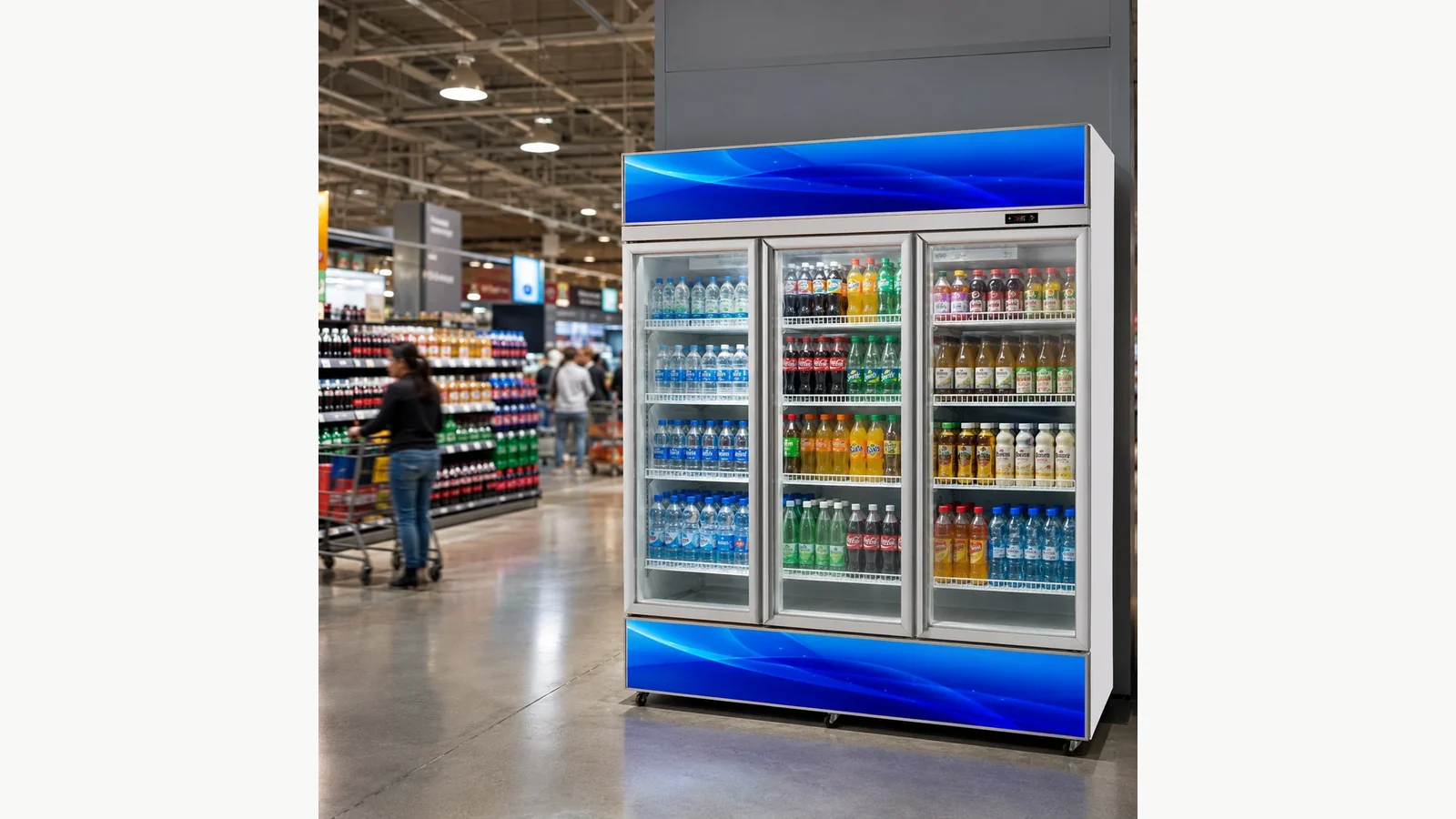
What Is Verified for the Published Range
The exact commercial glass-door beverage cooler product page publishes three model rows.
| Model row | Doors | Capacity | External dimensions | Listed power | Published cooling | Temperature range |
|---|---|---|---|---|---|---|
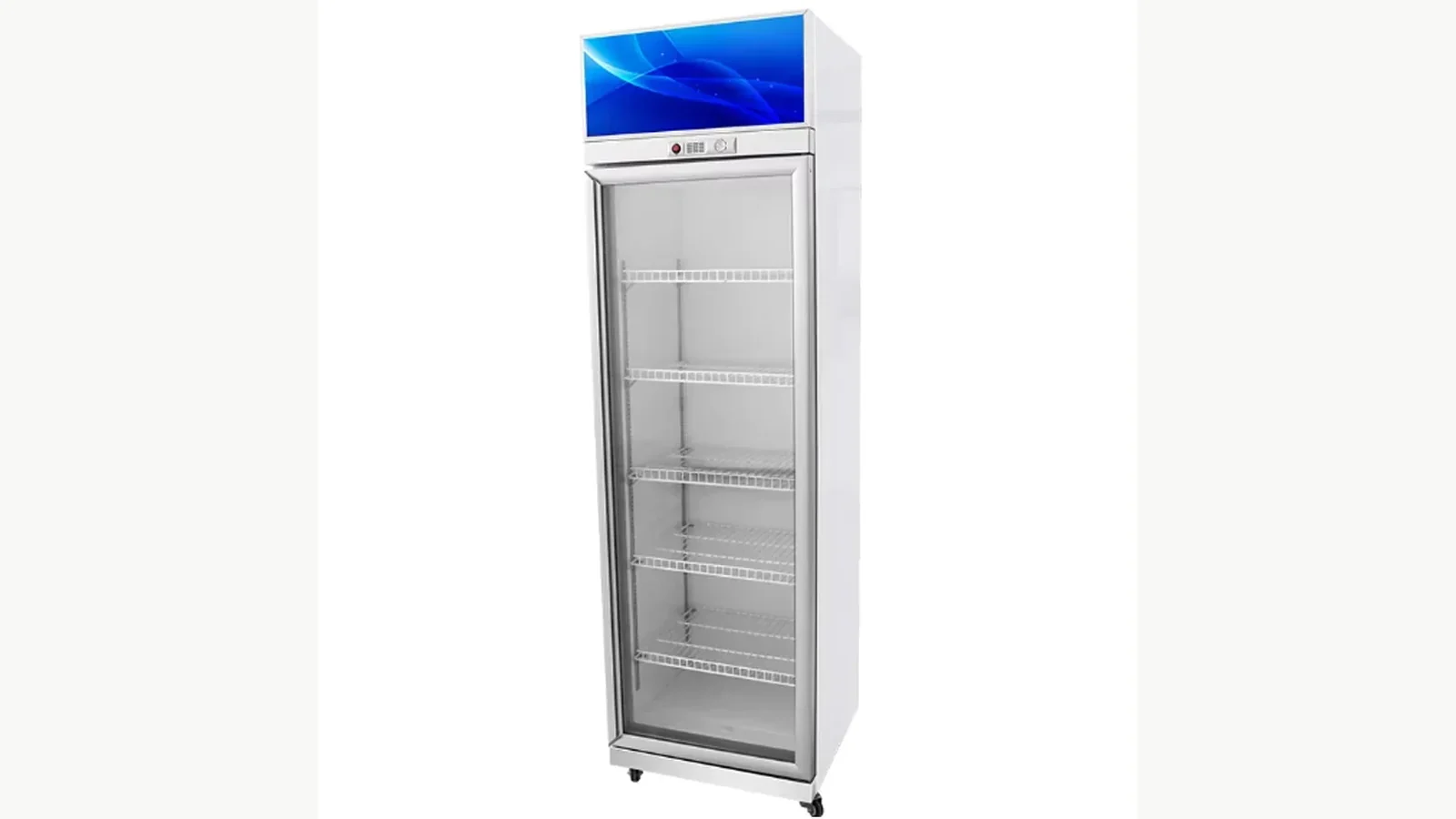
| Single door | 1 | 400 L | 600 × 620 × 2050 mm | 92 W | Direct cooling | 0–10°C |
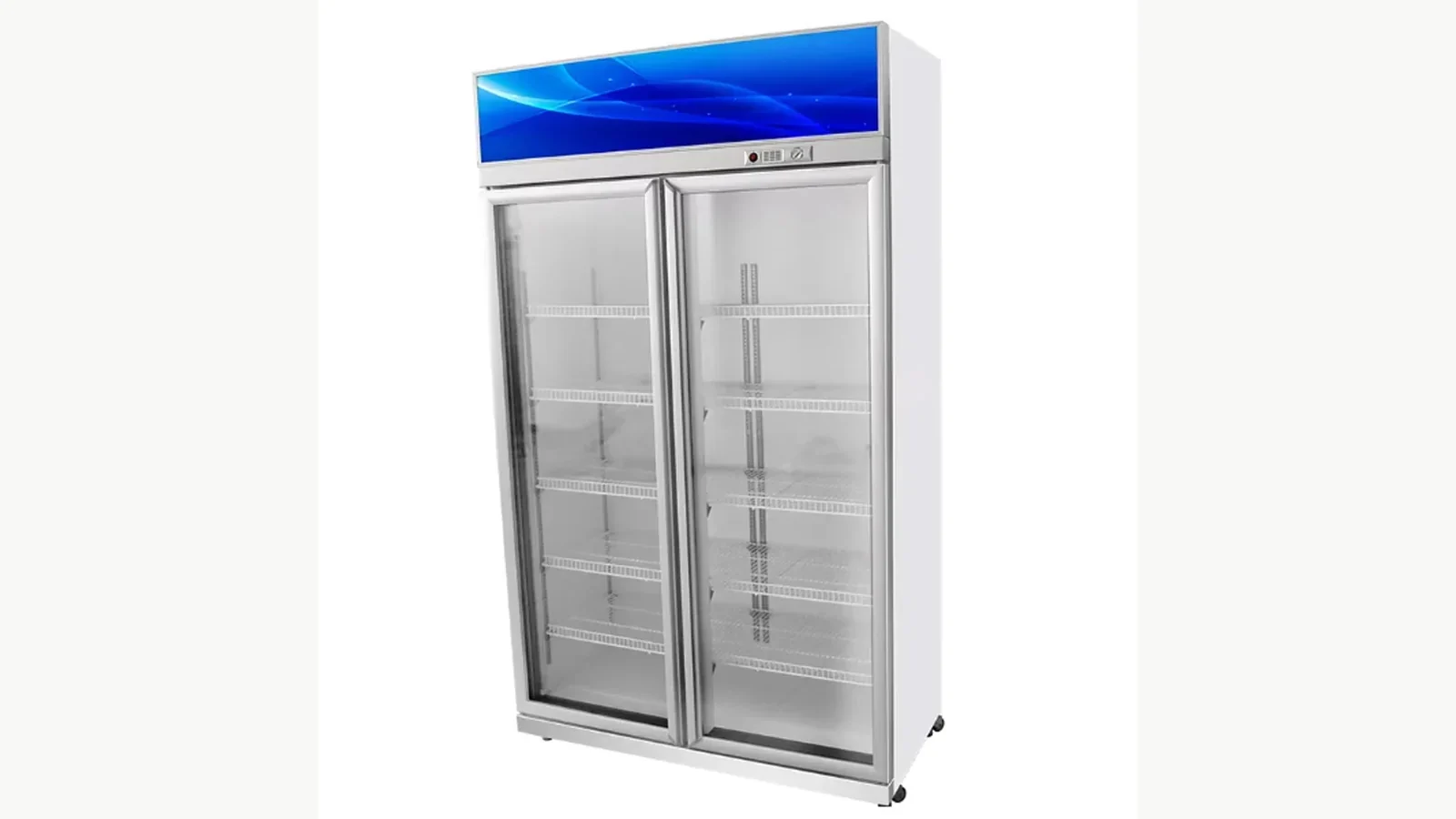
| Double door | 2 | 875 L | 1200 × 620 × 2050 mm | 148 W | Direct cooling | 0–10°C |
| Three door | 3 | 1300 L | 1800 × 620 × 2050 mm | 218 W | Direct cooling | 0–10°C |
The page also lists LED lighting, full-height tempered glass doors and adjustable shelves starting from five levels. These are chilled-display cabinets, not frozen-storage equipment.
The business profile mentions direct-cooling or air-cooled options at a broader company level, while the current product table identifies direct cooling. The narrower product-page evidence controls this article. An air-cooled request remains pending confirmation until the supplier connects it to an exact offered model and current technical file.
Why Cooling Method Needs Its Own RFQ Field
The published beverage-cooler importer RFQ guide already covers door count, voltage, plug and light box. Cooling method belongs beside those fields because a configuration change may affect components, controls, dimensions, site needs, packing, price and documentation.
A buyer should never infer an alternate system from a photograph. The three model images show door count and cabinet structure. They cannot reveal the complete refrigerating circuit or prove an unlisted option.
Use a model identity block like this:
- product family: commercial glass-door beverage cooler;
- supplier model or exact capacity/door row;
- chilled duty: published 0–10°C range;
- cooling method: direct cooling, unless another exact option is confirmed;
- voltage/frequency and plug for the destination;
- listed power from the current model table;
- dimensions, door count, shelves and lighting;
- OEM items such as logo, colour and light-box artwork;
- datasheet revision and approval date.
This block keeps a familiar cabinet appearance from masking a technical change.
Direct Cooling Is the Baseline for the Three Rows
Direct cooling should appear in the base quotation for the published 400 L, 875 L and 1300 L rows. The buyer can then compare like with like across door count and capacity.
The listed power values belong to those published models. They are useful identifiers and planning inputs, but they are not a complete site-electrical design. Confirm the final production nameplate, destination voltage/frequency, plug, circuit protection and site connection through the qualified parties responsible for the project.
The same boundary applies to performance. The 0–10°C product range is published. Recovery time, energy use, ambient limits, stock-loading pattern and door-opening cycle require current supplier evidence and actual operating conditions. A cooling-method label alone cannot answer those questions.
Treat an Air-Cooled Request as a Controlled Alternative
When a buyer prefers air-cooled operation, create an alternative request rather than editing “direct” to “air” in a spreadsheet. Ask the supplier to respond with:
- exact available model code;
- current product datasheet;
- exterior and interior dimensions;
- capacity and door configuration;
- temperature range and stated operating conditions;
- rated electrical data and nameplate draft;
- refrigerant and component schedule where contractually required;
- controls, defrost and condensate-management information relevant to installation and service;
- revised packing dimensions and weight if changed;
- sample, drawing or first-unit approval route.
If the supplier cannot provide an exact offered model, keep the request marked pending confirmation. A company-level capability statement is not a production specification.
Separate Appearance Approval From Technical Approval
A one-, two- or three-door cabinet image can support the visible product identity. It can confirm the number of doors, light-box form, basic shelf presentation and upright glass-door structure. It cannot confirm direct versus air-cooled construction.
Use two approval records:
| Record | Typical checks | Approval owner |
|---|---|---|
| Visible configuration | Door count, colour, logo, light box, glass, shelf layout, exterior condition | Buyer/merchandising/project team |
| Technical configuration | Model code, cooling method, temperature duty, electrical data, components and document revision | Buyer technical reviewer and supplier |
The records should share one model code. If the technical model changes, reopen any visible fields affected by the change.
Compare Quotations on the Same Baseline
For each bidder, normalize these columns:
- exact model and door count;
- listed capacity and dimensions;
- direct-cooling baseline or separately confirmed alternative;
- temperature duty;
- electrical basis;
- standard shelves, LED and glass-door scope;
- OEM items;
- packing and documentation;
- exclusions;
- sample and production-approval steps.
Put an unconfirmed air-cooled offer in an “alternative/pending evidence” column. It should not compete as if it were identical to the published direct-cooling row.
This also prevents a commercial mistake: choosing the lowest quotation when one supplier priced the standard direct-cooling model and another priced a different, incompletely defined system.
Approve the First Unit Against the Document Set
Before bulk release, match the first unit or pre-production sample to the approved model code and datasheet. Check door count, cabinet dimensions, labels, nameplate, shelves, lighting and accessible configuration identifiers. Review the cooling-method evidence with the supplier's technical file rather than attempting to identify it from the front view.
Record the power supply used during the agreed test, displayed temperature observations, door operation, lighting and any exceptions. The test procedure and acceptance window must be agreed for the actual model and conditions.
After approval, carry the model code, cooling method and document revision to the purchase order, carton label, packing list and receiving sheet. This makes a later reorder comparable.
Receiving and Reorder Control
At receipt, reconcile the model/nameplate, carton mark and packing list before allocating cabinets to stores. If the cabinet model or cooling configuration differs from the approved record, hold it for review. A matching door count does not establish a matching technical configuration.
For reorders, send the previous model code and approved datasheet. Ask the supplier to disclose changes in cooling method, electrical data, dimensions, components, controls or exterior configuration. Reapprove affected fields before production.
Send a Configuration-Specific RFQ
Send the door count, quantity, chilled products, destination, voltage/frequency, plug, selected direct-cooling model or air-cooled request, OEM fields and required technical documents. Ice Age can then confirm the available construction and return a quotation tied to one exact model.
The core decision is simple: use direct cooling as the verified baseline for the published three-model range, and require separate evidence for any alternate configuration.