
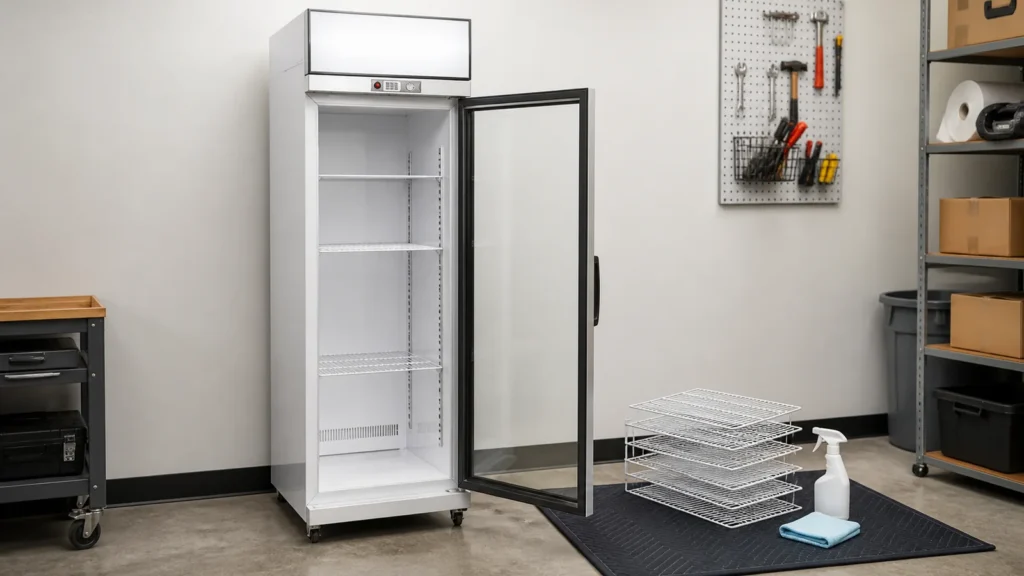
Routine cleaning is easier when the store has somewhere to move products, open the glass door fully, remove or reposition shelves, place components on a clean protected surface, reach corners, clean the floor, and inspect the cabinet before restocking. A cooler wedged beside a wall, sign, stock cart, or checkout can turn a simple task into rushed partial work. The plan should follow the exact model documentation and keep routine cleaning separate from electrical, refrigeration, or component service reserved for qualified personnel.
Identify the Exact Cooler and Cleaning Scope
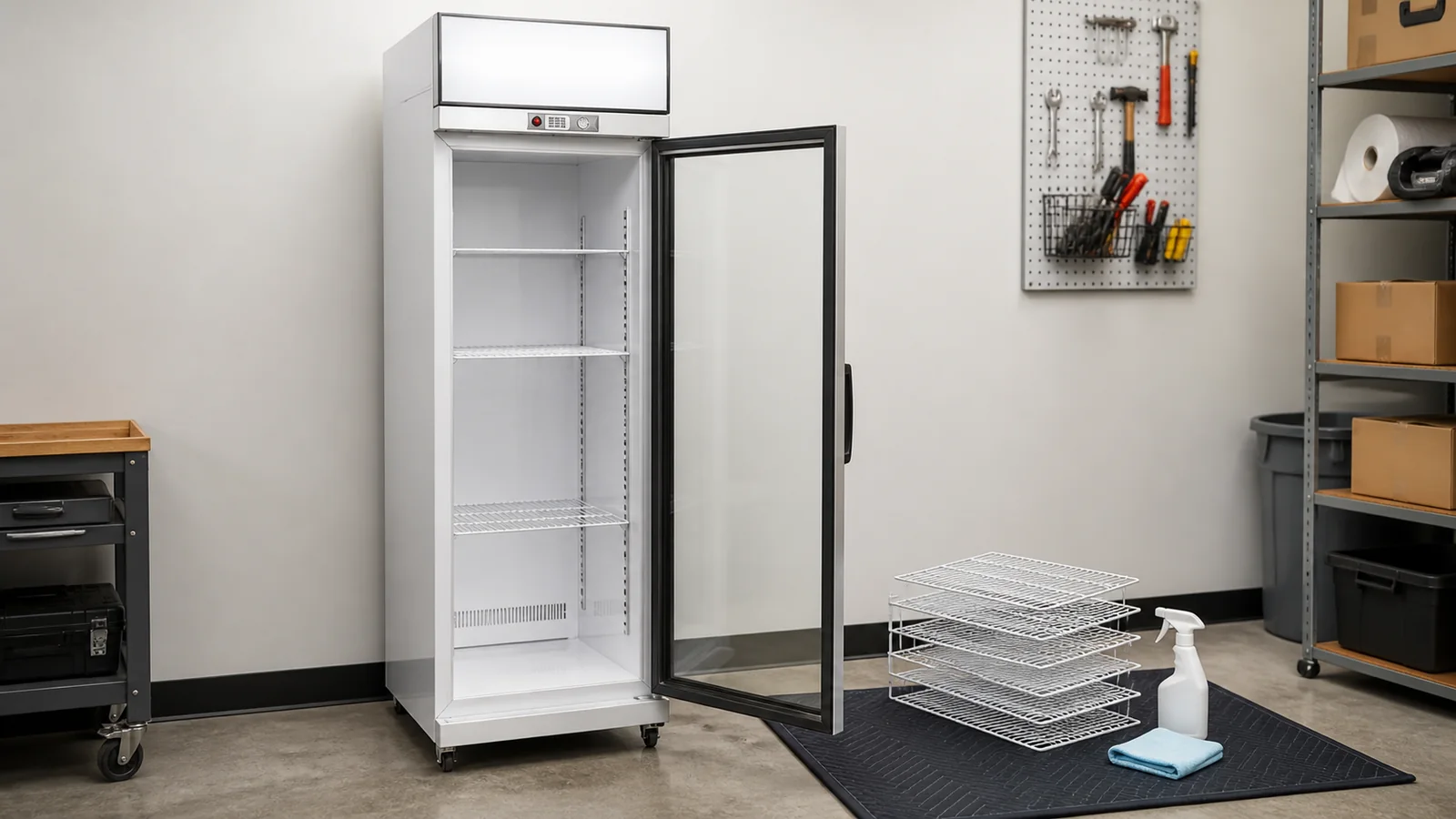
Record model, door count, shelves, light-box option, installation position, product categories, and the current manufacturer documentation. ICEAGE's beverage cooler page lists one-, two-, and three-door upright glass-door models, adjustable shelves, lighting, and customization fields. This article's approved visual reference is a one-door structure; wider models require their own access plan.
Define routine tasks such as product removal, shelf cleaning, approved interior wiping, glass cleaning, gasket observation, exterior surfaces, floor, and recordkeeping. Technical work on electrical, controls, refrigeration, fans, wiring, panels, or damaged parts belongs to qualified service under the model documentation.
Plan Product Transfer Before Opening the Cabinet
List the drinks, dairy, juice, water, or packaged chilled products stored in the cooler and follow the business's approved product-temperature and food-handling procedure during cleaning. Identify the temporary location, containers, labels, responsible staff, sequence, and maximum task window set by that procedure.
Group products by shelf and return location so restocking does not create a new shelf plan accidentally. Damaged, leaking, expired, or questionable items follow the store's product-control process. The beverage-cooler shelf-planning guide helps preserve the approved arrangement.
Reserve Door and Shelf Handling Space
Use the exact model drawing to mark full door opening, handle, hinge side, neighboring fixtures, customer aisle, stock cart, and staff standing position. Provide a clean padded surface for shelves and any removable approved components. Keep parts labeled by level and orientation.
Shelves need a protected horizontal surface away from glass, emergency routes, customers, and service paths. If shelf removal requires angling through the door, test the movement with an empty shelf under the manual. Multi-door coolers need a door-by-door sequence so products and shelves remain identifiable.
Follow an Inside-to-Outside Sequence
After following the manufacturer's isolation and cleaning preparation, remove loose debris using the approved method. Clean shelves and supports, interior surfaces, corners, door frame, gasket surfaces, and glass using products and tools permitted for the model and stored goods. Avoid flooding controls, lights, fans, openings, or electrical areas.
Clean exterior panels, handle, light-box exterior, lower grille or other accessible surfaces only as directed. Keep liquids from electrical and ventilation areas. The exact manual controls disassembly, detergents, water use, drainage, drying, and restart.
| Cleaning Zone | Access Need | Boundary |
|---|---|---|
| Shelves and supports | Clean protected laydown area | Keep level and position identity |
| Interior corners and floor | Open door and empty cabinet | Follow model-approved liquid and drainage method |
| Glass and gasket | Full door access | Observe damage; qualified service handles repair |
| Exterior and light box | Front and side working space | Protect labels, controls, and openings |
| Lower or rear service areas | Reserved clearance | Qualified service where panels or components are involved |
Inspect Before Restocking
Confirm shelves are dry, correctly seated, and stable; supports are in approved positions; glass and frame show no new damage; gasket appears seated; door movement is unobstructed; labels remain legible; and cleaning materials have been removed. Record unusual cracks, loose components, repeated moisture, damaged seals, or operation concerns for qualified review.
A cleaning check is an observation rather than a performance test. The glass-misting observation article provides a separate record when misting occurs during operation. Cleaning can reveal a condition without proving its cause.
Restart and Restock by the Approved Plan
Follow the model documentation for reassembly, connection, restart, stabilization, and restocking. Use the business's approved product-handling criteria before returning chilled goods. Rebuild the shelf map from the record rather than placing packages wherever space appears.
Keep packages clear of required openings and within model-specific loading guidance. Confirm door closure after each shelf is loaded. Keep a cleaning record with date, model, staff, product-transfer location, tasks, observations, corrective route, and final release.
Include Cleaning Access in the RFQ and Layout
Before purchase, ask for shelf dimensions and removal method, door swing, handle projection, cleaning guidance, accessible interior construction, drainage information where applicable, service panels, ventilation, and required clearances for the exact model. Put the cooler on the store plan with a cleaning cart and shelf laydown zone.
A larger cooler can require more product-transfer space and a longer shelf sequence. Compare the full operating workflow, not only door count and capacity. Reserve access for qualified service as well as routine cleaning.
Buyer Checklist
- Record exact model, door count, shelves, products, and manual.
- Plan approved temporary handling for chilled products.
- Reserve full door swing and clean shelf laydown space.
- Label shelf level and orientation before removal.
- Use only model-approved cleaning materials and methods.
- Inspect glass, gasket, shelves, labels, and door path before restart.
- Restock from the approved shelf map and retain a cleaning record.
Frequently Asked Questions
Can shelves be washed outside the cooler?
Use the exact model's approved removal, cleaning, drying, and reinstallation procedure. The store needs a clean protected area if off-cabinet cleaning is permitted.
Should staff remove a rear or lower panel for cleaning?
Panels and technical areas can contain electrical or refrigeration components. Only qualified personnel should access them under the model documentation.
Can glass cleaner be used on every surface?
Use only products and methods approved for the exact glass, frame, gasket, interior materials, labels, and stored-goods environment.
Related Product or Reading
Stores using a beverage cooler for bottles, dairy, juice, or chilled snacks can pair this workflow with the shelf-planning guide so cleaning does not erase the approved product layout.
Discuss the Exact Project
Use the ICEAGE contact page to share the candidate model and door count, product categories, shelf plan, store layout, cleaning space, service access, electrical destination, light-box and branding needs, packing, and documentation request.