
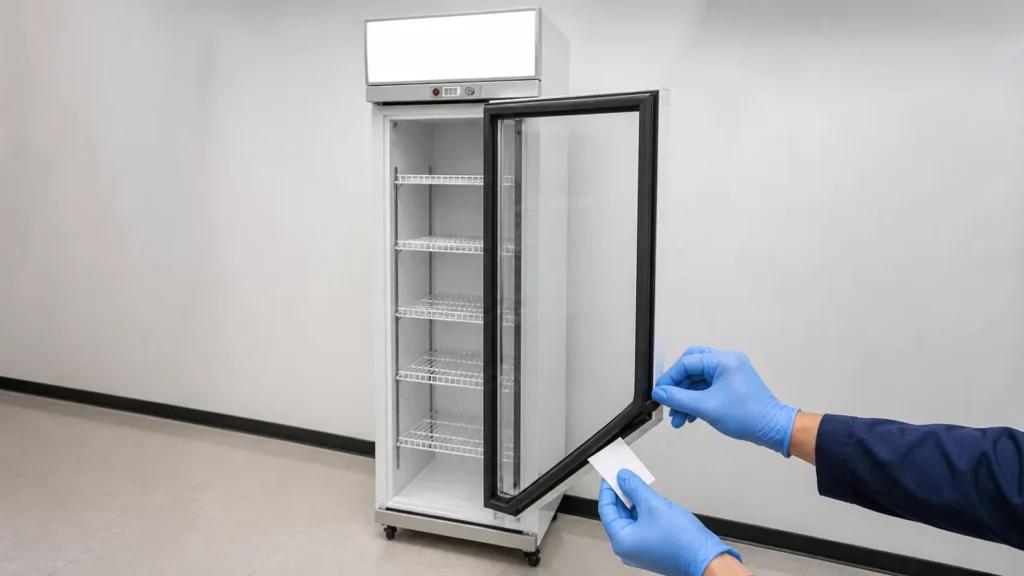
A glass beverage-cooler door that appears not to close evenly, reopens, shows a visible gap, or develops recurring moisture near one edge needs a clear observation record. Store staff can inspect accessible surfaces, remove obvious package obstructions, photograph the closure, and note a gentle paper-strip comparison when the manufacturer or service provider considers it appropriate. They should not adjust hinges, dismantle the door, heat the gasket, change controls, or diagnose refrigeration performance without authorization. The purpose is to help qualified service see the pattern before arriving.
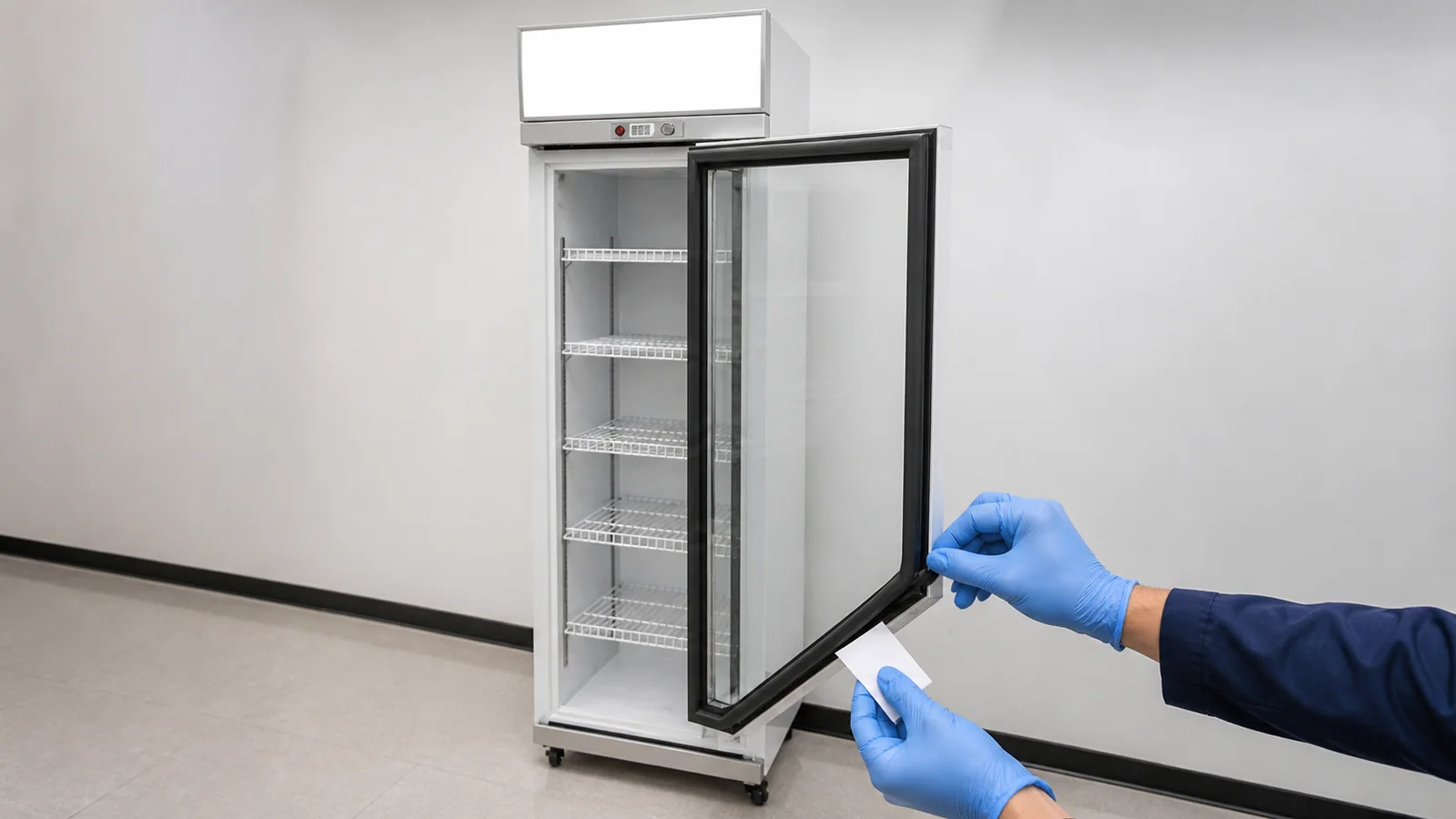
Protect Products and Identify the Cabinet
Follow the store's approved chilled-product procedure when the door cannot remain closed or cabinet operation is uncertain. Record the ICEAGE model, door count, asset code, store location, electrical configuration, installation date if known, recent movement or service, and product load. The beverage-cooler page establishes current product scope, while the actual model plate and documents identify the installed unit.
A generic one-door photograph cannot determine replacement parts. Photograph the full cabinet, model and serial information as permitted, hinge side, handle side, upper and lower corners, surrounding floor, and neighboring fixtures.
Write the Symptom Timeline
Note when the issue first appeared and whether it is constant or intermittent. Record recent restocking, cleaning, shelf change, cabinet movement, impact, door hold-open, floor work, or power event without assuming causation. Identify which edge or corner shows the gap and whether the door closes differently when empty of obstruction.
Record any sound, visible gasket displacement, condensation pattern, icing, damaged packaging, or repeat opening. Use clock times and photographs where practical. The glass-misting observation guide can support a separate glass-condition timeline.
Inspect Accessible Gasket and Contact Surfaces
Under the model's safe cleaning procedure, look for dirt, sticky residue, packaging film, labels, product debris, folds, cuts, hardened-looking sections, loose corners, or a gasket that appears out of its channel. Inspect the cabinet contact surface for contamination or damage. Clean only with the materials and method approved for the exact model.
Photograph the gasket in place before cleaning and after approved cleaning. Avoid pulling, stretching, heating, gluing, or removing it. A visual irregularity may help service, but it does not establish whether the gasket alone causes the symptom.
Use a Paper Strip as an Observation, Not a Verdict
When the manufacturer or service provider permits it, place a plain clean paper strip at one gasket location, close the door gently, and note the relative resistance when the strip is withdrawn. Repeat at comparable upper, middle, and lower positions with the same paper and method. Keep fingers clear and avoid slamming the door.
The result is qualitative. Paper type, fold, placement, door motion, gasket geometry, and operator technique affect the feel. It cannot prove sealing performance, pressure, temperature, or energy use. Record 'lighter resistance at lower handle corner than at upper handle corner' rather than declaring that the gasket failed.
| Observation | Record | Avoid Concluding |
|---|---|---|
| Visible gap | Exact edge, time, load, and photo | Gasket is the only cause |
| Paper-strip difference | Locations and relative feel | A numerical seal strength |
| Door reopens | Angle, package load, floor, recurrence | Hinge defect without service inspection |
| Moisture near one edge | Timing and conditions | Refrigeration or seal diagnosis |
| Dirty contact surface | Before and after approved cleaning | Permanent resolution after one closure |
Check Obstructions, Loading, and Surroundings
Look for bottles, cartons, shelf labels, promotional strips, cables, floor mats, wall trim, or neighboring fixtures in the door path. Confirm shelves are seated in approved positions and products remain within model-specific loading guidance. Observe whether the cabinet appears stable and whether the door moves consistently through its path.
Floor level, hinge condition, door alignment, closer mechanism, cabinet twist, and component wear require qualified assessment. Staff can provide full-cabinet photographs and a simple level observation only when directed; they should not adjust feet, hinges, or hardware without authorization.
Prepare the Service Evidence Pack
Send model and serial information, full-cabinet photos, exact corner and edge views, symptom timeline, product load, recent changes, gasket and contact-surface observations, approved cleaning performed, paper-strip locations and qualitative results, door movement, floor and surroundings, and actions already taken. Include the store's contact and access window.
Ask the provider what temporary product-protection steps and further observations are appropriate. Taping the door shut, wedging it, heating the seal, or increasing a control setting could conceal the condition or create another problem. Qualified service needs the unmodified condition where safe.
Create a Post-Service Baseline
After authorized work, record the service report, parts, adjustments, model, date, door movement, gasket appearance, closure photos, and any instructed observation. Keep the baseline with the asset record.
If the same symptom returns, compare location, product load, store conditions, timeline, and photos rather than opening a vague duplicate ticket. Repeat evidence can help distinguish an isolated obstruction from a recurring alignment, gasket, installation, or operating issue.
Buyer Checklist
- Protect chilled products through the approved store procedure.
- Record exact model, asset, location, timeline, and recent changes.
- Photograph full cabinet, hinges, handle side, corners, gasket, and surroundings.
- Remove visible obstruction and clean only through approved methods.
- Record paper-strip comparisons only when permitted and as qualitative observations.
- Leave hinge, gasket removal, electrical, and refrigeration work to qualified service.
- Retain the service report and post-service closure baseline.
Frequently Asked Questions
Does a loose paper strip prove the gasket has failed?
No. It is a qualitative comparison affected by method and door geometry. A qualified service provider evaluates the complete closure system.
Can warm water or a heat gun reshape the gasket?
Avoid improvised heating or reshaping. Follow the exact manufacturer documentation and qualified service advice to prevent damage or injury.
Should staff adjust the door hinges?
Hinge and alignment adjustments belong to authorized qualified personnel using model-specific procedures.
Can a blocked shelf cause a closure issue?
A misplaced shelf, bottle, label, or package can obstruct the path. Record and remove obvious obstructions safely, then observe whether the symptom persists without declaring a technical cause.
Related Product or Reading
If the main visible symptom is moisture across the glass rather than a clear closure gap, use the beverage-cooler glass-misting observation log as a separate evidence record.
Discuss the Exact Project
Use the ICEAGE contact page to share the exact model, asset and store position, timeline, full-door photos, gasket and contact-surface views, product load, obstruction check, qualitative paper-strip record if permitted, recent service, and requested support.