
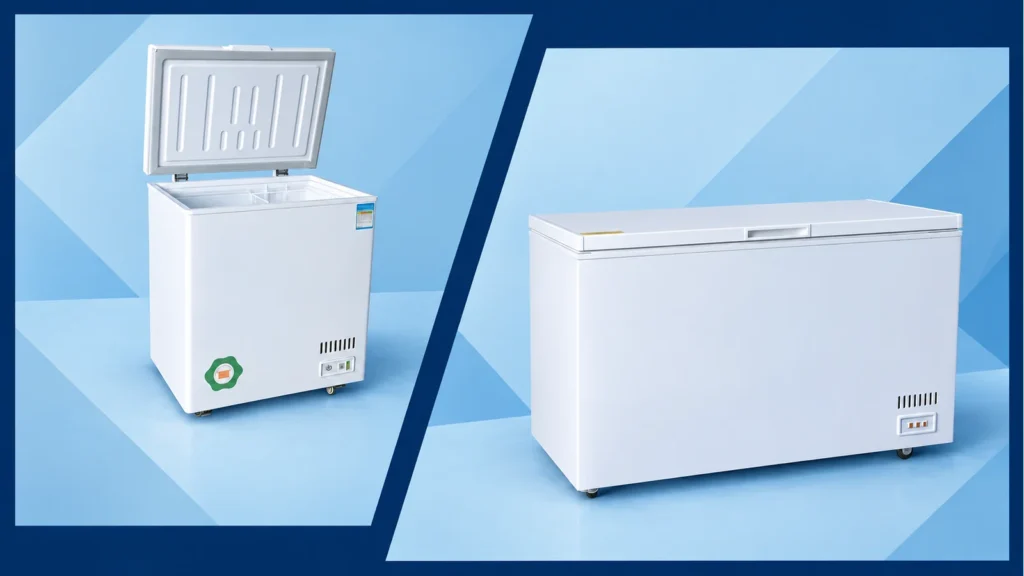
For a Ghana frozen-food kiosk or compact dealer shop, the IA-750 versus IA-990 decision starts with a 240 mm difference in listed cabinet width. The IA-750 is listed at 750 × 560 × 890 mm and 150 L; the IA-990 is 990 × 560 × 890 mm and 250 L. Both are currently listed at 95 W and -20 to 0°C. Because their depth and height are the same in the table, the first site-fit question is whether the extra 240 mm of frontage creates useful selling capacity without blocking circulation, lid operation, service access, or customer collection.
Capacity alone cannot answer that. Tape both cabinet rectangles on the real floor, mark the open-lid envelope from the approved drawing or sample, and walk the daily restocking path. Then compare the store's actual frozen-product pack plan and reorder pattern before asking for a final quotation.
Compare the Two Verified Model Rows
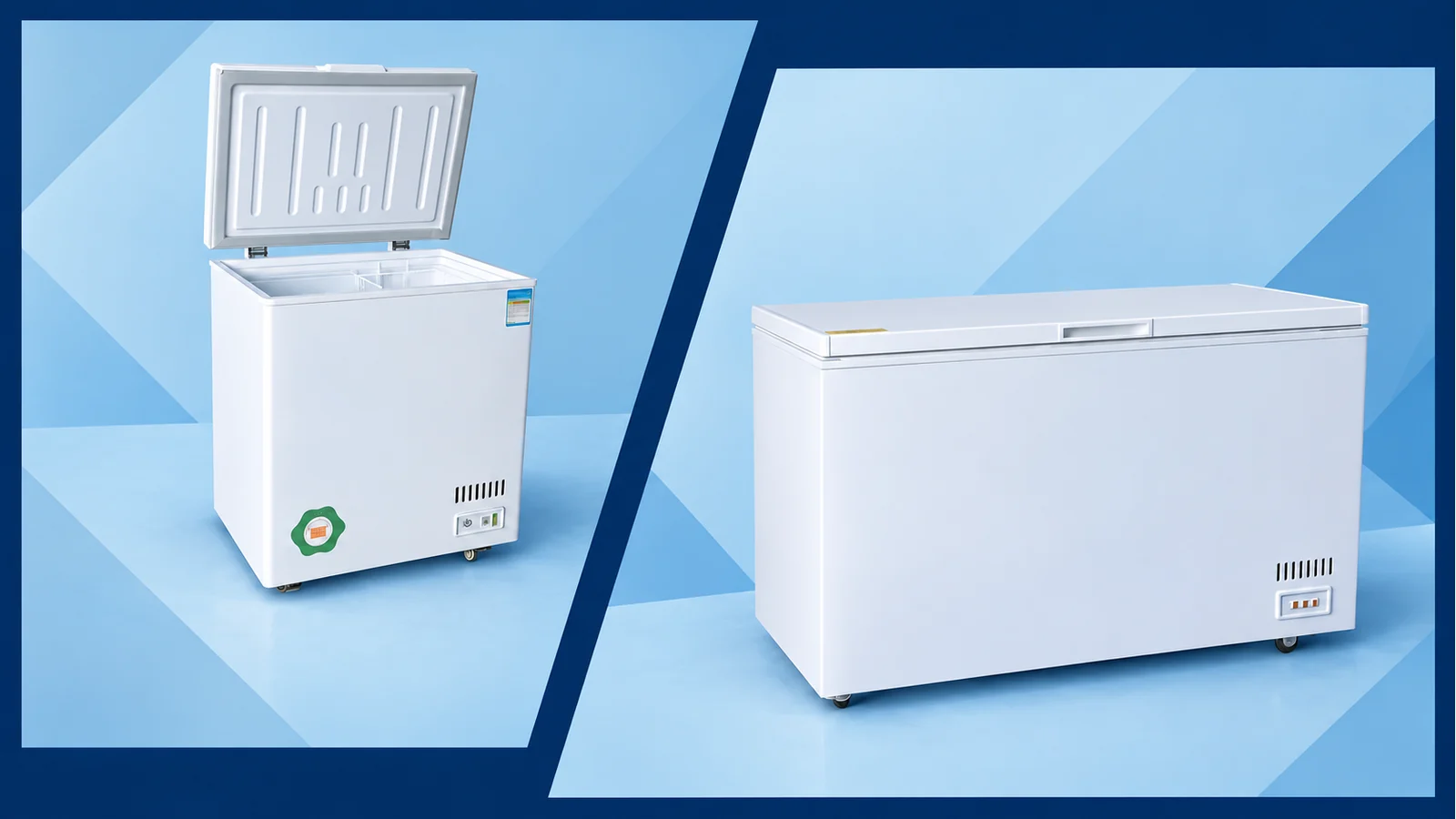
The current commercial chest freezer product page publishes these model-level facts:
| Field | IA-750 | IA-990 |
|---|---|---|
| Listed capacity | 150 L | 250 L |
| Listed input | 95 W | 95 W |
| Listed temperature range | -20 to 0°C | -20 to 0°C |
| External dimensions | 750 × 560 × 890 mm | 990 × 560 × 890 mm |
| Width difference | baseline | +240 mm |
The product family uses direct cooling, manual temperature control, and a top-opening lid. The page also describes glass-top and solid-door options, 220 V/50 Hz as the listed base configuration, customizable voltage and plug, and R600a/R290 options. Every option must be fixed on the order; the model name alone does not prove the lid, refrigerant, plug, colour, basket, or production-batch configuration.
The earlier 150 L, 250 L, and 350 L chest-freezer guide owns the broad small-store capacity comparison. This page narrows the decision to Ghana kiosk frontage and the exact 750/990 mm width choice.
Tape Out the Storefront, Not Just the Cabinet Body
Draw a 750 × 560 mm rectangle for the IA-750 and a 990 × 560 mm rectangle for the IA-990. Use removable floor tape at the proposed position. Keep each rectangle away from a wall unless the approved installation guidance allows that placement. Mark the customer side, staff side, neighbouring shelves, doorway, sales counter, power point, wall, column, and any change in floor level.
Now add project-specific zones around the body:
- lid opening and the operator's standing position;
- basket removal and product-loading path;
- cleaning reach around the cabinet and floor;
- ventilation and service access from approved product guidance;
- wheel or foot movement during positioning;
- customer queue and collection space;
- cartons or crates used during restocking;
- a safe cable route to the confirmed outlet.
The 240 mm frontage difference is easy to visualize with tape. What is harder is judging whether it affects the aisle at busy times. Ask staff to walk the route while one person opens the lid and another carries the largest normal restocking carton. Record the pinch points instead of deciding from an empty floor photograph.
Test the Real Frozen-Product Mix
The listed 150 L and 250 L capacities establish a model difference, but they cannot show how many of the buyer's cartons, bags, tubs, or retail packs fit. Internal dimensions, compressor hump, basket arrangement, allowable loading zone, and airflow requirements must come from the current drawing, sample, or supplier confirmation.
Build a simple product list for the Ghana location: pack name, external pack dimensions, units received per delivery, daily sales, desired facings, reserve quantity, and separation requirement. If the site sells ice cream, frozen meat, seafood, or prepared frozen food, keep each category's handling and segregation plan visible. Gross litres cannot be converted directly into saleable units.
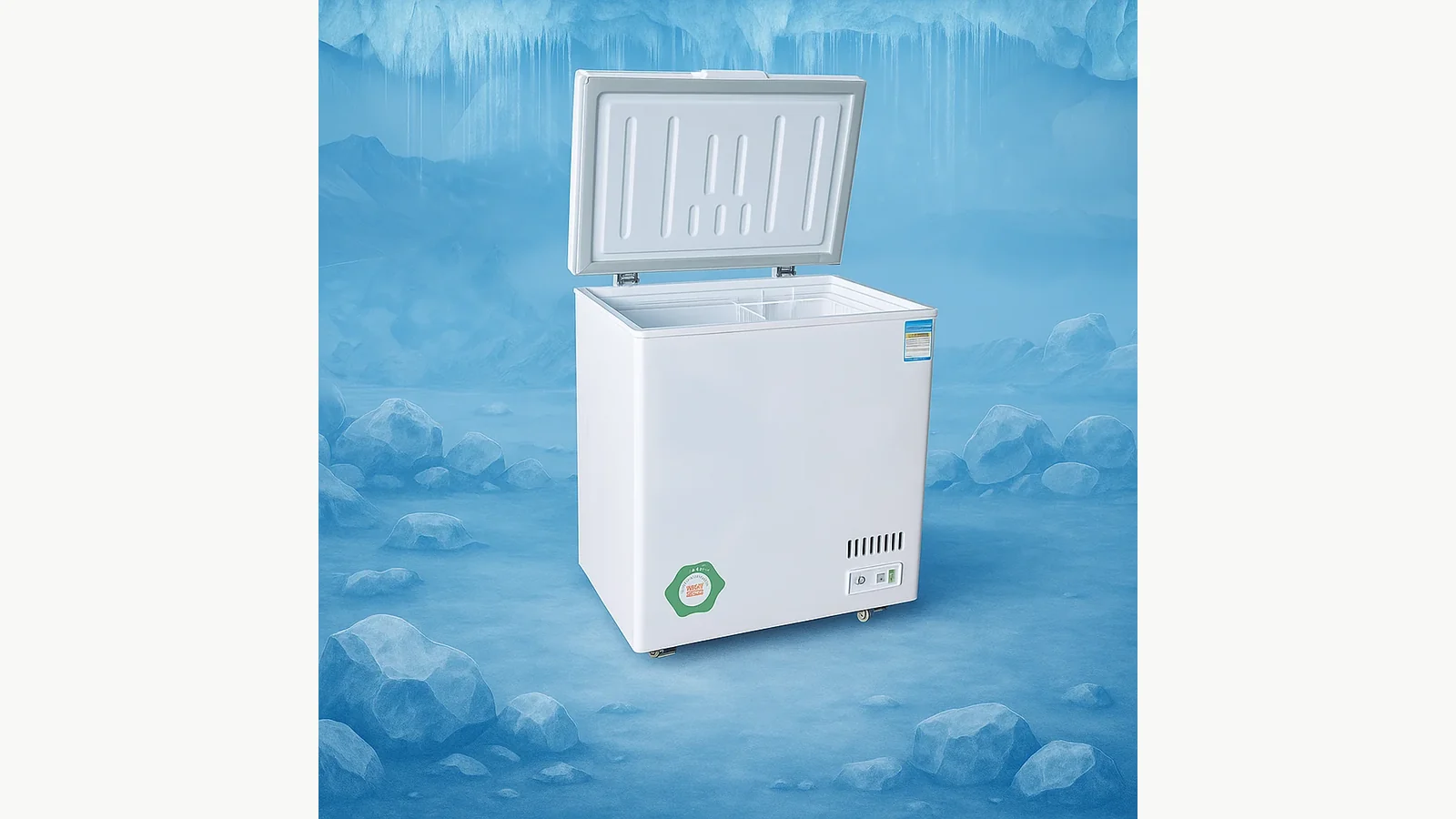
Ask ICE AGE for the current internal drawing and basket scope for both candidate models. If possible, run a physical or cardboard-template pack-fit test. Compare usable arrangement, access to fast-moving products, restocking disturbance, and the remaining clear zone below the approved loading limit. A larger cabinet only adds buyer value when staff can find, rotate, and replenish the stock efficiently.
Use Rated Input Without Estimating the Electricity Bill
Both rows currently list 95 W. That number is rated input, not proof that the two cabinets will use identical electricity over a day, week, or month. Energy use depends on ambient conditions, thermostat operation, lid openings, product load, pull-down demand, maintenance, voltage conditions, and the production configuration.
For a Ghana quotation, keep the model, rated input, voltage, frequency, plug, refrigerant, and nameplate evidence in one approval line. Ask the supplier for the applicable technical documents for the offered batch. Site wiring, circuit protection, outlet condition, earthing, stabilisation or backup-power decisions should be reviewed by a qualified local electrical professional. This article does not claim a universal voltage tolerance, generator requirement, operating cost, or payback.
The Ghana rated-power evidence guide explains why a nameplate wattage should not be turned into an invented cost claim. Apply that rule here even though the two published rows show the same input.
Confirm Lid, Delivery, and Service Access Before Ordering
Both cabinet bodies are listed at 890 mm high, but open-lid height and rear swing are not stated in the comparison table. Request an approved side drawing or measure a representative sample. Check the ceiling, shelf, shutter, window ledge, sign, counter, and any overhead security grille above the intended position.
Measure the delivery path separately. The 560 mm body depth may appear compact, but packaging, handles, wheels, thresholds, turns, and protective materials can change the real movement envelope. Ask for current packing dimensions and gross weight for the offered model. Record vehicle unloading, doorway clear width, corridor width, turning space, step or ramp, and final positioning method.
Service access also needs a named owner. Confirm which panels a technician must reach, how the cabinet can be moved without damaging the floor or cord, and where contents will be held during service. An access point must remain clear even when the body rectangle fits neatly.
Match the Model to the Ghana Dealer's Reorder Pattern
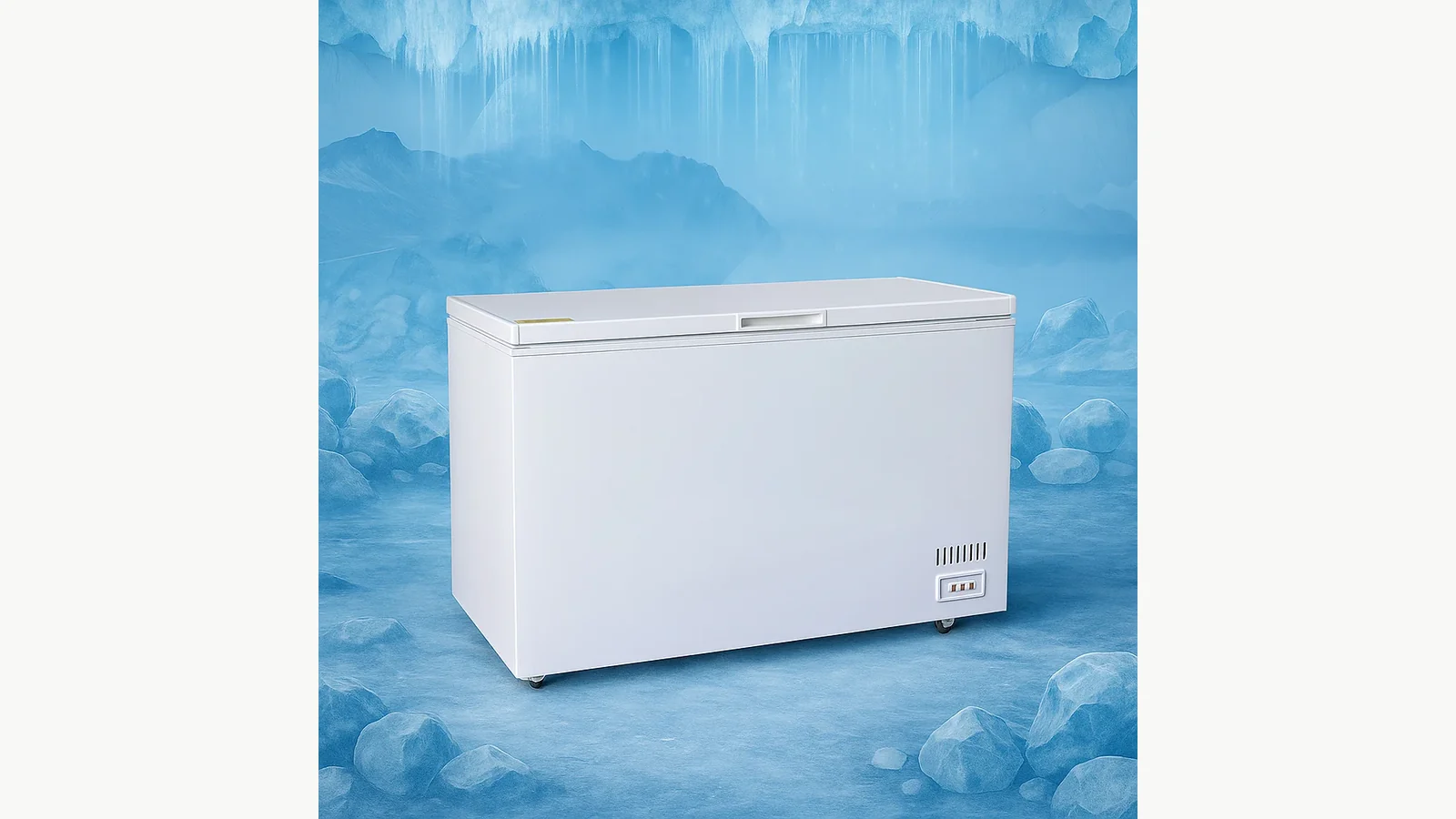
A kiosk with small, frequent replenishment may prefer the smaller footprint if 150 L supports the verified pack plan. A site with fewer deliveries or a broader frozen range may benefit from the 250 L row if the wider cabinet still preserves working space. These are decision patterns, not promises: sales velocity, delivery reliability, product mix, and usable internal arrangement must be supplied by the Ghana dealer.
Write the planned minimum and maximum stock by product group, delivery frequency, buffer rule, and emergency transfer arrangement. Then review the plan after the first operating period. Neither cabinet can be credited with preventing stockouts or increasing sales without measured store data.
For ICE AGE to review the request, send the Ghana city and shop type, dimensioned floor plan, photos, customer and staff flow, preferred model, product-pack list, delivery path, power details, lid and basket preference, quantity, refrigerant preference if specified, branding, and target dispatch date. Ask for the current datasheet, drawing, packing data, option schedule, quotation validity, production lead time, and sample or inspection evidence.
Select the IA-750 or IA-990 only after the floor tape, open-lid check, pack-fit evidence, order configuration, and route all point to the same model. That creates a defendable Ghana dealer quotation and prevents a nominal capacity choice from becoming a storefront obstruction.