
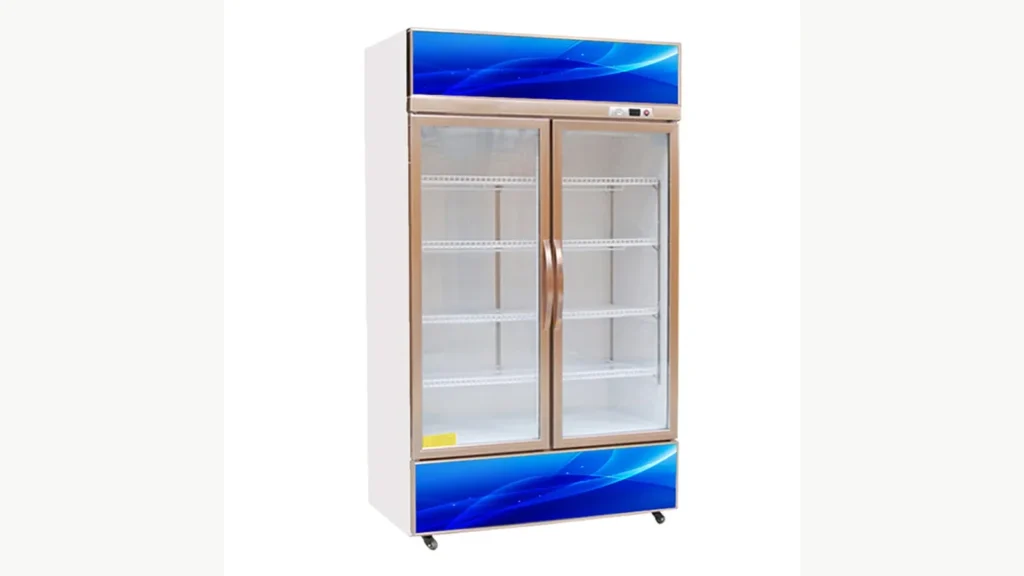
The current beverage-cooler range lists 92 W for the 400 L one-door model, 148 W for the 875 L two-door model, and 218 W for the 1300 L three-door model. These values belong on a model and electrical schedule, but they are not daily energy-consumption figures and cannot calculate an electricity bill by themselves.
Rated input is one verified field in a larger decision. Buyers still need the exact model, destination voltage and frequency, plug, site circuit review, operating conditions, door-opening pattern, temperature requirement, and a defined method for estimating or measuring energy use.
Keep Watts Attached to the Exact Model Row
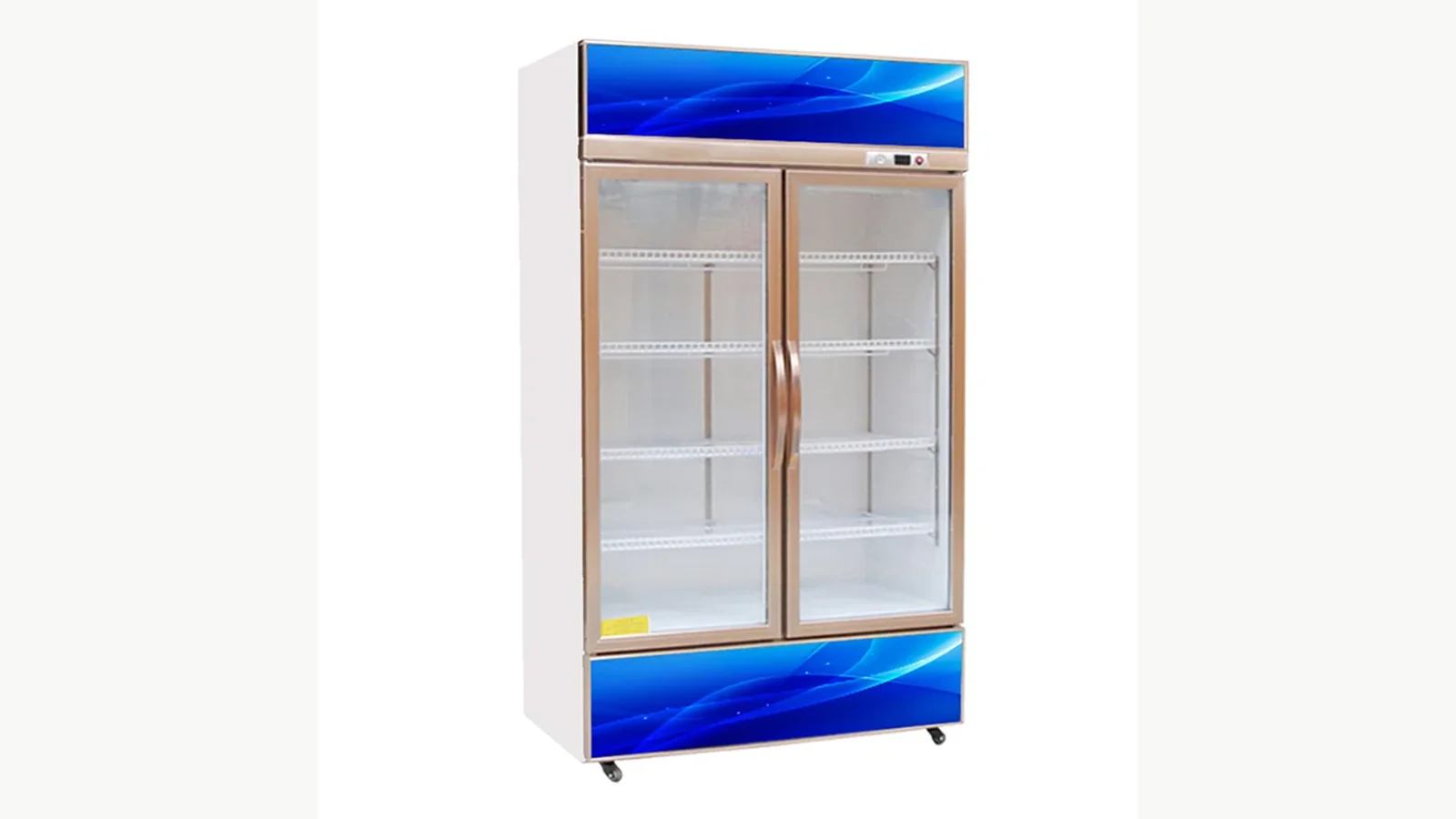
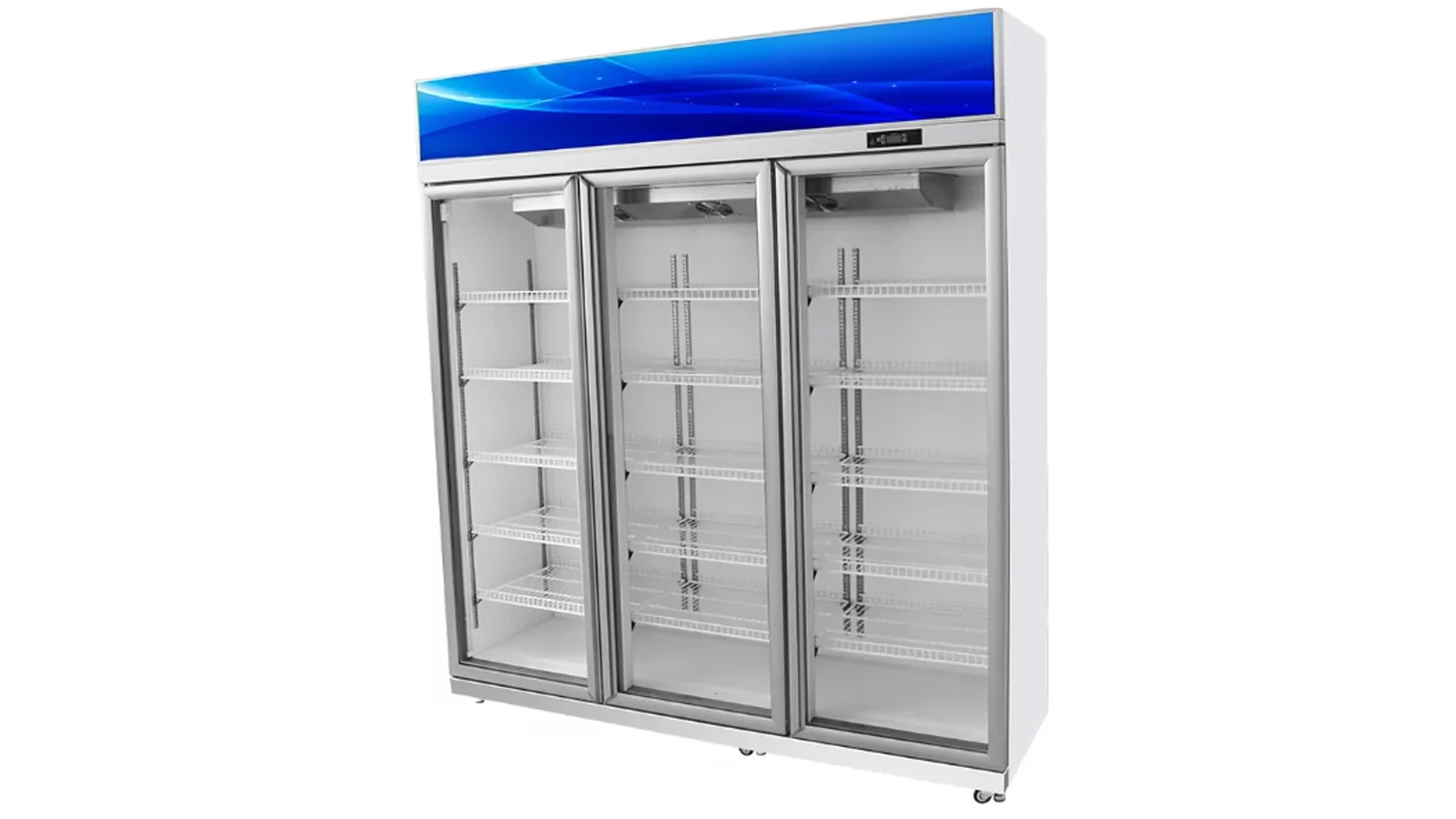
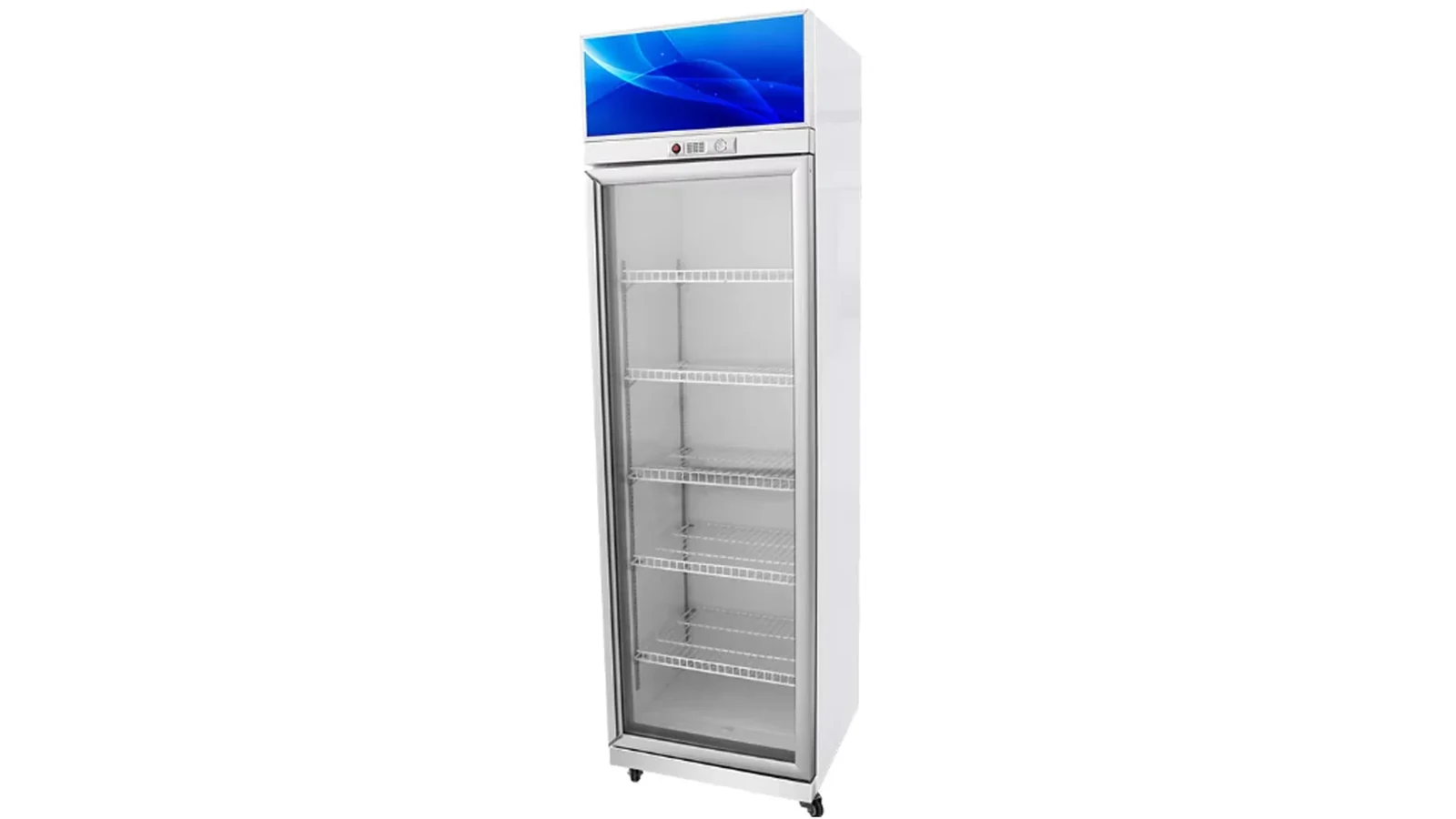
The current commercial beverage cooler product page lists three upright glass-door models with direct cooling, LED lighting, and a 0–10°C temperature range:
| Listed model | Door count | External dimensions | Internal dimensions | Listed input power | Listed net weight |
|---|---|---|---|---|---|
| 400 L | 1 | 600 × 620 × 2050 mm | 520 × 510 × 1530 mm | 92 W | 40 kg |
| 875 L | 2 | 1200 × 620 × 2050 mm | 1120 × 510 × 1530 mm | 148 W | 85 kg |
| 1300 L | 3 | 1800 × 620 × 2050 mm | 1725 × 510 × 1530 mm | 218 W | 120 kg |
This is a purchasing comparison, not a promise that a larger cabinet always uses a fixed amount more energy in every store. The model row gives a rated electrical input and cabinet identity. Real consumption depends on time and operation.
The published beverage cooler RFQ guide for importers keeps door count, voltage, plug, and light-box choices on the inquiry. Add the listed wattage only after the exact model has been identified.
Understand What Rated Input Does—and Does Not—Say
Watts describe a rate of power at a stated rating condition. Energy is power over time, commonly recorded in kilowatt-hours. Multiplying the listed watts by 24 hours assumes that the same input is drawn continuously for the entire day. That assumption is not established by the product row and should not be presented as a measured daily consumption figure.
A beverage cooler can cycle, face changing ambient conditions, and experience different door openings, product loads, set points, maintenance conditions, and supply conditions. Accessories or custom configurations may also change the approved electrical record. Without verified duty-cycle or measured energy data under defined conditions, a daily kWh or monthly bill is an estimate built on assumptions.
Use clear labels in commercial documents:
- listed input power for the supplier’s current model-row value;
- connected-load planning value only when accepted by the project electrical reviewer;
- estimated energy use only with a written calculation method and assumptions;
- measured energy use only with meter details, test period, operating conditions, and exact unit identity;
- energy cost only after applying the correct local tariff structure and currency.
A simple watts-times-hours figure is an estimate, not a test result.
Build a Model-Level Electrical Schedule
For every cabinet, record the supplier model, capacity, door count, rated input, voltage, frequency, phase if applicable, plug, cable information where supplied, and destination. Attach the current technical sheet and nameplate proof to the schedule revision.
The schedule should also identify quantity. Ten 92 W cabinets are a different connected-load planning problem from one cabinet, even though the individual model value is unchanged. The buyer’s qualified electrical professional should review circuit allocation, protective devices, outlet locations, local rules, and any diversity assumptions.
Plug type cannot be inferred from an image or country name. State the destination requirement and ask the supplier to confirm the complete electrical set for the exact order. Reconcile the quotation, technical sheet, artwork where relevant, nameplate proof, and packing list before shipment.
Use the Rated Input to Screen Options, Not Rank Efficiency
The three listed values help buyers check whether a quotation matches the expected model row. If an offer for the 400 L one-door cabinet states 218 W without an explained configuration change, that is a reconciliation question. It is not automatically evidence that the product is wrong; ask for the current model and technical record.
Likewise, dividing litres by watts does not establish real-world energy efficiency. Capacity, cabinet geometry, door area, control logic, ambient rating, insulation, lighting, test standard, and duty cycle are not captured by that ratio. Use verified efficiency or energy-test data only when the supplier provides the applicable standard, test conditions, exact model, and report scope.
Model selection should begin with the merchandising and operating requirement: product category, package dimensions, shelf plan, door count, refill access, footprint, delivery path, and required chilled range. The beverage cooler door-count and shelf-layout guide supports that decision. Rated input then follows the selected model into electrical planning.
Create an Honest Energy-Cost Estimate
If a buyer needs a budget estimate before measured data is available, keep assumptions visible. A useful worksheet separates:
- exact cabinet model and quantity;
- listed rated input in watts;
- assumed operating or equivalent-load hours, with its source;
- estimated auxiliary loads if verified and relevant;
- local tariff, including time bands, fixed charges, taxes, or demand charges where applicable;
- season, ambient, store schedule, and door-use assumptions;
- uncertainty range and the plan to replace assumptions with measurements.
Keep any assumed duty cycle visible beside the formula. Show low, expected, and high scenarios only if the business has a defensible basis for them. A precise-looking result built on an invented percentage is not better evidence.
For operating verification, use a suitable meter and a defined observation period under the direction of qualified personnel. Record model and serial identity, voltage, set point, ambient conditions, product load, door openings, defrost or control events where observable, and any maintenance issue. Short tests may miss weekly or seasonal patterns, so state exactly what the period can support.
Keep Chilled Application and Cabinet Configuration Visible
The listed beverage coolers use direct cooling and a 0–10°C range. That distinguishes their current product identity from a chest freezer intended for frozen storage. A freezer energy assumption cannot be moved onto a glass-door cooler, and a colder project requirement cannot rename the cabinet as a freezer.
The guide to direct-cooling beverage-cooler configuration evidence shows how to verify the cooling description on the quotation and technical sheet. The interior-dimensions package-facing test keeps usable merchandising checks separate from nominal litres and watts.
When a buyer asks for a custom door, light box, logo, shelf arrangement, controller, or electrical set, request a revised technical record. The base model’s input value requires reconfirmation for the custom configuration. The approved order should carry the exact value that applies to the released configuration.
Reconcile the Unit at Receiving and Commissioning
At receiving, compare the cabinet model, capacity, door count, nameplate input, voltage, frequency, plug, serial or batch identity, and packing list. Photograph the full cabinet and nameplate without exposing any unrelated sensitive information. Hold discrepancies for review before connecting or distributing the unit.
At commissioning, qualified personnel should verify the site supply and follow the manufacturer’s documented procedure. Record initial settings and any observation that could affect later energy interpretation. A dirty condenser, damaged door seal, blocked airflow, unusual loading, or repeated door opening can make a later comparison misleading even if the model is correct.
The final handover should distinguish the supplier’s rated field, project electrical approval, and any site measurement. That prevents a buyer from using an estimate as a warranty baseline or comparing meters from different conditions as if they were equivalent tests.
Send a Complete RFQ Instead of Asking for “Low Power”
For a useful quotation, send the exact 400 L, 875 L, or 1300 L model requirement; quantity; destination; voltage, frequency, and plug; intended chilled product; temperature requirement; door and shelf plan; external and internal dimension checks; delivery constraints; and any custom features. Ask the supplier to confirm the listed input for the final configuration and provide the applicable technical document.
If energy cost matters, also state the store schedule, local tariff, planned measurement method, and which assumptions still need verification. Ask for model-specific energy evidence under defined test conditions if it is available. A wattage field cannot guarantee an electricity bill.
That approach uses 92 W, 148 W, and 218 W correctly: as traceable model facts within a controlled selection and electrical-planning process—not as invented monthly savings.