
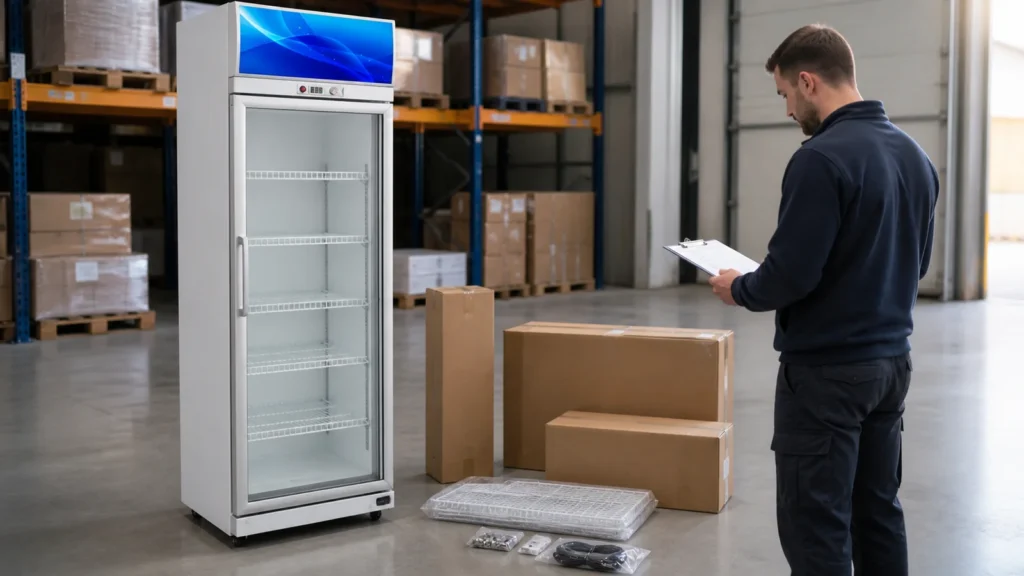
A beverage cooler can arrive as one large cabinet plus shelves, supports, documentation and other model-specific loose items. If a distributor checks only the cabinet count, parts from one door configuration can be placed with another or an exception may be discovered only at dealer delivery. Packing-list reconciliation should begin with package identity, preserve unopened evidence where required, count and photograph model-specific items, isolate mismatches, and create a dealer handoff that names the exact cabinet and included parts.
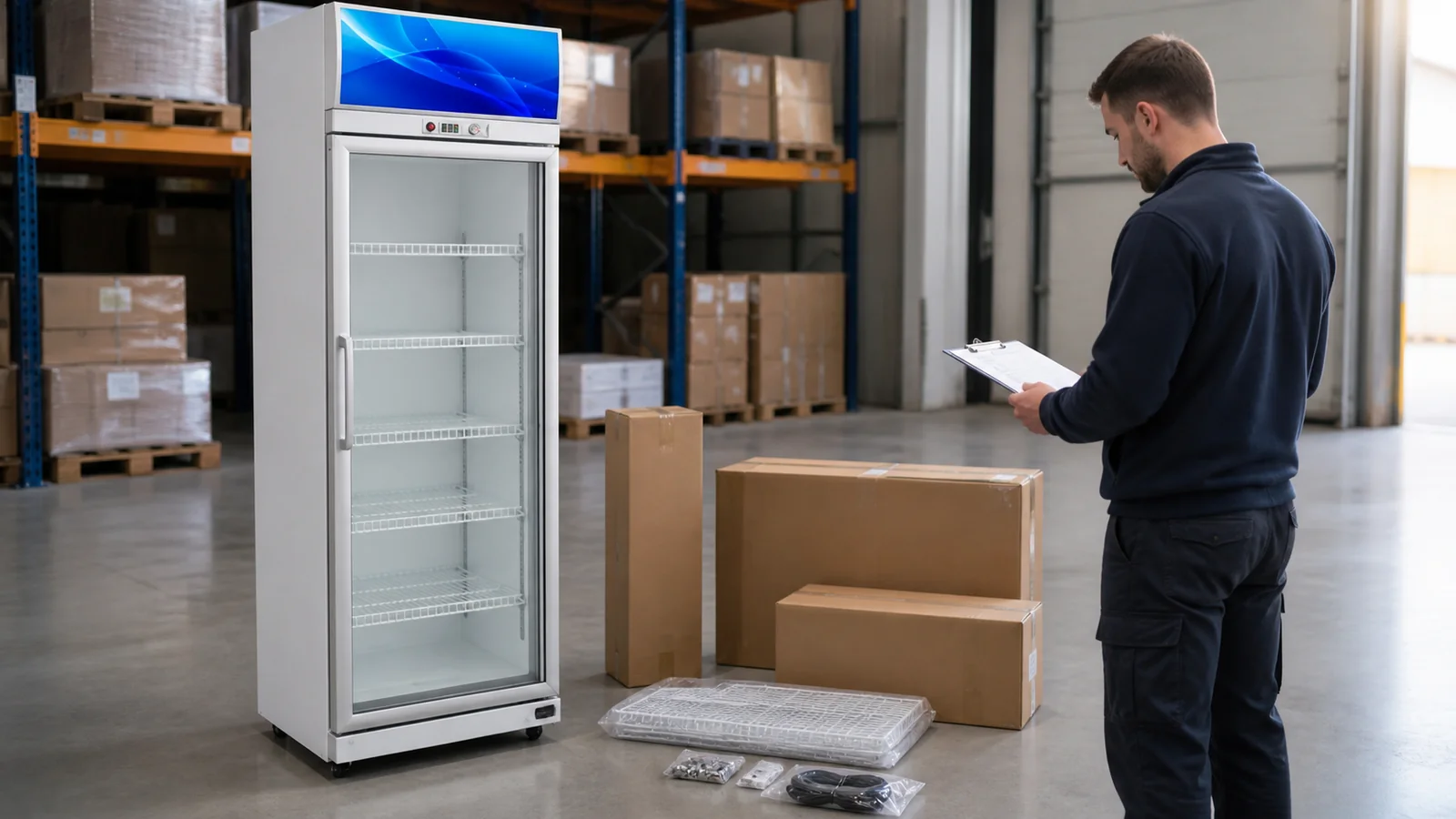
Match Shipment, Carton, and Cabinet Identity
Record purchase order, packing list, shipment reference, pallet or carton ID, beverage-cooler model, door count, cabinet quantity and visible labels. Compare the physical unit with the current beverage cooler order rather than recognizing it only by size or light-box appearance.
Keep single-, double- and three-door items separated. The current product range lists distinct capacities and outer sizes by configuration, so loose parts should never be assumed interchangeable.
Preserve Arrival Evidence
Photograph external packing, labels, orientation, impact indicators if legitimately supplied, glass protection, corners, base and any visible damage before opening. Record who received the package and whether carrier or supplier procedures require joint inspection.
Never discard straps, foam, bags or labels until exceptions are closed. Opening should follow the approved handling method and protect the glass door and cabinet.
Use a Model-Specific Packing List
The list should state every included item by part description, part number where available, quantity and cabinet association. It may include shelves, shelf supports or clips, keys or documentation only when the exact model packing list says so. Never add a generic accessory expectation from another cooler.
Mark each line present, short, excess, damaged, wrong model, unidentified or inspection pending. Photograph each loose-part group beside a cabinet ID card without covering product labels.
Inspect Without Installing Unverified Parts
Review shelves for count, visible shape and finish, supports for identity and quantity, glass and door areas for visible condition, and documents for model match. Never force a shelf, substitute a similar clip or operate technical systems merely to close the count.
If fit verification is authorized, use the exact model guidance and qualified personnel. Keep missing-part and damaged-part issues separate from cabinet performance.
| Reconciliation Level | Evidence | Exception Route |
|---|---|---|
| Shipment | Order and packing-list identity | Document mismatch |
| Cabinet | Model, door count, label, package | Wrong or unidentified unit |
| Loose parts | Part, quantity, cabinet link | Short, excess or wrong item |
| Condition | Photos before and after access | Damage review |
| Dealer handoff | Final included list and status | Open item disclosed |
Keep Parts With the Correct Cabinet
After count, place shelves, supports and documents in a protected package labeled with cabinet model and unit ID. If parts are stored separately, use a warehouse location and custody register. Never create a common unlabelled bin for supports from several models.
For multiple identical cabinets, preserve unit or batch association where required by the distributor. For different door counts, physical segregation is essential.
Resolve Exceptions Before Dealer Dispatch
Create one exception line per missing, excess, damaged or unidentified item. Attach model, package and part evidence; requested supplier action; temporary disposition; owner and due date. Never borrow a part from another dealer's cabinet without a controlled allocation and record.
If onward delivery must proceed with an open item, the commercial and service teams should document what is missing, who will supply it, and how the dealer receives the update.
Issue a Dealer Handoff Pack
Provide cabinet identity, final packing-list reconciliation, included parts, documents, visible condition record, open exceptions, handling notes from the model documentation and contact route. The dealer should confirm receipt before installation or store setup.
Update distributor inventory for cabinet and parts separately. A closed packing count becomes the baseline for later shelf or replacement-part requests.
Use a Two-Stage Seal and Loose-Part Check
Stage one verifies package identity and external condition before opening. Stage two occurs only after authorized access and records the first internal view, shelf pack, support pack, documents and any model-specific loose items. Give each stage a date, person and photo index. This protects evidence when a shortage could have occurred before receipt or during warehouse handling.
For repeated cabinets, use a cabinet-level reconciliation sheet rather than one total for the shipment. If twenty shelves are present across five units, the distributor still needs to know whether each exact cabinet has its required set. Seal or close the reconciled loose-part package with a cabinet ID and count.
Before onward dispatch, a second person checks the cabinet label and attached parts package against the dealer delivery note. Record any approved borrowed, replacement or backordered item openly. This small independent check prevents warehouse totals from hiding a unit-level shortage at the dealer site.
Close Warehouse Custody With a Cabinet-Level Handoff
The warehouse releases each cabinet with its own reconciled parts pack, condition status, document set and open-exception list. The dealer delivery note should repeat model and door count rather than only cooler quantity. Any backordered shelf or support keeps an owner and due date. Unit-level closure prevents a correct shipment total from hiding one incomplete cabinet. Ask the dealer to countersign the parts pack and open-item status at receipt, creating a clear custody boundary before store installation or merchandising begins.
Reconcile Documents and Artwork Alongside Physical Parts
Check operating documents, model sheets, labels, light-box artwork proof or other approved files only when they belong to the order. Record language, revision and cabinet association. A correct shelf count does not close a shipment if the wrong model document or obsolete artwork accompanies it. Keep document exceptions in the same cabinet-level handoff, then route technical or artwork approval to the responsible team. This prevents physical receiving and commercial documentation from closing on different versions. Scan or photograph document identity when permitted and store it with the cabinet record; loose paper separated from the unit should never be reassigned because the cover image looks similar. At dealer dispatch, place the confirmed documents in the designated protected pack and record that location, allowing receiving staff to find them without unpacking unrelated shelf or support bundles.
Buyer Checklist
- Match order, shipment, carton, model, and door count.
- Photograph external packaging and labels before opening.
- Use the exact model packing list for every expected item.
- Count and inspect loose parts without forcing installation.
- Keep parts protected and linked to the correct cabinet.
- Resolve or disclose exceptions before dealer dispatch.
- Issue a final cabinet-and-parts handoff record.
Frequently Asked Questions
Do all beverage coolers include the same shelves and parts?
No. Use the current packing list for the exact model and door configuration.
Can spare clips from another model fill a shortage?
Only use supplier-approved compatible parts with a controlled allocation record.
Should the distributor operate the cooler during packing reconciliation?
Packing reconciliation is not commissioning; follow qualified model-specific procedures for any technical operation.
Related Product or Reading
Use the beverage cooler delivery-path guide before the reconciled cabinet is dispatched to the dealer site.
Discuss the Exact Project
Send IceAgeFreeze the order, packing list, model and door count, cabinet labels, external and internal photos, shelf and support counts, document status, and exception list.