
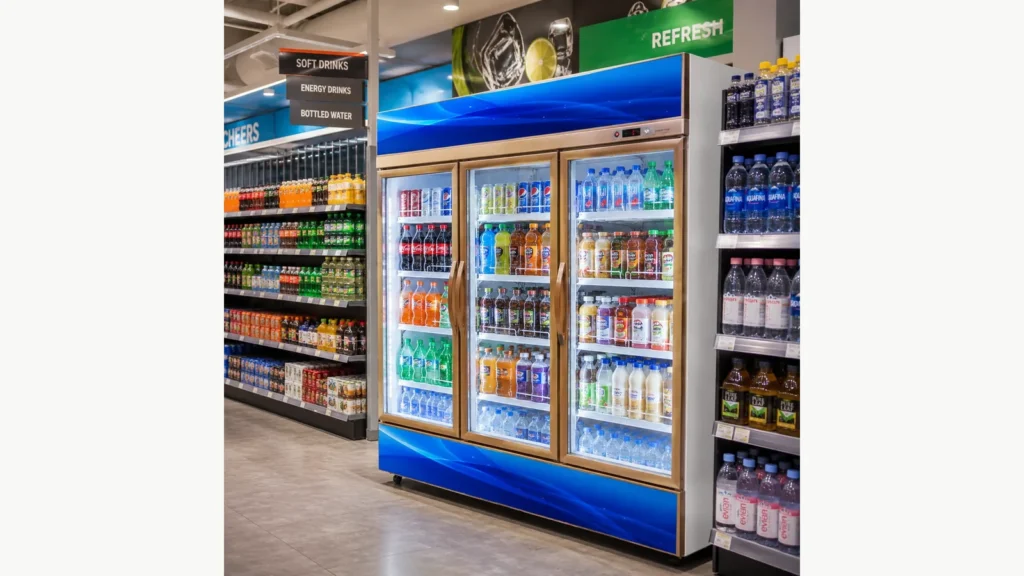
The listed 400 L, 875 L and 1300 L beverage coolers share the same 510 mm interior depth and 1530 mm interior height, while interior width increases from 520 mm to 1120 mm and 1725 mm. That makes width the obvious first comparison—but it still does not tell a buyer how many bottles, cans or dairy packs will fit.
Use the published interior dimensions to build a physical package-facing test. Include shelf hardware, air gaps, door mullions and replenishment space. Approve the final layout against the current model drawing or sample, not a simple volume calculation.
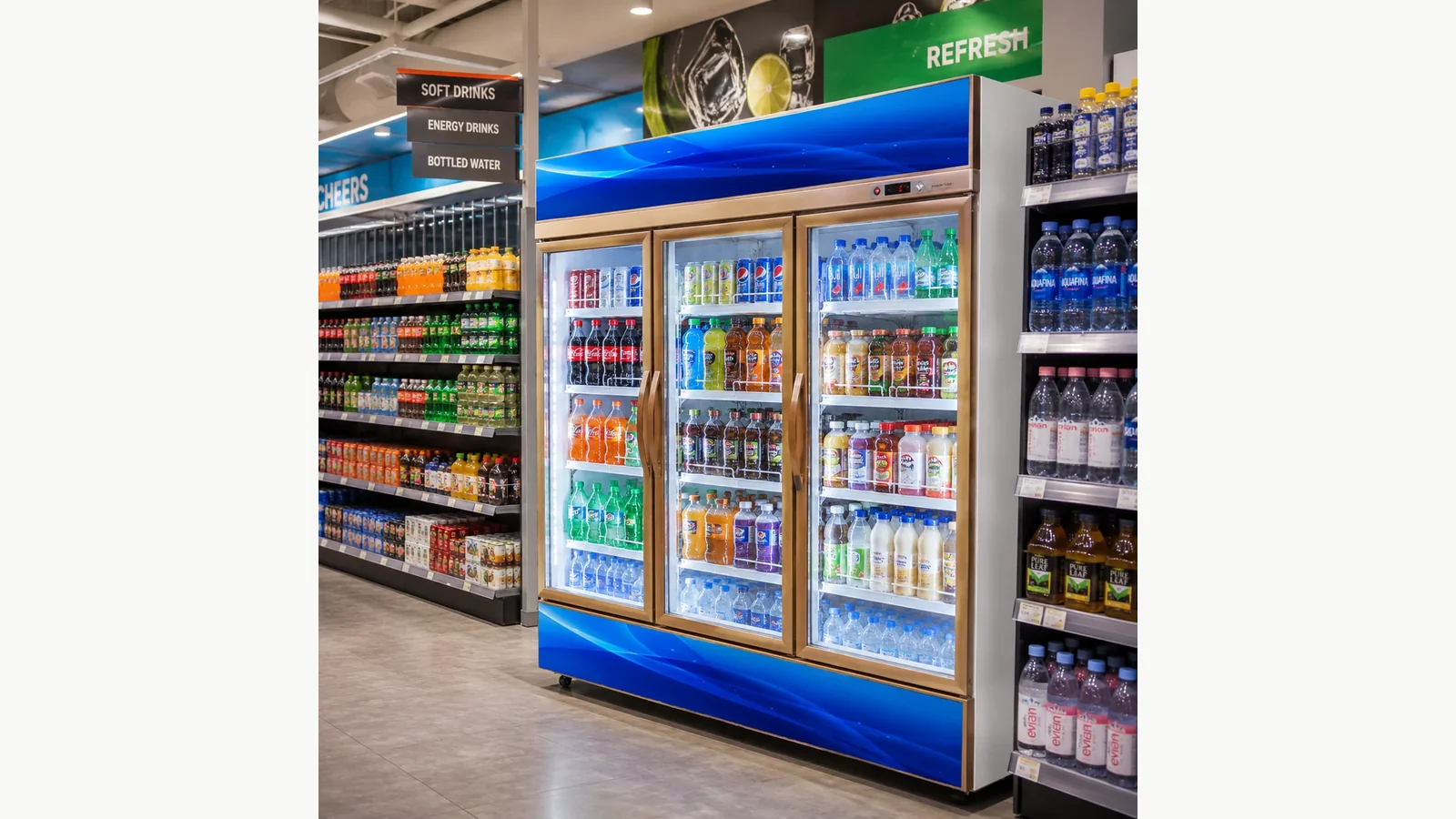
Compare the Listed Inside and Outside Dimensions
The exact commercial beverage cooler product page publishes these three models:
| Listed capacity | Door format | Outside dimensions (W × D × H) | Inside dimensions (W × D × H) | Listed power | Net weight |
|---|---|---|---|---|---|
| 400 L | Single door | 600 × 620 × 2050 mm | 520 × 510 × 1530 mm | 92 W | 40 kg |
| 875 L | Double door | 1200 × 620 × 2050 mm | 1120 × 510 × 1530 mm | 148 W | 85 kg |
| 1300 L | Triple door | 1800 × 620 × 2050 mm | 1725 × 510 × 1530 mm | 218 W | 120 kg |
The same record lists a 0–10 °C temperature range, direct cooling, LED lighting and five-plus adjustable shelves. Confirm current voltage, frequency, plug, refrigerant, controller, shelf count, shelf loading, door direction, light-box artwork, packing and test conditions on the quotation.
The outside dimensions belong in the delivery and floor plan. The inside dimensions start the merchandising test. Neither set replaces the other.
Why Nominal Litres Cannot Equal Sellable Facings
Nominal capacity is useful for model identification, but a merchandising plan needs package geometry. A 330 ml can, 500 ml bottle, one-litre carton and wide dairy tub use the same cabinet differently. Door frames and mullions can also interrupt what appears to be continuous internal width.
Avoid dividing 400, 875 or 1300 litres by package volume and publishing the result as capacity. That ignores unusable gaps, shelf edges, air circulation, product orientation and operating access. Instead, count facings from a controlled shelf mock-up.
Build a Representative Package Set
Choose real items from the target market. A practical set includes:
- the narrowest and widest bottle;
- the tallest bottle or carton;
- the deepest tray or multipack;
- a round can and a square carton;
- one fragile or easily tipped package;
- the actual shelf-edge label or price strip.
Measure package width, depth and height in the selling orientation. Add realistic manufacturing tolerance and any required divider. If labels must face forward, test the exact orientation rather than rotating products to make a theoretical count work.
The existing beverage-cooler shelf-planning guide explains how to separate product mix, shelf pitch and replenishment decisions. Use that workflow with the model dimensions below.
Test the 400 L Single-Door Model
The 400 L model lists 520 mm of internal width, 510 mm depth and 1530 mm height. Start with one full-width shelf template. Place the widest planned package first, then add the main fast-moving SKU. Record:
- facings that sit fully on the shelf;
- space at both side boundaries;
- package depth plus rear operating gap;
- vertical clearance for removal;
- visibility through the single door;
- shelf-edge label position;
- restocking hand clearance.
A single-door cabinet can simplify SKU discipline in a small footprint, but the merchandising mix must fit the 520 mm listed internal width. Avoid creating a plan that depends on packages overhanging the shelf edge.
Test the 875 L Double-Door Model
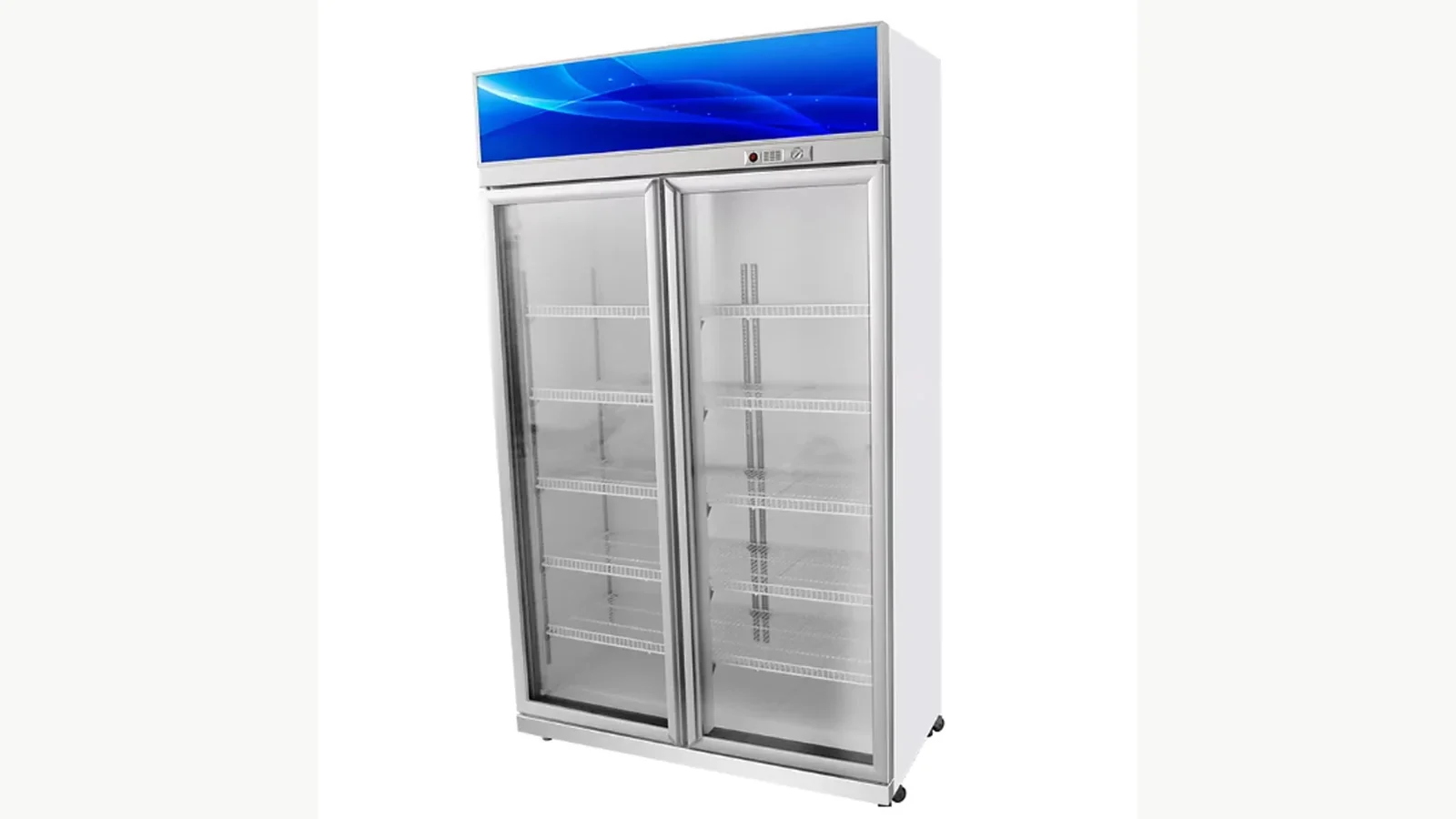
The 875 L model lists 1120 mm internal width with the same 510 mm depth and 1530 mm height. Treat the full width as one uninterrupted merchandising lane only after the current interior drawing confirms the centre structure and shelf arrangement.
Build the test by door bay. Give each bay a product role—such as water and soft drinks, or dairy and juice—then check whether the centre boundary cuts a key facing. Record the replenishment sequence so one open door does not force staff to reach across the other bay.
If both bays carry the same fast-moving product, decide whether the team will mirror the plan or maintain one continuous sequence. Put that choice on the planogram instead of leaving it to store interpretation.
Test the 1300 L Triple-Door Model
The 1300 L model lists 1725 mm interior width, again with 510 mm depth and 1530 mm height. A larger width creates more assortment options but also more opportunities for inconsistent shelf pitch, mixed labels and slow replenishment.
Plan three door zones first. Assign categories, temperature-sensitive handling rules and replenishment ownership. Then test the real packages in each zone. Check whether a promotional block crosses a door boundary and whether that makes labels or access awkward.
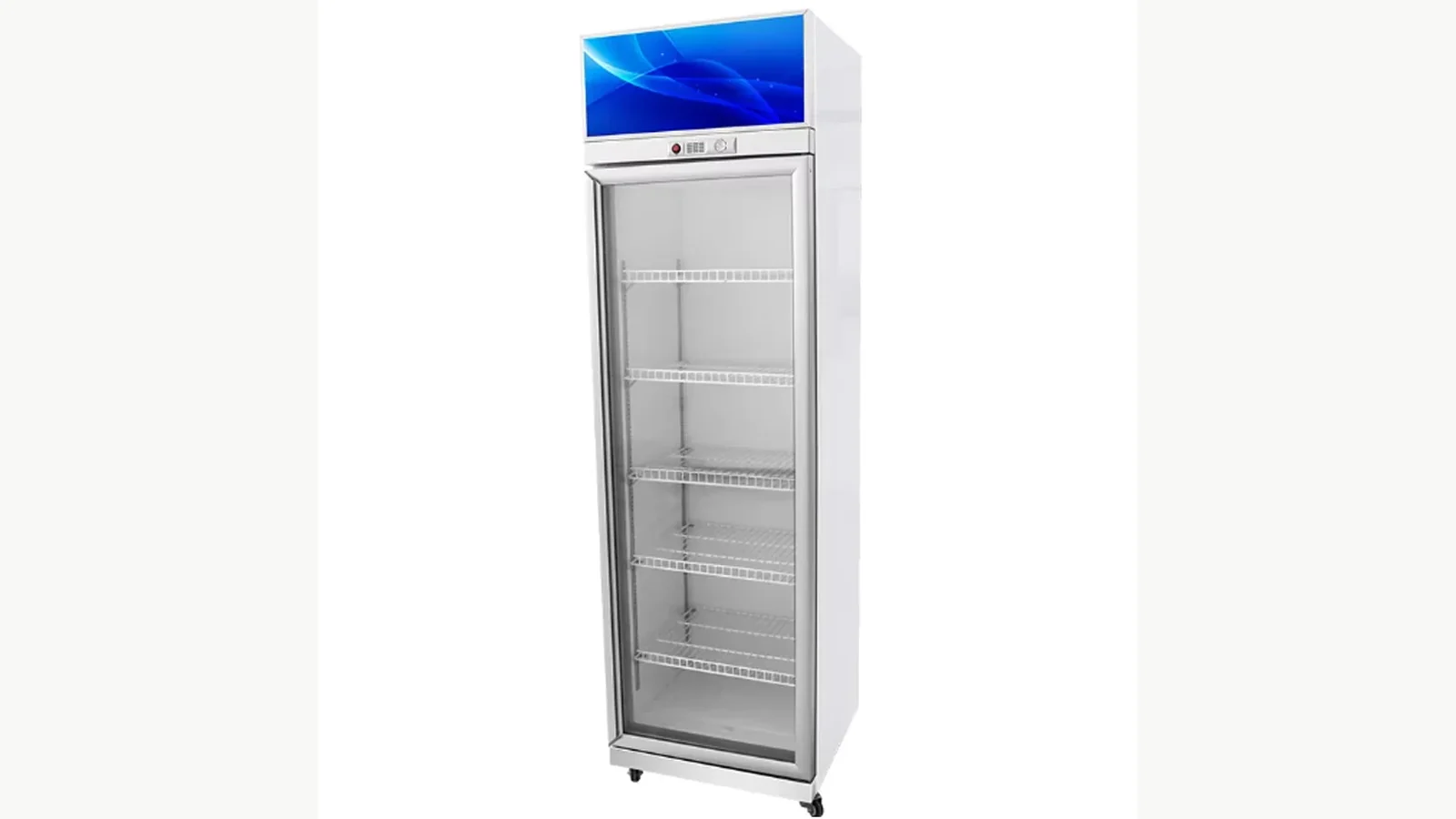
The photo shows the three-door structure and shelf framework. It does not prove a facing count or permitted shelf load. Those values require the current shelf specification and a physical layout.
Convert the Test Into a Controlled Facing Sheet
For every model being compared, record:
| Field | What to capture |
|---|---|
| Model | 400 L, 875 L or 1300 L plus supplier model code |
| Door/bay | Single, left/right, or left/centre/right |
| SKU | Exact package and revision |
| Package size | W × D × H in selling orientation |
| Planned facings | Count physically demonstrated |
| Shelf level | Number or height position |
| Rear/top gap | Actual retained space |
| Shelf load | Supplier-confirmed limit and planned mass |
| Label | Price strip and front-facing requirement |
| Approval | Photo, date and reviewer |
Photograph each approved shelf with a scale or dimension reference. Keep a copy of the package list and note substitutions. A new bottle shoulder, cap or multipack can change the result even when nominal volume stays the same.
Keep Airflow and Loading Outside the Arithmetic Shortcut
Direct cooling and a stated temperature range cannot make every packing density acceptable. Follow the supplier’s current guidance for air paths, load lines, shelf spacing and commissioning. Keep returns, fans and sensors clear, and avoid using products to bridge unsupported shelf areas.
Calculate planned shelf mass separately from the facing count. Obtain the permitted shelf load in writing. The cabinet net weights—40 kg, 85 kg and 120 kg—describe the listed empty equipment, not the loaded floor demand. Add product, shelves and any site-specific base arrangement when planning the floor.
Put Model and Layout Evidence on the RFQ
Send the selected model, outside and inside dimensions, package matrix, planned facings, shelf levels, maximum planned shelf mass, door-zone plan and label requirements. Add power supply, plug, ambient/test conditions, branding, packing, destination and delivery route.
Ask for a current drawing that identifies usable shelf geometry and door/mullion interfaces. If the proposed production model differs from the published record, require a revised facing test before approval.
Choose the Model With the Best Verified Layout
The 400 L, 875 L and 1300 L progression is not simply small, medium and large. It is a change from one merchandising bay to two and three, with listed internal widths of 520, 1120 and 1725 mm. The best model is the one whose real packages, shelf loading, access and store route are verified—not the one with the largest nominal litre number.
Send ICEAGE the destination, model shortlist, package dimensions, facing targets, shelf loads, door-zone plan, electrical details, branding and delivery constraints. Request a current schedule, drawing and sample-layout review tied to the quotation revision.