
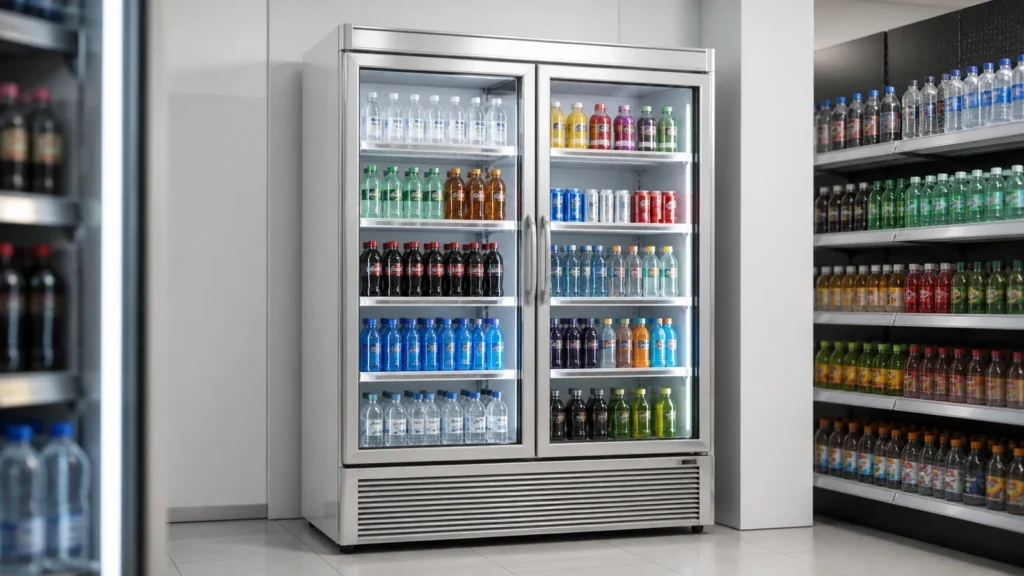
A new beverage cooler is not ready the moment it is plugged in. First use is a short sequence of checks — what arrived, where the cabinet stands, how level it is, what the power connection requires, and how the cabinet behaves before stock goes in. Stores that skip this sequence usually find the problem later, when the cooler is full of drinks and the fix is more expensive.
This guide follows one order: inspect, place, power, cool down, load, verify, record. Every model-specific value — operating range, power details, standing time — comes from the actual product documentation, not from this article. Where a step needs a qualified person, the article says so instead of pretending a store checklist replaces one.
Inspect What Arrived Before Powering Anything
Start with the cabinet, not the plug. Check the glass door, frame, body finish and visible labels against the order, and confirm the door opens and closes smoothly with the protective film still intact. The protective film and glass-door inspection guide covers the receiving-stage check in detail; film is usually removed during setup, and removal is a good moment to catch scratches that were hiding underneath.
Then reconcile the contents: shelves, supports, keys, manuals and any loose parts against the packing list. The packing-list reconciliation guide is written for the distributor warehouse, and the same discipline applies at the store. Missing shelves or supports discovered after loading is a preventable delay.
Choose the Position Before You Plug It In
Placement decides three things at once: whether the door can open fully, whether the cabinet can breathe, and whether customers and staff can move around it.
- Level floor and level cabinet. A glass door on an unlevel cabinet can drift or not close squarely. Level the cabinet using its feet or supports before loading; a spirit level across the top and front edges is the practical check.
- Door swing and aisle. Map the full swing of each door and keep that arc clear of counters, columns and traffic. A cooler that must be opened half-way is a merchandising failure.
- Airflow and heat. Refrigeration equipment needs air movement around it and rejects heat somewhere. Follow the model's documented clearance requirements for walls, vents and surrounding fixtures; never box the cabinet into a tight corner on the assumption that it will cope.
- Sunlight and heat sources. Direct afternoon sun on the glass or a position beside ovens and hot equipment fights the cabinet's job. The position should be chosen once, before stock and power lock the decision in.
The cabinet also had to get to that position. The delivery-path guide covers doorways, turns and clearances with the listed cabinet dimensions, and the same numbers apply on the store floor.
Confirm Power and Plug Before the First Switch-On
Voltage, frequency and plug type are model and destination facts, not guesses. The beverage cooler RFQ guide lists the electrical fields an order should define, and the first-use check is where they meet the actual wall outlet. If the site supply, socket or protection does not match the model documentation, stop and resolve it with a qualified local electrician rather than adapting the connection.
The same rule applies to any commissioning that the model documentation assigns to qualified personnel. Leveling, plugging and observing are store-side steps; internal technical verification is not.
Run the Cabinet Empty Before Loading
Let the empty cabinet run and stabilize before stock goes in. The time needed depends on the model, the ambient temperature and the store conditions, so the supplier's guidance — not a generic number — controls when loading is reasonable.
During that first run, watch the basics: doors seating flush along the seal line, shelves and supports firm in their clips, any condensation behaving as the documentation describes, and the cabinet reaching its expected operating condition for the empty state. Write down anything unusual with a time. None of this replaces qualified service, but it builds the evidence that makes a service call fast and useful later.
The First Load Matters
Load the first stock the way the cabinet was designed to be loaded: organized, with product behind the natural airflow and sight lines, and without blocking fans, vents, lights or the door path. The shelf planning guide covers shelf arrangement for bottled drinks, dairy and chilled snacks, and the first load is the moment to follow it instead of improvising.
Keep the first load moderate. A full, dense first load on a cabinet that has not proven its behavior in the store turns a simple observation period into a guess about what caused what. Once the store routine is proven, the restocking shelf-map workflow keeps the same arrangement repeatable across shifts.
Verify With Product Inside
The empty run proves the cabinet works; the loaded run proves it works in service. Check that the loaded cabinet holds its expected condition per the store's temperature procedure, that doors still seat after customers open and close them through a day, and that nothing shifted in the shelves. The door-seal observation guide shows how to record seal behavior as evidence rather than memory.
If the store's temperature procedure shows the cabinet is not holding where the model documentation says it should, note when, what changed (new stock, open door, hot ambient), and route it to qualified service with the evidence.
Keep a Baseline Record
The first-use checks should end as a small record: cabinet identity, position, leveling result, power confirmation, empty-run observations, first-load date and the store's temperature procedure result. That baseline is what every later comparison refers back to.
Later changes stay manageable when they are logged against the same record. Shelf positions, for example, change over time, and the shelf configuration change log keeps those changes tied to cabinet, bay and approval — a first-use baseline is the natural starting page of that log.
When to Stop and Get Qualified Help
Some observations are not setup adjustments. If the cabinet will not reach its expected operating condition after a reasonable run, makes unusual sounds, trips protection, shows damage to the glass or frame, or doors will not seat, stop the DIY path and call qualified service with the recorded evidence. A new cooler under warranty is the easiest moment to resolve a fault — and the worst moment to void the picture by continuing to operate it.
Common Questions
How long should a new beverage cooler run before loading stock?
It depends on the model, the ambient conditions and the store environment. Follow the supplier's guidance for the specific cabinet rather than a generic waiting time, and verify the empty run before the first load.
Can a beverage cooler be plugged into any store outlet?
No. Voltage, frequency and plug type are model and destination facts, and the actual supply must match the model documentation. If it does not, a qualified local electrician resolves the mismatch before the cabinet is used.
Should the cooler run 24 hours a day?
That is a store operating decision based on the products, opening hours and the model's documentation. This article makes no energy or cost claims; follow the supplier's operating guidance and the store's own temperature procedure.
Related Reading
- Beverage Cooler RFQ Details for Importers — the electrical and order fields this article checks against the real wall outlet.
- Beverage Cooler Shelf Planning — the shelf arrangement the first load should follow.
- For frozen-product storage, a commercial chest freezer is the separate complementary product. A beverage cooler is chilled display equipment for drinks and chilled goods; a chest freezer is for frozen products, and the two are planned as different store zones.
Send IceAgeFreeze the model and door count, the store position and clearance details, the local supply facts, and any setup questions from the first-use record, and the team can confirm the details against the actual product documentation.