
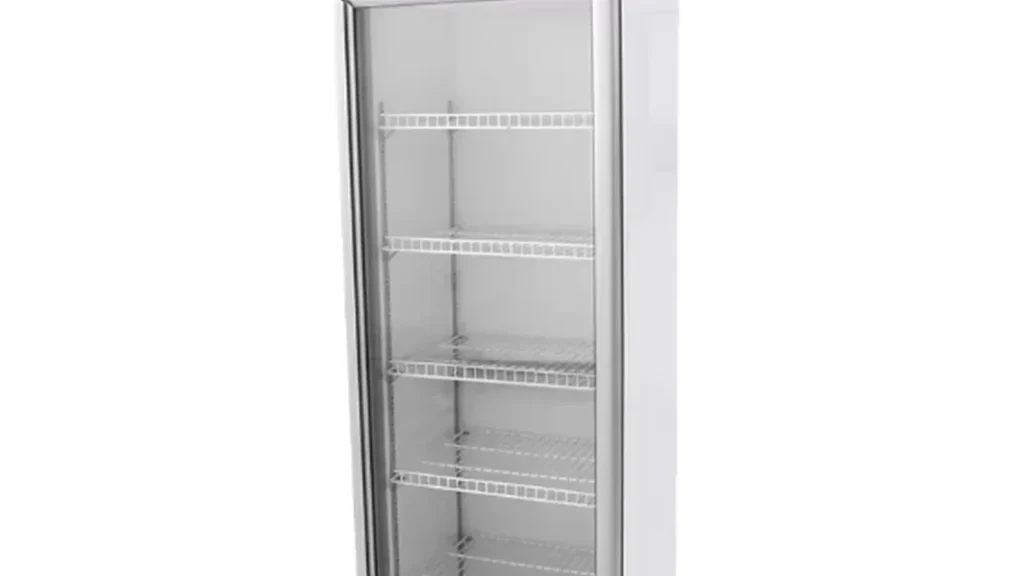
When a retailer compares top-mount vs bottom-mount commercial beverage coolers, the important question is not which compressor location is universally better. It is which cabinet layout fits the store’s ceiling clearance, floor conditions, service routine, customer sightline, product mix and electrical plan.
A top-mount configuration places the refrigeration machinery above the refrigerated cabinet. This can keep the lower service area away from floor dust and may suit a hot or busy retail environment, but the top needs clearance and service access. A bottom-mount configuration places the ventilation and service area near the base. It can be easier for technicians to reach from floor level and can raise the lowest display shelf, but the lower grille is more exposed to dust, cartons and cleaning activity.
The beverage cooler itself remains the same product entity: a glass-door cabinet for chilled drinks, dairy products, juice, water and other chilled retail items. Treat compressor location as one specification alongside door count, shelf layout and the actual store application.
Top-mount and bottom-mount at a glance
| Buyer concern | Top-mount beverage cooler | Bottom-mount beverage cooler |
|---|---|---|
| Machinery location | Above the cabinet | Near the cabinet base |
| Floor-level dust exposure | Usually lower around the machinery | Usually higher around the lower grille |
| Ceiling requirement | Needs clearance above the cabinet | Less dependent on overhead service space |
| Service access | May require overhead access or a ladder | Often reachable from floor level, subject to model design |
| Display consideration | Top cabinet area may need to be kept clear | Lowest shelf and base grille share the lower zone |
| Main planning check | Ceiling, lightbox and overhead obstructions | Floor dust, cleaning route and front clearance |
These are planning tendencies, not a substitute for a model drawing. Cabinet construction, condenser design and service panels vary by supplier and model.
When a top-mount beverage cooler makes sense
Top-mount equipment can be attractive when the store floor is dusty, when the cabinet sits near frequent carton movement or when the retailer wants to keep the refrigeration intake away from the lowest part of the sales area. It can also work well in a back-of-house or institutional beverage zone where the ceiling provides enough clearance for the cabinet and technicians can reach the top safely.
The trade-off is overhead planning. Measure ceiling height, lightbox height, sprinkler or lighting conflicts and the lifting route into the store. Leave the service clearance shown on the drawing. A top-mounted cabinet that fits the floor plan but blocks a beam or sign is not a usable order.
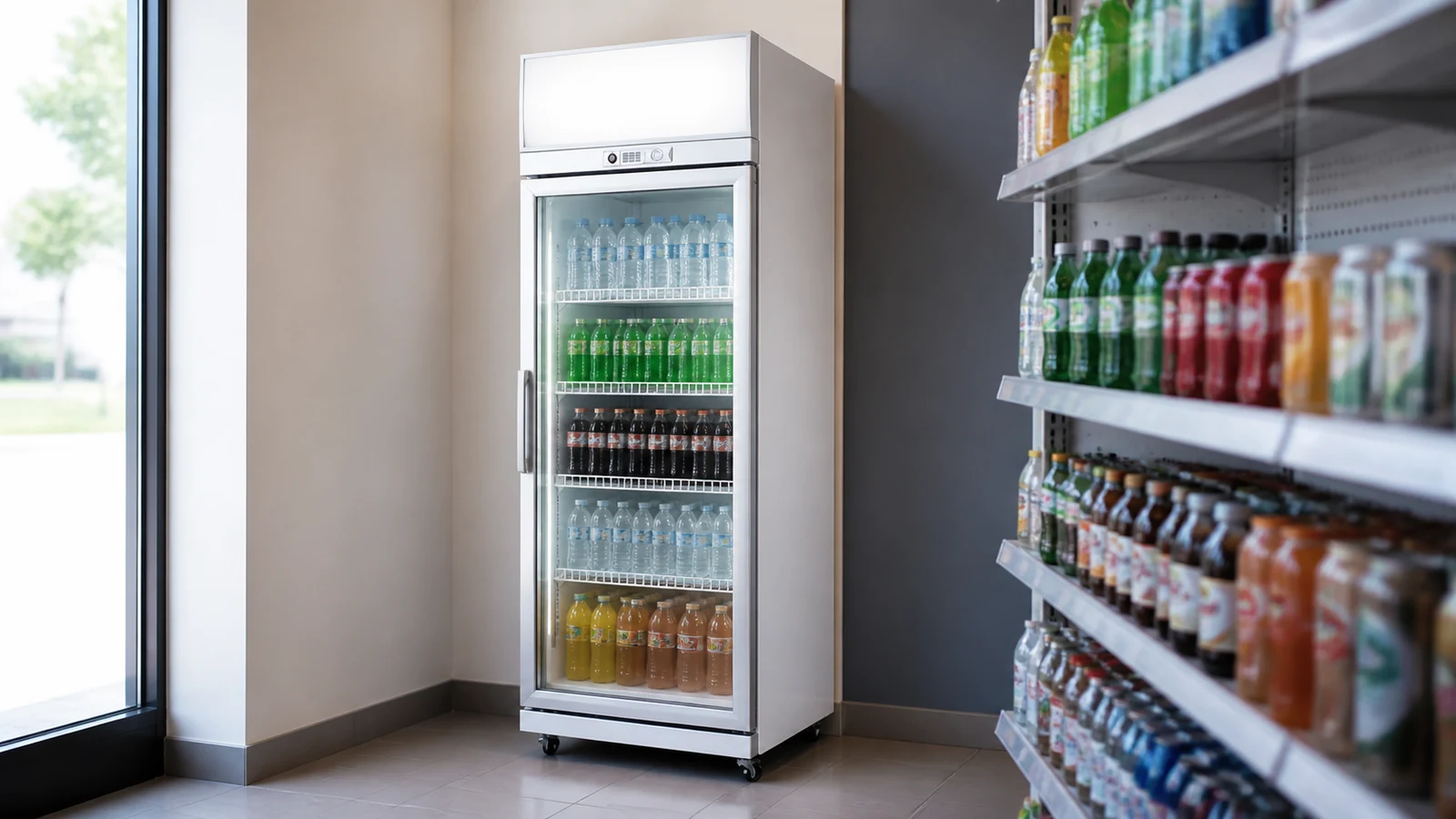
Top-mount can also change the visual balance of a beverage wall. If the cabinet has a top sign or lightbox, decide whether the sign is part of the equipment, a separate store fixture or an optional branding panel. Treat the top section according to the product drawing rather than assuming it is structural, illuminated or suitable for storage.
When a bottom-mount beverage cooler makes sense
Bottom-mount equipment can be practical when service access near the floor is valuable, when the ceiling is low or when the retailer wants the lowest display shelf at a more accessible height. It can also simplify visual access to the top of the cabinet because the machinery is not occupying the overhead section.
The base needs a disciplined cleaning routine. Dust, cardboard fibers and spilled liquid can collect around a low grille, restricting airflow or making service work harder. Plan a clear path for a technician to remove panels and clean the condenser area without moving half the beverage wall.
The base also affects the merchandising conversation. Ask for the internal usable height above the machinery zone, the number and adjustment range of shelves and the clearance needed for door opening. The same nominal door count can display different mixes of cans, bottles and tall containers depending on shelf spacing.
Choose around the retail operating environment
Ceiling and floor conditions
Top-mount buyers should submit ceiling height and overhead obstructions. Bottom-mount buyers should describe floor dust, mop water, pallet traffic and the distance from the cabinet to nearby fixtures. Both configurations need ventilation clearance and should not be boxed into a tight recess unless the product drawing allows it.
Service access
Ask where the technician will stand, which panel opens, and whether the cabinet can be serviced without unloading every shelf. A top-mount design may require a safe overhead method. A bottom-mount design may need the front plinth or grille removed. The best choice is the one the store can maintain consistently, not just the one with the lower quotation price.
Door count and customer flow
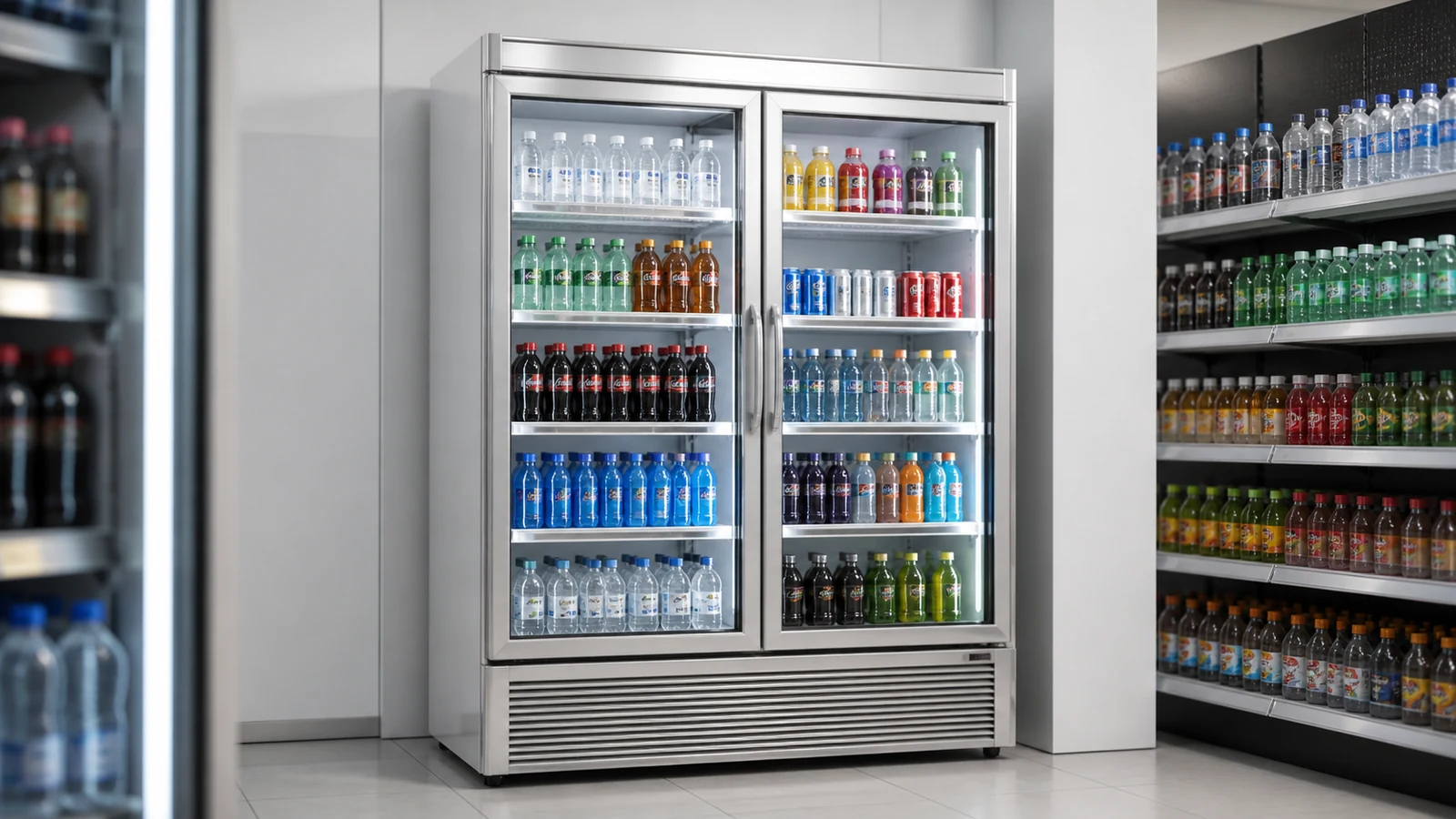
Door count should follow peak demand, product range and available wall length. Single-door beverage coolers can suit compact drink zones or a focused SKU set. Two- and three-door cabinets can provide more display width, but they also increase delivery dimensions, door-clearance needs and restocking volume.
Use IceAgeFreeze’s beverage cooler range to keep the product discussion tied to glass-door beverage display, adjustable shelf layout and retail drink use. The compressor location remains one specification field inside that product family.
Shelf layout and product mix
List the actual package sizes: cans, small bottles, large bottles, dairy cartons or mixed chilled products. A shelf plan should show the number of rows, required vertical clearances and which products need eye-level placement. Leave airflow paths open and avoid designing a display that only works when every shelf is overfilled.
The commercial cooling product page also separates beverage coolers from commercial chest freezers. Keep chilled drink display and frozen-food storage as different purchase decisions even when the same store needs both.
Electrical and quotation details to request
The RFQ should state the cabinet type, door count, dimensions, voltage, plug type, frequency, lightbox or branding needs, shelf quantity, preferred compressor location and destination. Add the intended store environment, delivery route, floor condition and the available ceiling height.
Ask for the model drawing, electrical data, service-clearance drawing and packing dimensions. If the store operates in a warm or dusty environment, describe that environment rather than asking for a generic “heavy-duty” cooler. If the buyer is a distributor, keep the top-mount and bottom-mount variants as separate SKUs so the sales team does not quote the wrong cabinet for a customer’s ceiling or cleaning routine.
Common selection mistakes
Choosing from a product photo alone
A front photo rarely shows the service panel, ventilation clearance or delivery dimensions. Use the drawing and the installation notes.
Treating energy claims as universal
Energy use depends on cabinet size, ambient conditions, door openings, loading, lighting and controls. A top-mount or bottom-mount tendency is not an energy-savings percentage; request model-specific data when operating cost is part of the business case.
Ignoring the service route
If a technician cannot reach the condenser or controller without dismantling the display, the store will postpone maintenance. That is an operating problem regardless of compressor location.
Mixing a beverage cooler with a chest freezer
A glass-door beverage cooler is for chilled display. A commercial chest freezer is for frozen retail products. If both are needed, specify them as complementary equipment, not as interchangeable cabinet types.
Related equipment to plan together
- Beverage coolers for glass-door chilled drink display.
- Commercial chest freezers when the same store also needs frozen-food storage.
- IceAgeFreeze product range when planning a two-zone retail equipment order.
For a quotation, send the store footprint, ceiling height, floor conditions, door count, product mix, electrical supply and compressor-location preference through the IceAgeFreeze contact page. The best choice is the cabinet that the store can install, stock, clean and service without creating a new operational bottleneck.