
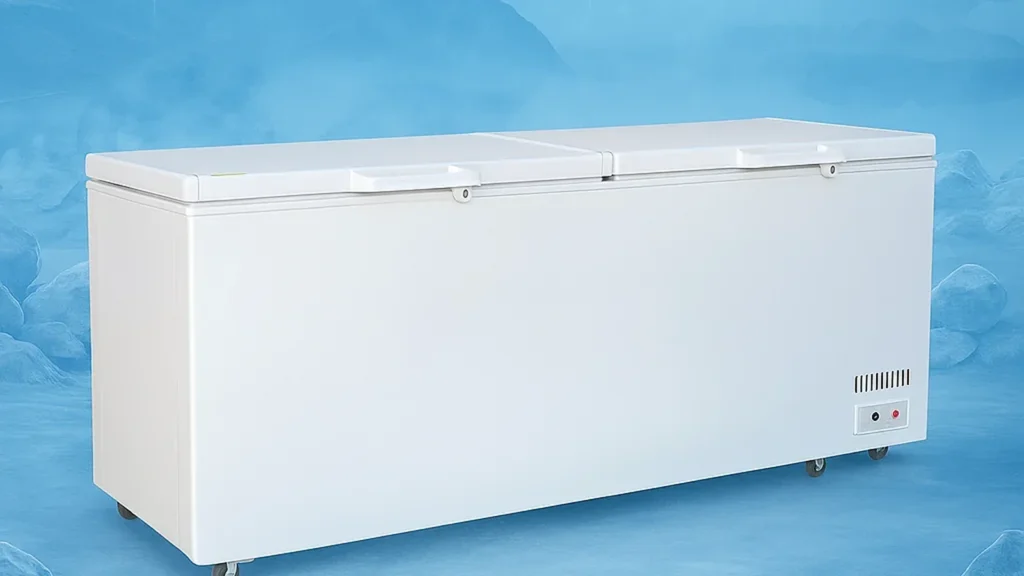
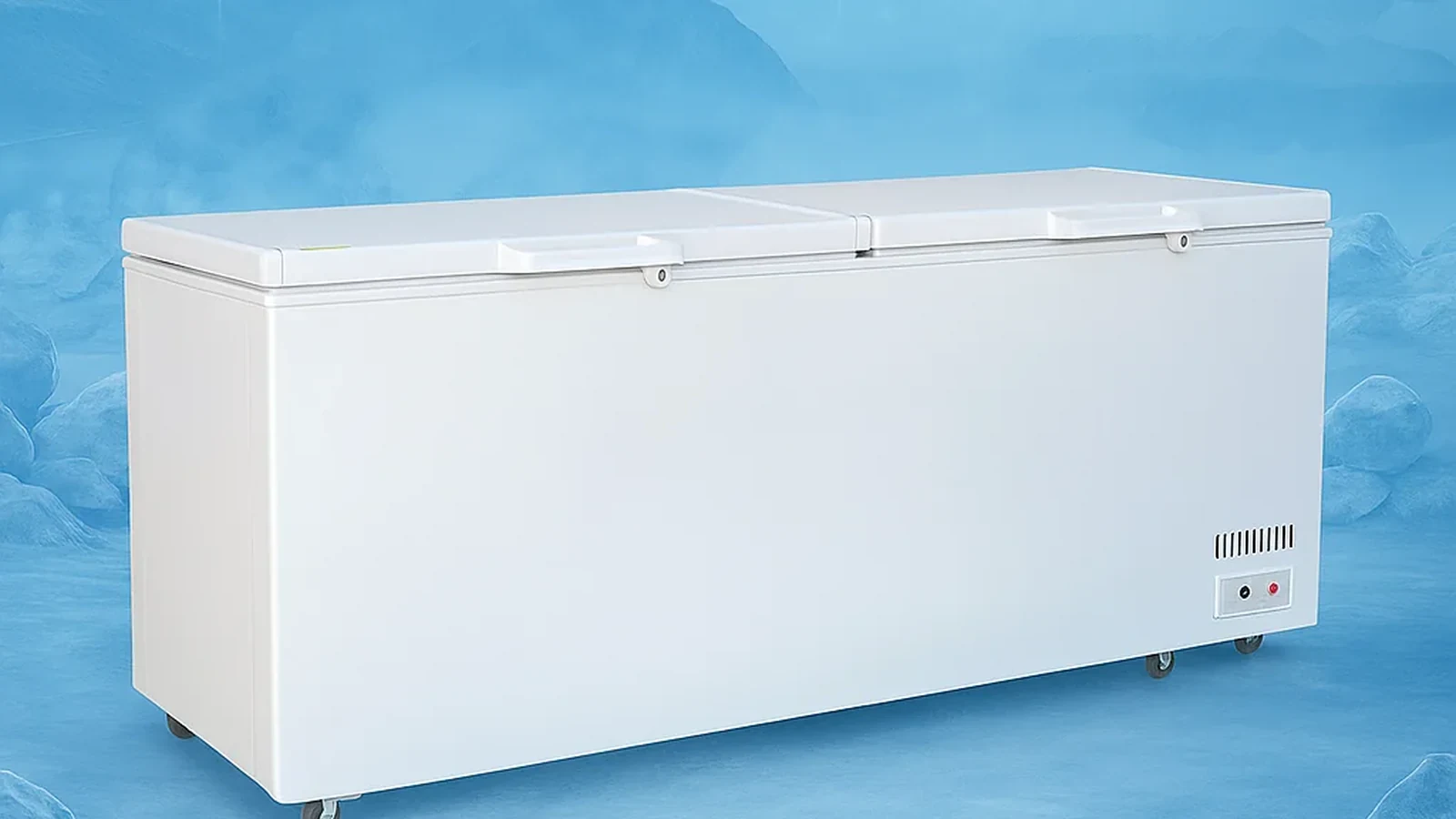
Commercial chest freezers and glass door beverage coolers can both sit in a customer-facing retail area, but they solve different merchandising problems. A chest freezer is for frozen products in a horizontal cabinet. A beverage cooler is for chilled drinks in a vertical glass-door display. Choosing between them starts with the product, not the cabinet appearance.
The short answer
Choose a commercial chest freezer for frozen food, bulkier packs and a low horizontal display zone. Choose a glass door beverage cooler for chilled drinks that customers should see and reach from vertical shelves. If a store sells both categories, the practical answer may be two separate cabinets because the product entities, loading methods and operating requirements are different.
Commercial chest freezer: best for frozen product stock
A chest freezer uses a horizontal cabinet with a lid or sliding top structure. It can suit frozen food shops, convenience stores, small supermarkets and distributors that need frozen storage close to the selling area. Baskets or dividers can help separate product groups, but the buyer should confirm the actual cabinet layout and accessories for the selected model.
The trade-off is access. Staff normally load and retrieve products from above, so the store needs clearance around the lid and a sensible product organization plan. Deep or crowded cabinets can make fast-moving items harder to see. A chest freezer is therefore strong for frozen product density, but it is not a substitute for a vertical drink display.
Glass door beverage cooler: best for chilled drink merchandising
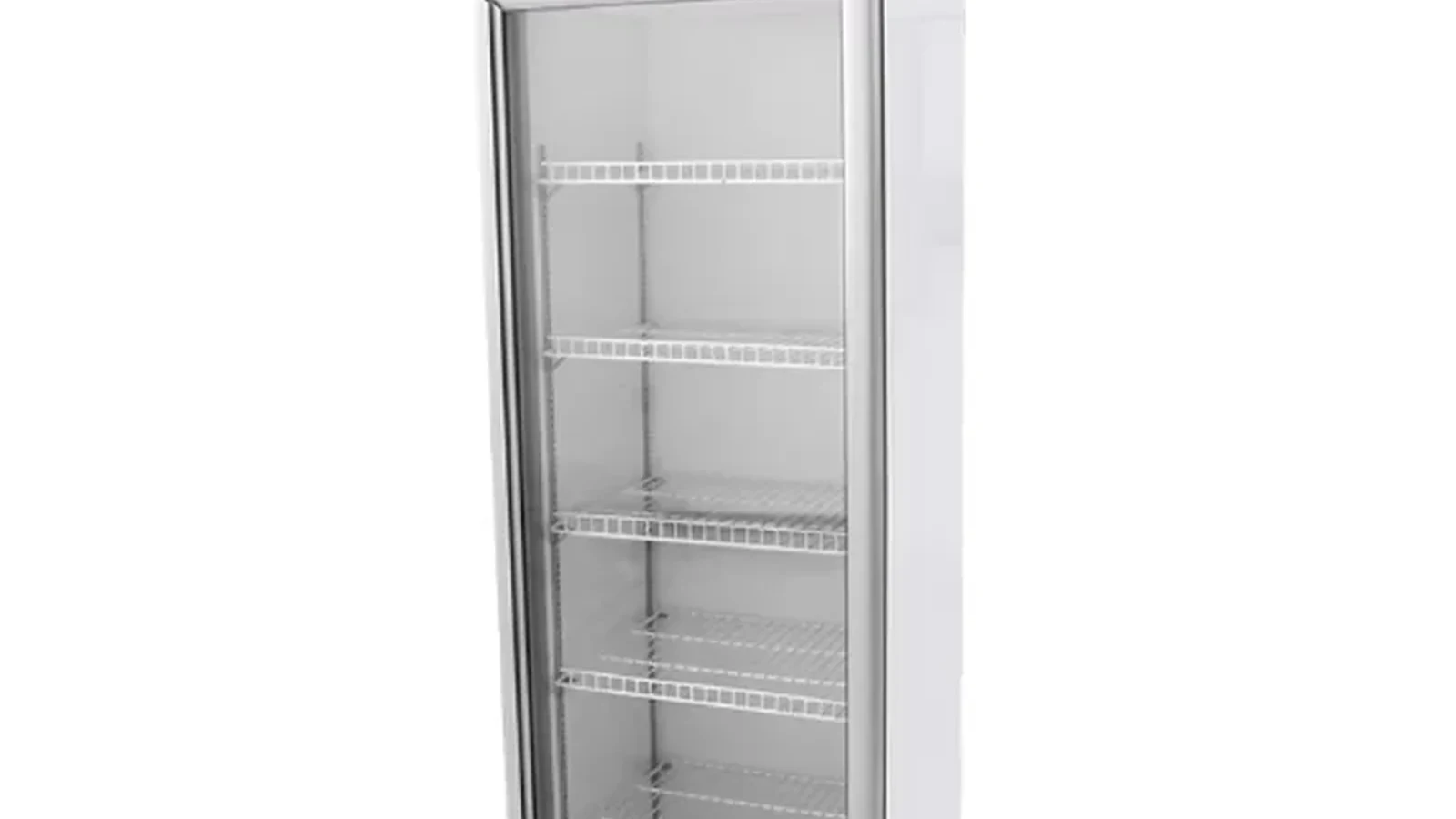
A beverage cooler is a vertical glass-door cabinet with shelves for bottles, cans or other chilled drinks supported by the selected model. The glass door makes the product range visible before opening. Door count, shelf spacing, internal lighting, cabinet width and replenishment access all affect the selling layout.
The store should confirm that the chosen beverage cooler is intended for chilled beverage display and that its electrical and installation requirements suit the location. A drink cooler should not be specified as a freezer simply because both products use a visible display cabinet.
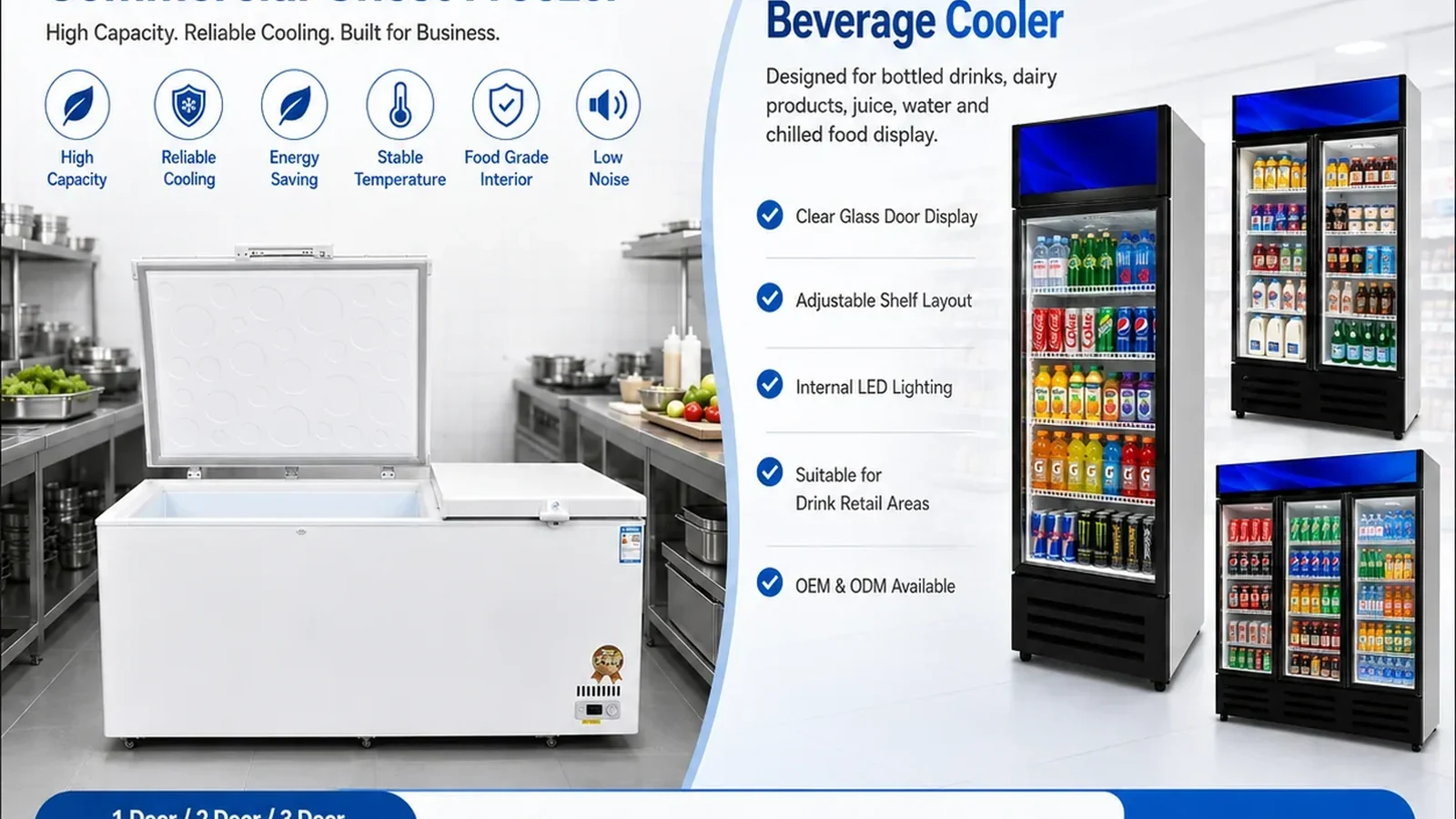
Side-by-side buying comparison
| Decision | Commercial chest freezer | Glass door beverage cooler |
|---|---|---|
| Product entity | Frozen food | Chilled beverages |
| Cabinet orientation | Horizontal | Vertical |
| Access | Top lid or sliding lid | Front glass door |
| Merchandising | Baskets, dividers and product layers | Shelves, door bays and shelf labels |
| Main layout need | Lid-opening clearance and aisle access | Door swing, shelf reach and replenishment path |
| Buyer check | Cabinet size, lid, baskets and selected operating specification | Door count, shelves, lighting, electrical details and selected operating specification |
The table is a planning guide. Model-level details must come from the actual product specification.
Match the cabinet to the shopping task
Frozen food shoppers often need a cabinet that can hold packs below the rim and keep categories organized. A chest freezer can work well when the store has staff who restock from above and enough floor area for the lid movement. Keep fast-moving products near the easiest access zone and avoid filling above the usable loading line.
Beverage shoppers usually select from a visible vertical range. A glass door cooler can support brand blocks, price rails and shelf-level grouping, but the cabinet must be placed where customers can open the door without blocking a high-traffic route. Door direction and adjacent equipment should be part of the layout review.
Keep the specifications separate
The two cabinets should have separate line items in the RFQ. For a chest freezer, state frozen product type, external footprint, lid structure, basket needs, quantity and available electrical information. For a beverage cooler, state beverage categories, door count, shelf layout, display position, lighting preference and quantity.
If the store is planning both zones, use the commercial chest freezer range for frozen products and the glass door beverage cooler range for chilled drinks. A commercial chest freezer buying guide can help structure the frozen-food questions, while the two equipment types should remain separate in the final quotation.
Common selection mistakes
The first mistake is selecting by visible glass or exterior color while ignoring the product temperature and loading method. The second is using a chest-freezer footprint without allowing lid clearance. The third is assuming a beverage cooler's shelves or doors will match another model. The fourth is asking for a quote without the store layout, quantity or electrical information, which makes comparison difficult.
Final decision
Buy a commercial chest freezer when the core job is frozen product storage and horizontal merchandising. Buy a glass door beverage cooler when the core job is chilled drink visibility and vertical self-service. If both jobs are important, plan both entities in one store layout but request separate specifications, images and quotation lines.
For a product recommendation or quotation, send the product mix, cabinet quantity, floor space, photos and available site information through the Iceage Freeze contact page.