
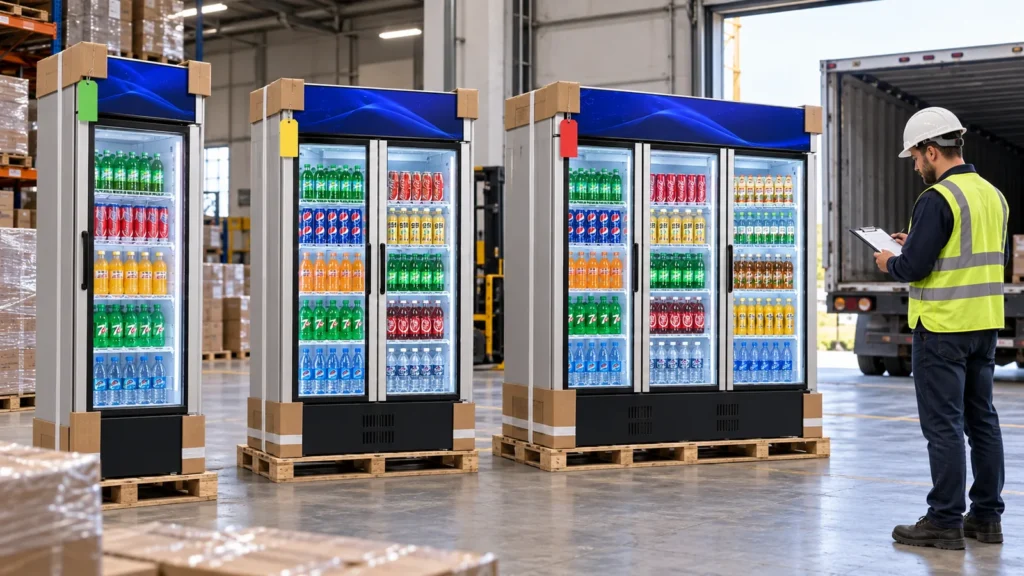
A mixed beverage-cooler order should not start with “How many fit in a container?” It should start with three exact model rows. The 400 L one-door, 875 L two-door and 1300 L three-door cabinets have different listed dimensions, net weights and rated inputs. Container quantity cannot be approved until the supplier provides current packed dimensions, packed weight, orientation and a loading plan for the actual order.
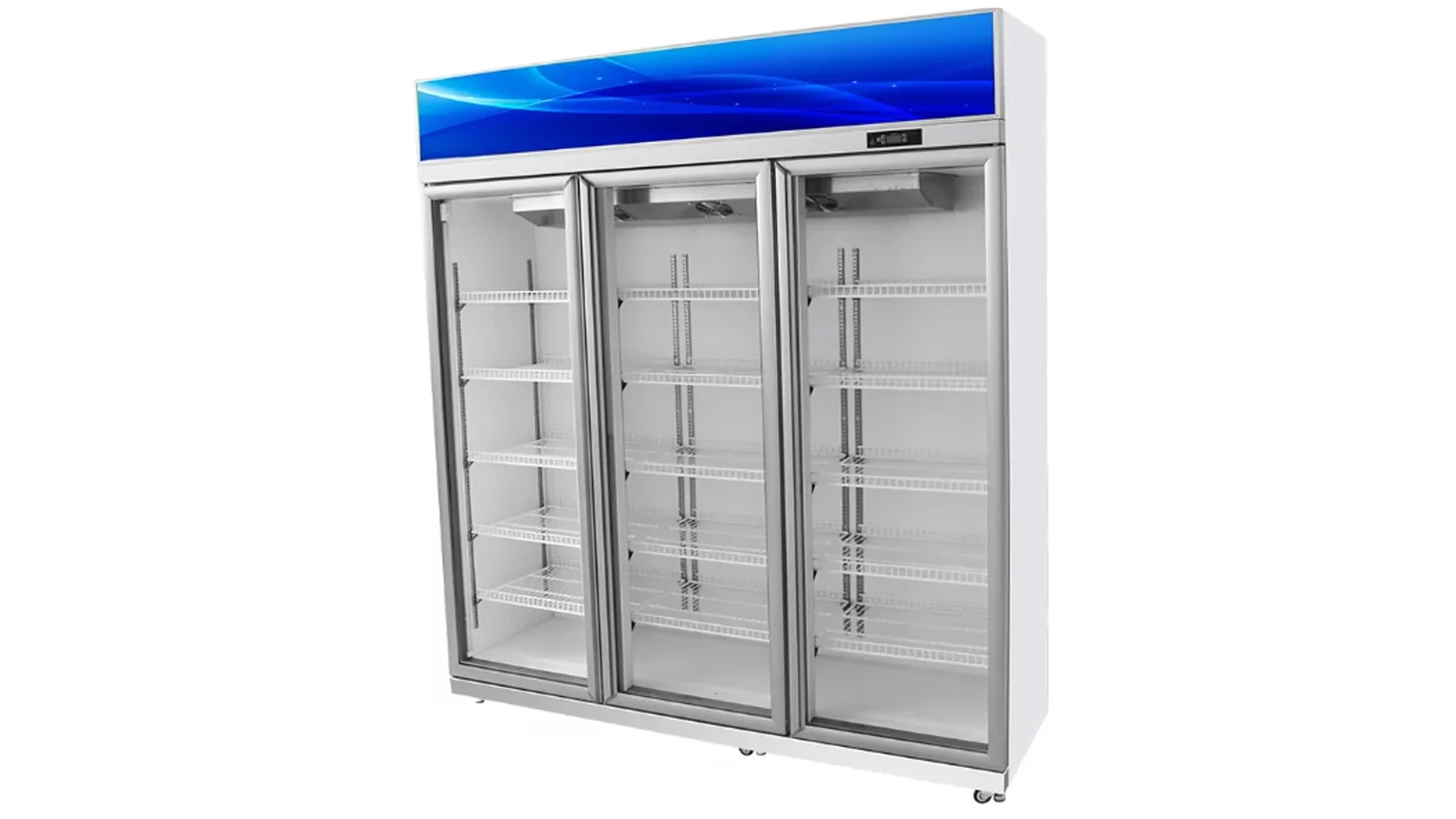
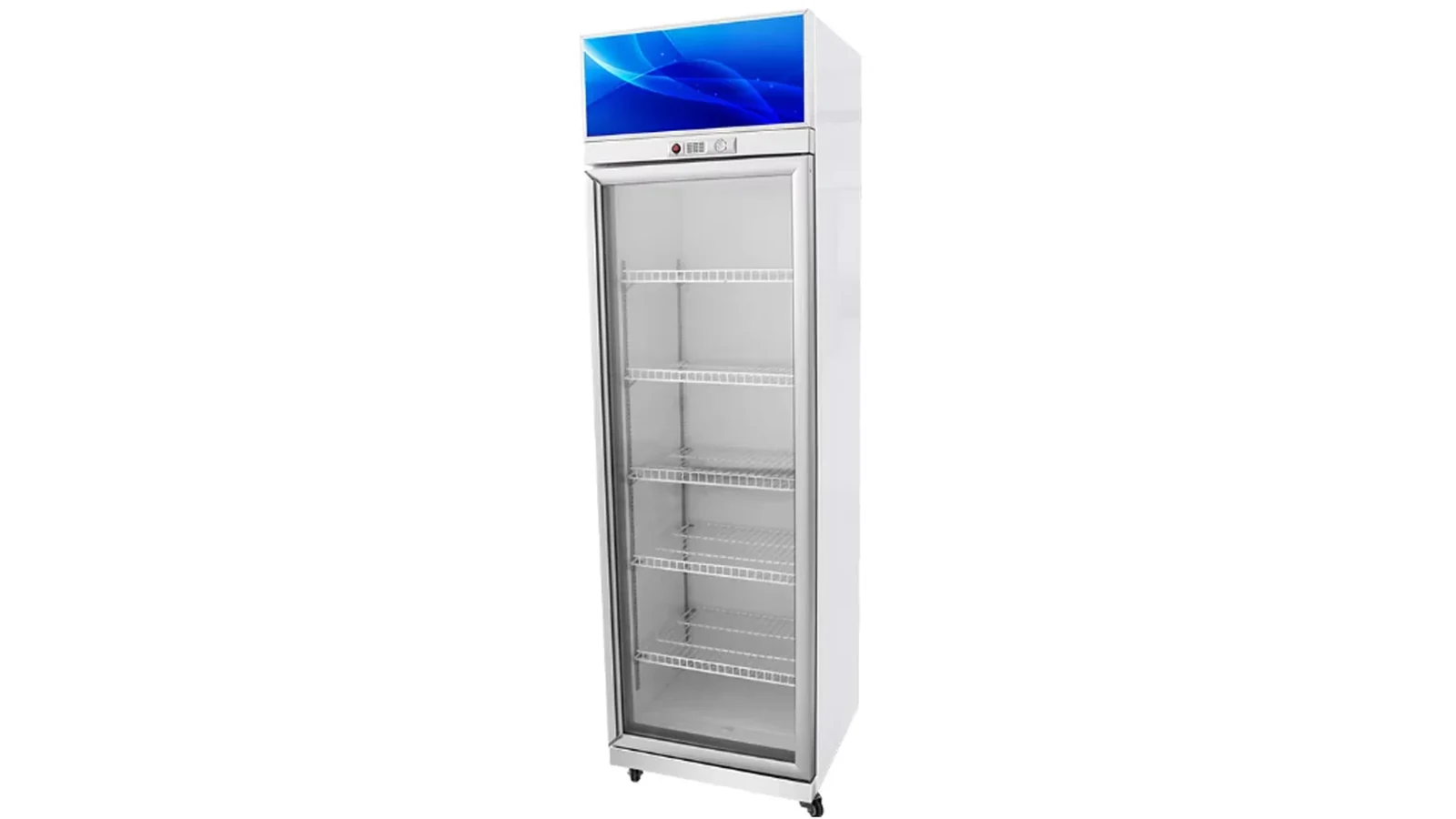
The ICEAGE commercial beverage cooler range documents 400 L, 875 L and 1300 L capacities with one, two and three doors respectively. The listed external dimensions are 600 × 620 × 2050 mm, 1200 × 620 × 2050 mm and 1800 × 620 × 2050 mm. These are cabinet dimensions, not export-package dimensions.
Build the Order by Model Row
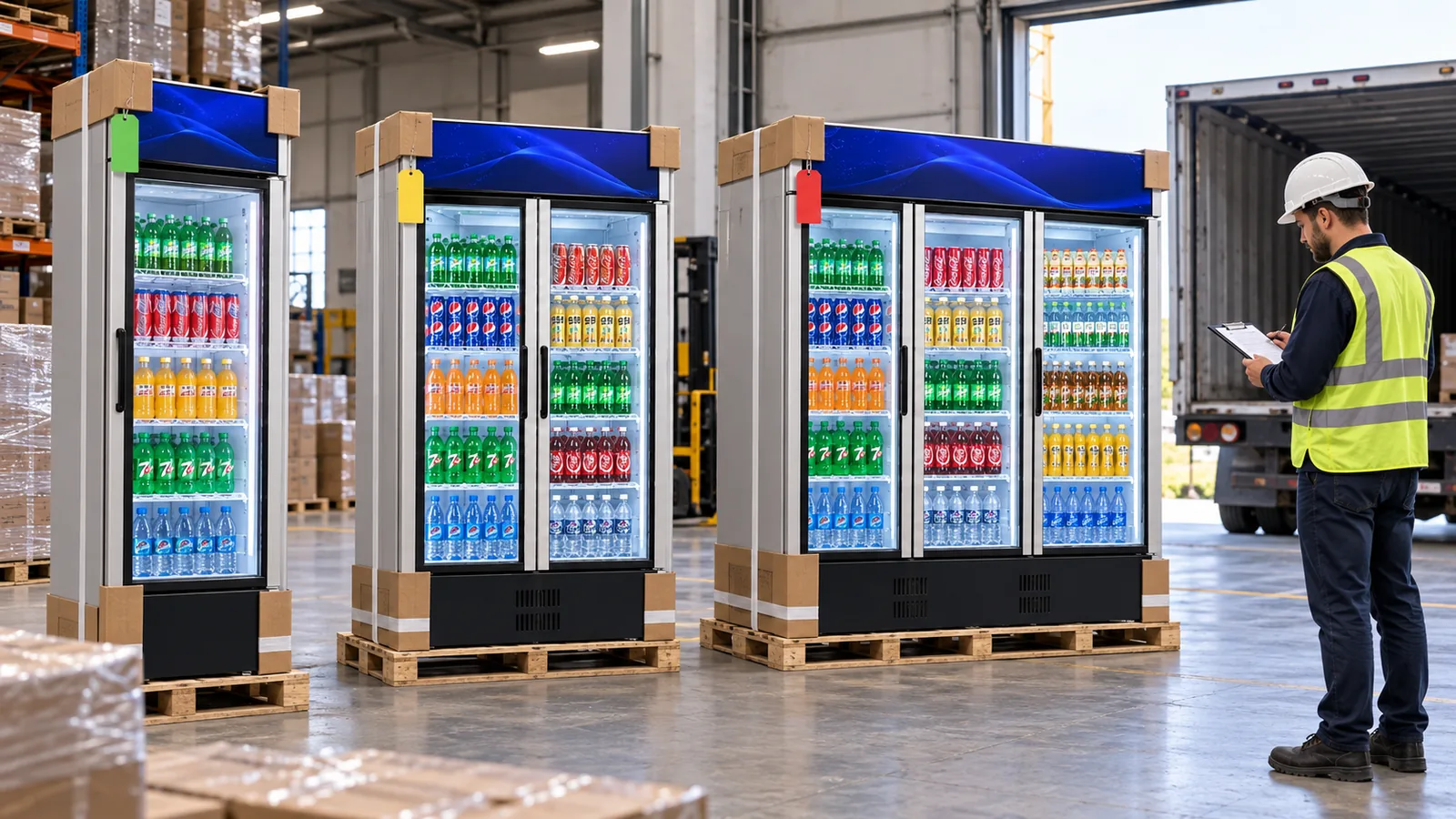
Give each model its own purchase-order and loading-plan line. State model identity, door count, quantity, destination, approved electrical configuration, branding revision and required accessories. Avoid “mixed coolers” as a single line because the factory and forwarder need to reconcile each cabinet type.
| Product row | Listed external dimensions | Listed internal dimensions | Listed net weight |
|---|---|---|---|
| 400 L, one door | 600 × 620 × 2050 mm | 520 × 510 × 1530 mm | 40 kg |
| 875 L, two doors | 1200 × 620 × 2050 mm | 1120 × 510 × 1530 mm | 85 kg |
| 1300 L, three doors | 1800 × 620 × 2050 mm | 1725 × 510 × 1530 mm | 120 kg |
Use these published figures to keep product rows separate and to start route or warehouse planning. They exclude export packaging, pallets, corner protection, accessories and loading restraints. Ask for packed values from the approved production configuration.
The beverage cooler voltage and plug approval checklist should be completed before container release. A mixed order can share a destination while still requiring model-bound nameplate, cord and plug evidence.
Request the Missing Logistics Data
Before accepting a loading quantity, require a supplier packing schedule with packed length, width, height and gross weight per model; packaging method; upright-orientation rule; stacking prohibition or allowance; accessory carton treatment; and proposed container type. Ask the forwarder to confirm internal container limits and operational restrictions for the booked equipment.
Avoid calculating a commercial loading quantity from external cabinet dimensions alone. Clearances, packaging deformation limits, pallet footprints, blocking and bracing, door protection, weight distribution and loading access all change the result. A diagram with no revision or model list is not sufficient evidence.
Separate Sales Mix From Loading Feasibility
First define the market requirement: how many one-, two- and three-door cabinets are needed by customer or branch. Then test that mix against verified shipping constraints. If the proposed mix leaves unusable space or exceeds a handling limit, return a revised scenario without silently changing the sales allocation.
A useful scenario table shows requested quantity, supplier-confirmed pack data, proposed load position, accessory allocation and unshipped balance for every model. It also names who approved the commercial mix and who approved the physical loading plan. That separation prevents a logistics adjustment from becoming an unauthorized purchase-order change.
Control Cabinet Identity During Loading
Mark each packed cabinet with an order line, model, door count and destination code. Reconcile labels against the packing list before the unit enters the container. Photograph the accessible package identity and visible condition. If a label conflicts with the schedule, hold the cabinet rather than filling the nearest open space.
Accessories and spare parts need model allocation as well. Record shelf packs, keys, branding parts or other confirmed items against the cabinet row or separate accessory carton. Avoid placing unrecorded loose items inside a cooler unless the supplier's approved packing method specifically allows it.
Approve Restraint and Handling Responsibilities
The loading record should name who provides corner protection, blocking, bracing and final container sealing. Keep cabinet doors secured according to the approved packing method and protect glass surfaces from point loads. Only trained personnel should decide restraint methods; a marketing photograph does not prove transport suitability.
At destination, compare the seal, packing list, model labels and visible package condition before unloading. Record exceptions before moving the cabinets to separate customer or warehouse zones. Maintain model identity through unpacking so damage or shortages can be traced to the correct line.
Keep Product Performance Out of the Space Calculation
All three models are listed for 0–10°C, direct cooling and at least five adjustable shelf levels, with rated inputs of 92 W, 148 W and 218 W. Those facts help with product and electrical review. They neither change the number of packed cabinets that fit a container nor predict energy cost or performance in every ambient condition.
Related Beverage Cooler Planning Guides
- Compare 92 W, 148 W and 218 W rated inputs by exact model
- Match door count and shelf layout to the merchandising brief
- Test product packages against listed internal cabinet dimensions
Request a Mixed-Model Loading Review
Send the quantity of each 400 L, 875 L and 1300 L model, destination, electrical approval, branding revision, accessories, requested container type and delivery deadline through ICEAGE contact. Ask for current packed dimensions, gross weights and a revised model-by-model loading diagram before treating any container quantity as confirmed.