
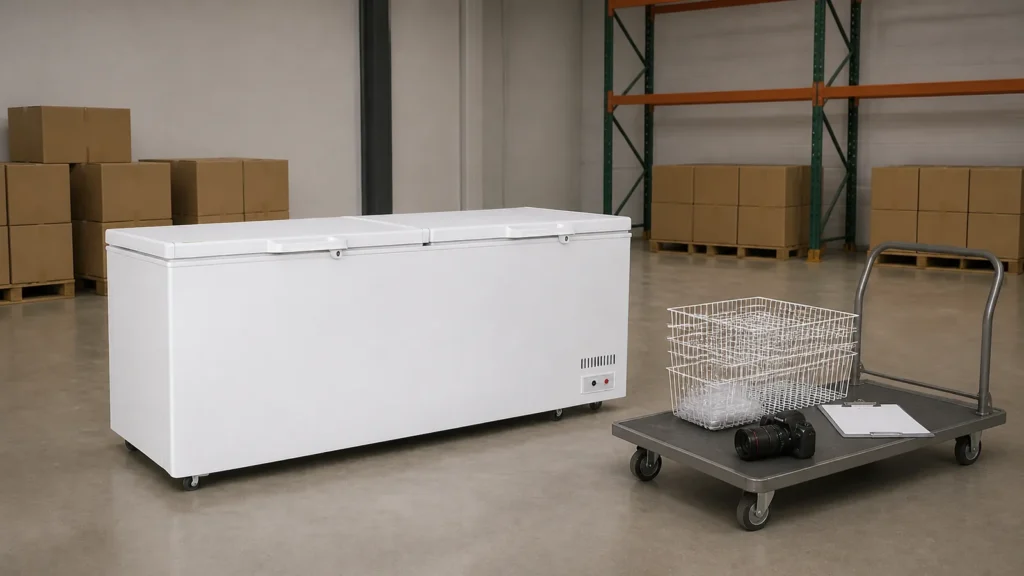
A seasonal store may close while its chest freezer remains a valuable distributor or retailer asset. The cabinet cannot be treated like an empty box. Product must be cleared under the store's handling procedures, shutdown must follow the selected model documentation, interior and drainage-related areas must be cleaned and dried as applicable, accessories must be counted, and the lid and cabinet must be protected for movement.
The return file should follow the freezer from its final trading position to the warehouse slot. It records model and serial identity, operating and product-clearance handoff, cleaning state, baskets and keys, visible condition, cable or plug protection, transport orientation required by applicable guidance, receiving inspection, and future status. This prevents an unidentified returned unit from becoming assumed saleable stock.
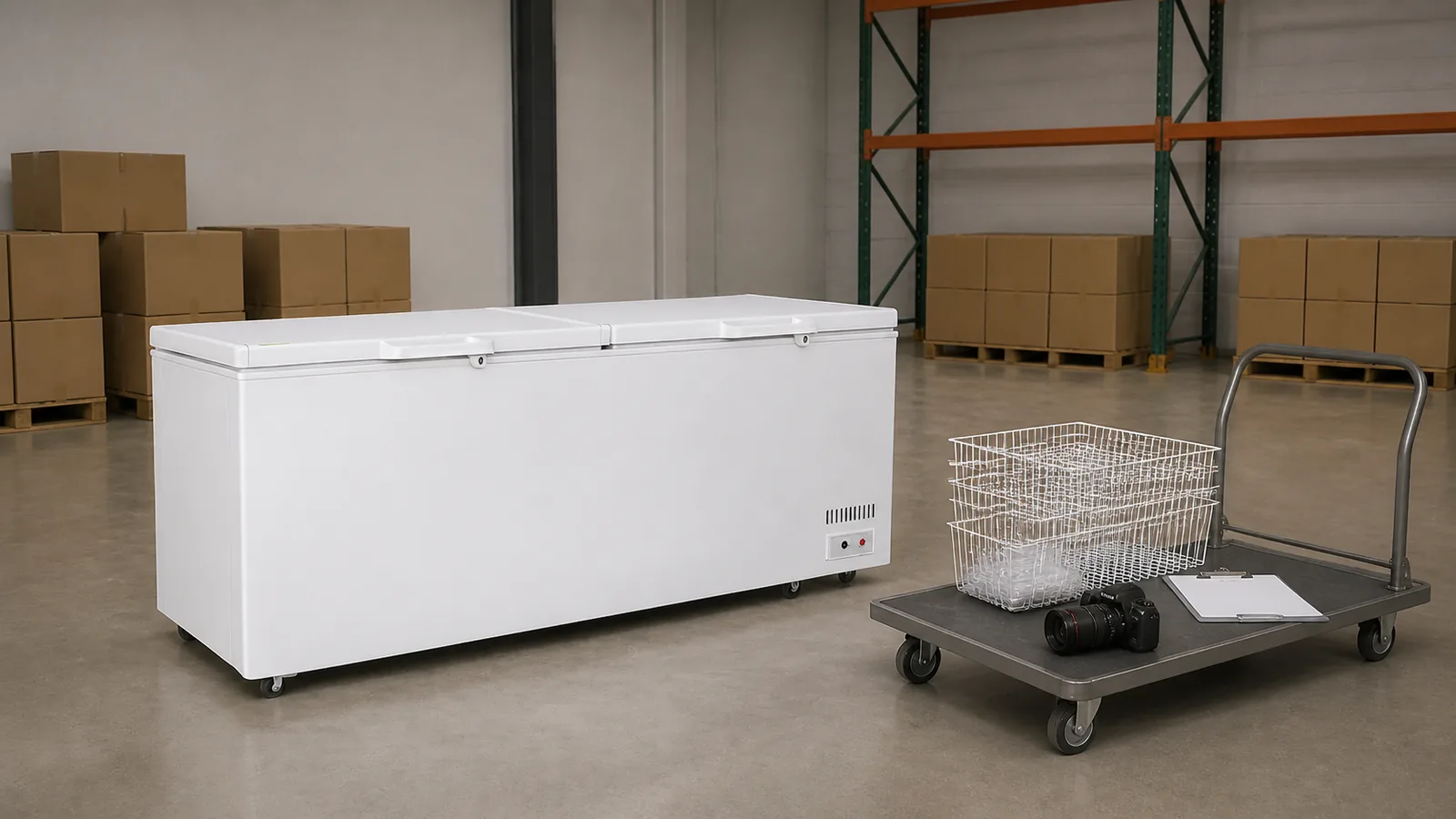
Close Product Stock Before Equipment Work
Separate the store's product disposition from the later equipment shutdown and movement tasks. The working record for this stage covers last trading date, product inventory, sell-through or transfer plan, held or unsaleable stock, responsible store role, empty confirmation, and clearance record.
Records for this stage
- last trading date: source, location, owner, status, and date.
- product inventory: source, location, owner, status, and date.
- sell-through or transfer plan: source, location, owner, status, and date.
- held or unsaleable stock: source, location, owner, status, and date.
- responsible store role: source, location, owner, status, and date.
- empty confirmation: source, location, owner, status, and date.
Why this stage can fail: Moving or switching the cabinet state while product remains unrecorded inside. Use last trading date, product inventory, and sell-through or transfer plan to document the exception, and keep held or unsaleable stock with the reviewer's decision.
Release condition: The freezer is empty and product disposition is closed under the store's applicable procedures. Record any exception against empty confirmation, name its owner and next action, and keep clearance record open until resolved.
Follow the Model Shutdown and Cleaning Handoff
Use the selected model documentation and authorized roles for shutdown, defrosting when applicable, cleaning, and drying. The working record for this stage covers model manual, power isolation responsibility, interior cleaning, drainage or defrost component per model, drying evidence, cleaning materials, and completion date.
Records for this stage
- model manual: source, location, owner, status, and date.
- power isolation responsibility: source, location, owner, status, and date.
- interior cleaning: source, location, owner, status, and date.
- drainage or defrost component per model: source, location, owner, status, and date.
- drying evidence: source, location, owner, status, and date.
- cleaning materials: source, location, owner, status, and date.
Why this stage can fail: Applying a generic shutdown sequence or sealing a cabinet while moisture remains unreviewed. Use model manual, power isolation responsibility, and interior cleaning to document the exception, and keep drainage or defrost component per model with the reviewer's decision.
Release condition: The authorized shutdown is complete and accessible internal surfaces are clean and dry for the next controlled step. Record any exception against cleaning materials, name its owner and next action, and keep completion date open until resolved.
Inventory Accessories and Secure Loose Parts
Count baskets, dividers, keys, plugs, covers, and supplied documents and protect them for transport. The working record for this stage covers basket count, divider count, key set, cable and plug, drain part when applicable, manual, and accessory carton.
Records for this stage
- basket count: source, location, owner, status, and date.
- divider count: source, location, owner, status, and date.
- key set: source, location, owner, status, and date.
- cable and plug: source, location, owner, status, and date.
- drain part when applicable: source, location, owner, status, and date.
- manual: source, location, owner, status, and date.
Why this stage can fail: Placing loose metal or plastic parts inside the cabinet where movement may mark surfaces or break components. Use basket count, divider count, and key set to document the exception, and keep cable and plug with the reviewer's decision.
Release condition: Every accessory has a protected location and the return record states what is present or missing. Record any exception against manual, name its owner and next action, and keep accessory carton open until resolved.
Create a Condition Baseline Before Movement
Photograph cabinet sides, lids, hinges, handles, interior, base, cable, identification plate, and route constraints. The working record for this stage covers full elevations, lid condition, seal observation, hinge and handle, interior, cable and plug, identification plate, and existing marks.
Records for this stage
- full elevations: source, location, owner, status, and date.
- lid condition: source, location, owner, status, and date.
- seal observation: source, location, owner, status, and date.
- hinge and handle: source, location, owner, status, and date.
- interior: source, location, owner, status, and date.
- cable and plug: source, location, owner, status, and date.
Why this stage can fail: Recording only the clean front while transport-related disputes later concern an unseen side or base. Use full elevations, lid condition, and seal observation to document the exception, and keep hinge and handle with the reviewer's decision.
Release condition: Dated views cover all accessible sides and existing exceptions have precise locations. Record any exception against cable and plug, name its owner and next action, and keep identification plate open until resolved.
Control Transport, Warehouse Receipt, and Status
Move, receive, and store the freezer according to applicable handling guidance and assign a future disposition. The working record for this stage covers approved movement method, orientation requirement, route, restraint and surface protection, warehouse receipt, storage slot, status tag, and future inspection or redeployment.
Records for this stage
- approved movement method: source, location, owner, status, and date.
- orientation requirement: source, location, owner, status, and date.
- route: source, location, owner, status, and date.
- restraint and surface protection: source, location, owner, status, and date.
- warehouse receipt: source, location, owner, status, and date.
- storage slot: source, location, owner, status, and date.
Why this stage can fail: Placing a returned unit into available stock before receipt condition, identity, and required future checks are established. Use approved movement method, orientation requirement, and route to document the exception, and keep restraint and surface protection with the reviewer's decision.
Release condition: Warehouse identity, condition, accessories, storage position, and next-use status reconcile with the dispatch record. Record any exception against storage slot, name its owner and next action, and keep status tag open until resolved.
Seasonal Freezer Return Register
The register separates product clearance, equipment condition, transport custody, warehouse receipt, and future disposition.
| Review Point | Evidence to Keep | Release Question |
|---|---|---|
| Close Product Stock Before Equipment Work | last trading date, product inventory, sell-through or transfer plan, and held or unsaleable stock | the freezer is empty and product disposition is closed under the store's applicable procedures. |
| Follow the Model Shutdown and Cleaning Handoff | model manual, power isolation responsibility, interior cleaning, and drainage or defrost component per model | the authorized shutdown is complete and accessible internal surfaces are clean and dry for the next controlled step. |
| Inventory Accessories and Secure Loose Parts | basket count, divider count, key set, and cable and plug | every accessory has a protected location and the return record states what is present or missing. |
| Create a Condition Baseline Before Movement | full elevations, lid condition, seal observation, and hinge and handle | dated views cover all accessible sides and existing exceptions have precise locations. |
| Control Transport, Warehouse Receipt, and Status | approved movement method, orientation requirement, route, and restraint and surface protection | warehouse identity, condition, accessories, storage position, and next-use status reconcile with the dispatch record. |
Seasonal Closure Checklist
- Complete product inventory and disposition before starting equipment shutdown work.
- Use model documentation and authorized roles for shutdown, cleaning, drying, and any defrost-related task.
- Count and protect baskets, dividers, keys, drain parts when applicable, cable, plug, and manuals.
- Photograph all accessible cabinet faces, interior, lids, hardware, cable, plate, and existing marks.
- Reconcile transport and warehouse receipt, then assign a clear hold, inspection, repair, storage, or redeployment status.
Seasonal Chest Freezer Return Questions
Can the freezer be moved immediately after stock removal?
Follow the selected model documentation and the responsible service or handling process. Shutdown, cleaning, drying, loose-part control, and movement requirements may need to be completed first.
Should lids be left open in warehouse storage?
Use the model and storage guidance applicable to the cabinet and site. The key objective is a clean, dry, protected, identified unit with a documented storage state.
When is a returned freezer ready for another store?
Warehouse receipt alone is not a redeployment release. Confirm identity, accessories, condition, storage history, required inspection or service, cleaning, and destination preparation.
Related Product or Reading
- Commercial chest freezer range: anchors the return plan to the actual chest-freezer product scope
- Glass-door beverage cooler range: provides a clearly separate chilled-drink display option for stores planning the next season
Create the Freezer Return File
Share the freezer model and serial, store location, closure date, product disposition, shutdown responsibility, cleaning and drying record, accessory inventory, condition photographs, transport guidance, warehouse slot, and future status with ICEAGE. That project evidence lets ICEAGE review the selected commercial chest freezer for this buyer task: Help retailers and distributors preserve chest-freezer identity and condition when a seasonal location closes and the equipment returns to a warehouse.