
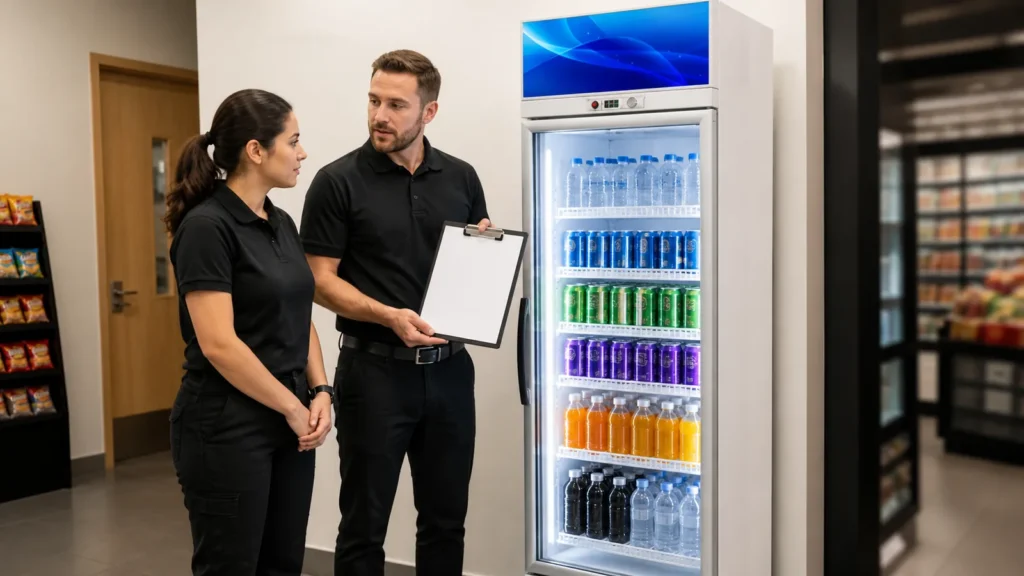
Retail staff often receive a beverage cooler as part of a finished store area, yet the handover may be no more than a model name and a set of keys. Daily use then depends on memory: which shelf map is current, what belongs in the chilled display, who cleans the glass and interior, how visible observations are recorded, and when qualified service should be contacted. A concise handover pack should follow the exact one-, two-, or three-door cooler and separate store tasks from technical work. It supports consistent operation without inventing performance claims, service procedures, or food rules.
Identify the Exact Cabinet
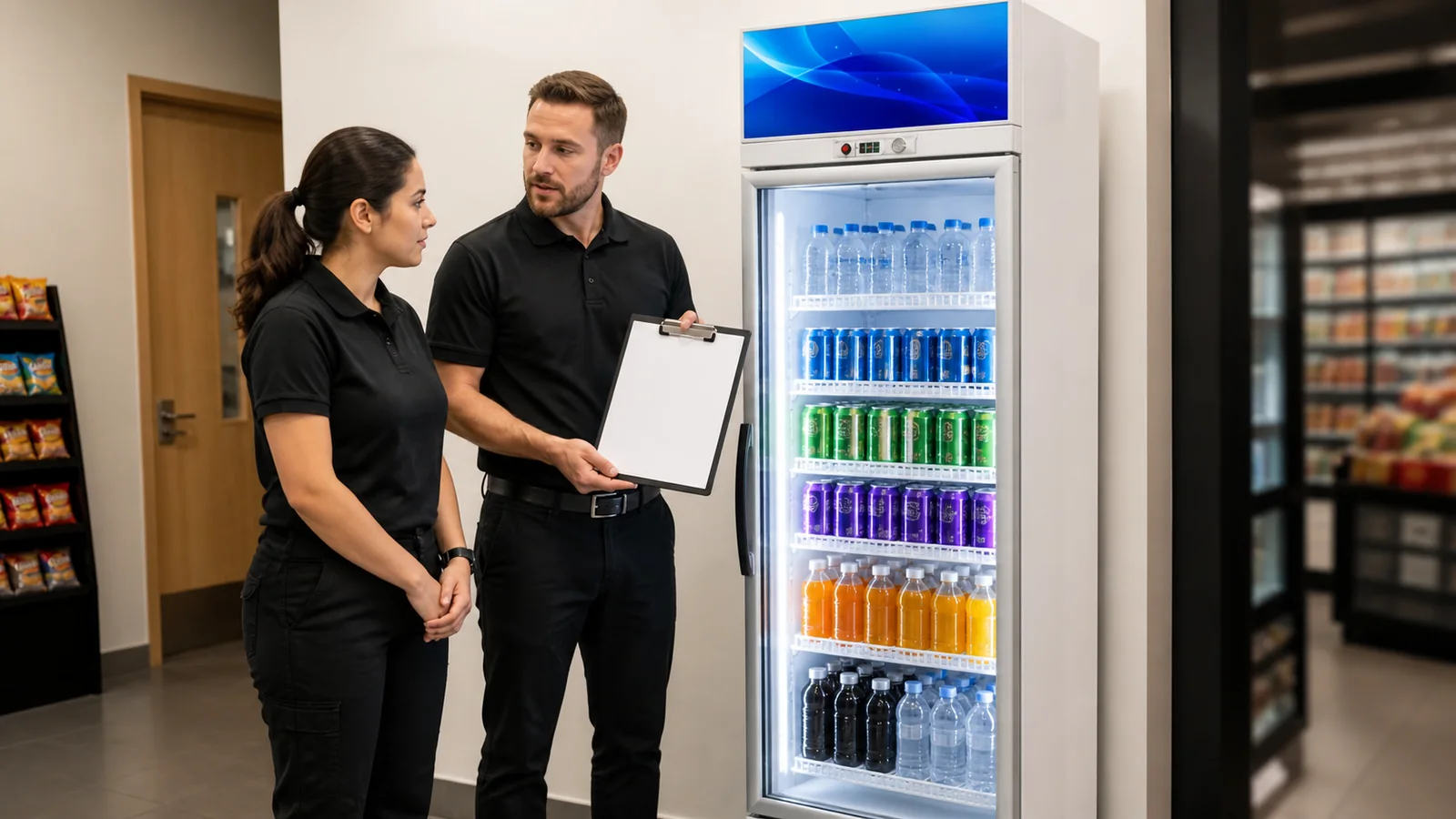
which beverage-cooler model, door count, listed capacity, location, asset code, and approved customization the team receives For this beverage cooler retail staff handover pack task, the responsible team should show staff the cabinet label and match it to the current store and supplier records. At identify the exact cabinet, verify the beverage cooler retail staff handover pack condition together with its identity before the working state changes.
At the identify the exact cabinet stage, retain model, 400 L, 875 L or 1300 L listed format, door count, asset ID, location, artwork, voltage and plug selection, and document revision. Link each photograph, count, mark, drawing, or note to the beverage cooler retail staff handover pack item it describes. For identify the exact cabinet, keep the location and responsible role beside model, 400 L, 875 L or 1300 L listed format, door count, asset ID, location, artwork, voltage and plug selection, and document revision so the next reviewer can repeat the check.
Similar glass-door cabinets may use different shelves, parts, and configurations. That boundary governs beverage cooler retail staff handover pack, not a different product or site. When evidence supports several interpretations, route the beverage cooler retail staff handover pack uncertainty through identify the exact cabinet to the role authorized by this release condition: staff can identify the unit before reporting or changing anything.
Close identify the exact cabinet only when staff can identify the unit before reporting or changing anything. If open, preserve the beverage cooler retail staff handover pack state and name the unresolved point, owner, next evidence, and follow-up action. Pair model, 400 L, 875 L or 1300 L listed format, door count, asset ID, location, artwork, voltage and plug selection, and document revision with the next identify the exact cabinet review before custody, stock, equipment, or site work changes.
Before moving on, compare model, 400 L, 875 L or 1300 L listed format, door count, asset ID, location, artwork, voltage and plug selection, and document revision with the release condition: staff can identify the unit before reporting or changing anything. This final comparison gives the beverage cooler retail staff handover pack handoff its usable context. For identify the exact cabinet, the receiving role should be able to reconstruct the decision from model, 400 L, 875 L or 1300 L listed format, door count, asset ID, location, artwork, voltage and plug selection, and document revision without relying on memory.
Explain Chilled Product Scope
which bottled drinks, water, juice, dairy, and chilled foods belong in the approved 0 to 10 C beverage-cooler plan For this beverage cooler retail staff handover pack task, the responsible team should connect the product page, store category policy, and current shelf map and state excluded frozen use clearly. At explain chilled product scope, verify the beverage cooler retail staff handover pack condition together with its identity before the working state changes.
At the explain chilled product scope stage, retain category list, shelf zones, product labels, local store controls, model guidance, and escalation for uncertain items. Link each photograph, count, mark, drawing, or note to the beverage cooler retail staff handover pack item it describes. For explain chilled product scope, keep the location and responsible role beside category list, shelf zones, product labels, local store controls, model guidance, and escalation for uncertain items so the next reviewer can repeat the check.
The beverage cooler is not a chest freezer and should not be presented as frozen storage. That boundary governs beverage cooler retail staff handover pack, not a different product or site. When evidence supports several interpretations, route the beverage cooler retail staff handover pack uncertainty through explain chilled product scope to the role authorized by this release condition: staff understand the bounded product use.
Close explain chilled product scope only when staff understand the bounded product use. If open, preserve the beverage cooler retail staff handover pack state and name the unresolved point, owner, next evidence, and follow-up action. Pair category list, shelf zones, product labels, local store controls, model guidance, and escalation for uncertain items with the next explain chilled product scope review before custody, stock, equipment, or site work changes.
Before moving on, compare category list, shelf zones, product labels, local store controls, model guidance, and escalation for uncertain items with the release condition: staff understand the bounded product use. This final comparison gives the beverage cooler retail staff handover pack handoff its usable context. For explain chilled product scope, the receiving role should be able to reconstruct the decision from category list, shelf zones, product labels, local store controls, model guidance, and escalation for uncertain items without relying on memory.
Hand Over the Door and Shelf Map
how doors, bays, shelves, clips, labels, and product facings are identified and restored For this beverage cooler retail staff handover pack task, the responsible team should demonstrate one restocking cycle and the process for requesting an approved shelf change. At hand over the door and shelf map, verify the beverage cooler retail staff handover pack condition together with its identity before the working state changes.
At the hand over the door and shelf map stage, retain door and shelf IDs, shelf positions, clip count, category zones, facings, label rails, revision, and before-after views. Link each photograph, count, mark, drawing, or note to the beverage cooler retail staff handover pack item it describes. For hand over the door and shelf map, keep the location and responsible role beside door and shelf IDs, shelf positions, clip count, category zones, facings, label rails, revision, and before-after views so the next reviewer can repeat the check.
Adjustable shelves never authorize undocumented loads or incompatible positions. That boundary governs beverage cooler retail staff handover pack, not a different product or site. When evidence supports several interpretations, route the beverage cooler retail staff handover pack uncertainty through hand over the door and shelf map to the role authorized by this release condition: the next shift can rebuild the approved display.
Close hand over the door and shelf map only when the next shift can rebuild the approved display. If open, preserve the beverage cooler retail staff handover pack state and name the unresolved point, owner, next evidence, and follow-up action. Pair door and shelf IDs, shelf positions, clip count, category zones, facings, label rails, revision, and before-after views with the next hand over the door and shelf map review before custody, stock, equipment, or site work changes.
Before moving on, compare door and shelf IDs, shelf positions, clip count, category zones, facings, label rails, revision, and before-after views with the release condition: the next shift can rebuild the approved display. This final comparison gives the beverage cooler retail staff handover pack handoff its usable context. For hand over the door and shelf map, the receiving role should be able to reconstruct the decision from door and shelf IDs, shelf positions, clip count, category zones, facings, label rails, revision, and before-after views without relying on memory.
Decision and Evidence Matrix
Use this compact matrix to keep the physical item, working record, and release decision aligned.
| Review Point | What to Record | Release Question |
|---|---|---|
| Identify the Exact Cabinet | model, 400 L, 875 L or 1300 L listed format, door count, asset ID, location, artwork, voltage and plug selection, and document revision | staff can identify the unit before reporting or changing anything |
| Explain Chilled Product Scope | category list, shelf zones, product labels, local store controls, model guidance, and escalation for uncertain items | staff understand the bounded product use |
| Hand Over the Door and Shelf Map | door and shelf IDs, shelf positions, clip count, category zones, facings, label rails, revision, and before-after views | the next shift can rebuild the approved display |
| Assign Cleaning and Daily Observation Roles | task, frequency under store plan, approved materials, responsible role, completion record, visible mark, spill, and escalation | routine tasks and open observations have owners |
Assign Cleaning and Daily Observation Roles
who cleans glass, handles, shelves, interior surfaces, surrounding floor, and records visible conditions For this beverage cooler retail staff handover pack task, the responsible team should use selected-model guidance and store procedures and define responsibility by task and shift. At assign cleaning and daily observation roles, verify the beverage cooler retail staff handover pack condition together with its identity before the working state changes.
At the assign cleaning and daily observation roles stage, retain task, frequency under store plan, approved materials, responsible role, completion record, visible mark, spill, and escalation. Link each photograph, count, mark, drawing, or note to the beverage cooler retail staff handover pack item it describes. For assign cleaning and daily observation roles, keep the location and responsible role beside task, frequency under store plan, approved materials, responsible role, completion record, visible mark, spill, and escalation so the next reviewer can repeat the check.
Staff should avoid technical disassembly or unapproved chemicals and methods. That boundary governs beverage cooler retail staff handover pack, not a different product or site. When evidence supports several interpretations, route the beverage cooler retail staff handover pack uncertainty through assign cleaning and daily observation roles to the role authorized by this release condition: routine tasks and open observations have owners.
Close assign cleaning and daily observation roles only when routine tasks and open observations have owners. If open, preserve the beverage cooler retail staff handover pack state and name the unresolved point, owner, next evidence, and follow-up action. Pair task, frequency under store plan, approved materials, responsible role, completion record, visible mark, spill, and escalation with the next assign cleaning and daily observation roles review before custody, stock, equipment, or site work changes.
Before moving on, compare task, frequency under store plan, approved materials, responsible role, completion record, visible mark, spill, and escalation with the release condition: routine tasks and open observations have owners. This final comparison gives the beverage cooler retail staff handover pack handoff its usable context. For assign cleaning and daily observation roles, the receiving role should be able to reconstruct the decision from task, frequency under store plan, approved materials, responsible role, completion record, visible mark, spill, and escalation without relying on memory.
Separate Observation From Service Diagnosis
how staff report door movement, glass misting, lighting, unusual sound, cabinet condition, or product-display concerns For this beverage cooler retail staff handover pack task, the responsible team should capture time, location, cabinet identity, operating context, neutral description, and useful photos before qualified review. At separate observation from service diagnosis, verify the beverage cooler retail staff handover pack condition together with its identity before the working state changes.
At the separate observation from service diagnosis stage, retain asset ID, door or shelf location, observation, chronology, recent change, store action, photos, and service case. Link each photograph, count, mark, drawing, or note to the beverage cooler retail staff handover pack item it describes. For separate observation from service diagnosis, keep the location and responsible role beside asset ID, door or shelf location, observation, chronology, recent change, store action, photos, and service case so the next reviewer can repeat the check.
Staff observations support service but cannot establish hidden cause or repair guidance. That boundary governs beverage cooler retail staff handover pack, not a different product or site. When evidence supports several interpretations, route the beverage cooler retail staff handover pack uncertainty through separate observation from service diagnosis to the role authorized by this release condition: qualified service receives a reproducible case.
Close separate observation from service diagnosis only when qualified service receives a reproducible case. If open, preserve the beverage cooler retail staff handover pack state and name the unresolved point, owner, next evidence, and follow-up action. Pair asset ID, door or shelf location, observation, chronology, recent change, store action, photos, and service case with the next separate observation from service diagnosis review before custody, stock, equipment, or site work changes.
Before moving on, compare asset ID, door or shelf location, observation, chronology, recent change, store action, photos, and service case with the release condition: qualified service receives a reproducible case. This final comparison gives the beverage cooler retail staff handover pack handoff its usable context. For separate observation from service diagnosis, the receiving role should be able to reconstruct the decision from asset ID, door or shelf location, observation, chronology, recent change, store action, photos, and service case without relying on memory.
Control Revisions and Shift Handover
how shelf maps, artwork, product categories, staff responsibility, service status, and documents stay current For this beverage cooler retail staff handover pack task, the responsible team should keep one active pack, archive superseded pages, and include open actions in shift communication. At control revisions and shift handover, verify the beverage cooler retail staff handover pack condition together with its identity before the working state changes.
At the control revisions and shift handover stage, retain revision, effective date, changed field, approver, staff acknowledgment, open service case, temporary display change, and closure. Link each photograph, count, mark, drawing, or note to the beverage cooler retail staff handover pack item it describes. For control revisions and shift handover, keep the location and responsible role beside revision, effective date, changed field, approver, staff acknowledgment, open service case, temporary display change, and closure so the next reviewer can repeat the check.
Old guidance should not remain beside the active cabinet as an equally valid option. That boundary governs beverage cooler retail staff handover pack, not a different product or site. When evidence supports several interpretations, route the beverage cooler retail staff handover pack uncertainty through control revisions and shift handover to the role authorized by this release condition: physical display, staff practice, and current pack agree.
Close control revisions and shift handover only when physical display, staff practice, and current pack agree. If open, preserve the beverage cooler retail staff handover pack state and name the unresolved point, owner, next evidence, and follow-up action. Pair revision, effective date, changed field, approver, staff acknowledgment, open service case, temporary display change, and closure with the next control revisions and shift handover review before custody, stock, equipment, or site work changes.
Before moving on, compare revision, effective date, changed field, approver, staff acknowledgment, open service case, temporary display change, and closure with the release condition: physical display, staff practice, and current pack agree. This final comparison gives the beverage cooler retail staff handover pack handoff its usable context. For control revisions and shift handover, the receiving role should be able to reconstruct the decision from revision, effective date, changed field, approver, staff acknowledgment, open service case, temporary display change, and closure without relying on memory.
Buyer Checklist
- Show staff the exact model, asset label, door count, and location.
- Keep chilled beverage and food use separate from frozen storage.
- Provide a door and shelf map with stable position codes.
- Demonstrate restocking and the shelf-change approval route.
- Assign cleaning and observation responsibilities by role.
- Record neutral observations and route technical questions to qualified service.
- Maintain one current handover revision and carry open actions between shifts.
Frequently Asked Questions
Should staff adjust technical settings during handover?
Only qualified people following the selected model guidance and responsible site procedure should perform technical adjustments. The handover focuses on identity, use, routine tasks, and escalation.
Can staff move shelves whenever products change?
Use the model-permitted configuration and store approval process, then update the active shelf map and confirm package fit.
What should a service report include?
Include exact cabinet and location, neutral observation, timing, operating context, recent changes, useful photographs, and any safe store action already taken.
Related Product or Reading
Use the cleaning-access guide to define store responsibilities for shelves, glass door, and surrounding workflow in more detail.
Discuss the Exact Project
Send ICEAGE the beverage-cooler model, asset and store location, door count, shelf map, chilled categories, staff roles, cleaning process, artwork, electrical selection, document language, and service-reporting route.