

One IA-2500 and two IA-1960 units both add up to 1300 litres of listed nominal capacity, yet they create different physical installations and orders. The IA-2500 is one 2500 × 900 × 900 mm cabinet with a listed rated input of 580 W. Each IA-1960 is a 1960 × 730 × 900 mm cabinet with 650 L capacity and 220 W rated input, so two units create two cabinet bodies and a simple summed listed input of 440 W.
Those numbers define a shortlist, not a winner. Access routes, lid opening, stock separation, electrical circuits, cleaning space, service access, delivery sequence, local rules, and the current production-batch datasheet decide which arrangement belongs in the RFQ.

Compare the Verified Rows Before Discussing Layout
The current ICEAGE commercial chest-freezer range lists the following two rows:
| Order option | Listed capacity | Cabinet dimensions | Listed rated input | Listed temperature band | Physical count |
|---|---|---|---|---|---|
| One IA-2500 | 1300 L | 2500 × 900 × 900 mm | 580 W | -24 to 0°C | 1 |
| Two IA-1960 | 2 × 650 L = 1300 L | 2 × 1960 × 730 × 900 mm | 2 × 220 W = 440 W | -24 to 0°C per listed row | 2 |
The additions are arithmetic from the published model rows. They are not measured energy consumption, usable loading volume, pull-down performance, redundancy, or lifetime-cost evidence. Actual units, voltage and frequency, plug, refrigerant, lid or top option, accessories, and performance conditions must be confirmed on the quotation and latest batch datasheet.
Draw Both Options on the Real Floor Plan
Nominal cabinet rectangles show an immediate difference. One IA-2500 occupies a 2500 by 900 mm body rectangle. Two IA-1960 bodies total 3920 mm in length if placed end to end, or they can be separated into different positions. The two 730 mm-deep bodies are narrower individually, but there are two lid zones, two service positions, and two routes to manage.
Those body dimensions are separate from required installation clearances. The buyer should add manufacturer-confirmed ventilation and service space, lid-opening envelope, wall and column offsets, customer or staff routes, cleaning access, and any protection from carts or stock handling. Draw doors, drains, shelving, counters, and emergency routes on the same plan.
For a replacement site, measure the narrowest door, turn, corridor, lift, ramp, and final approach. A single large cabinet may fit the sales floor yet fail at a doorway or turn. Two smaller cabinets are not automatically easier; each still needs safe handling, and the second position may create a separate route problem.
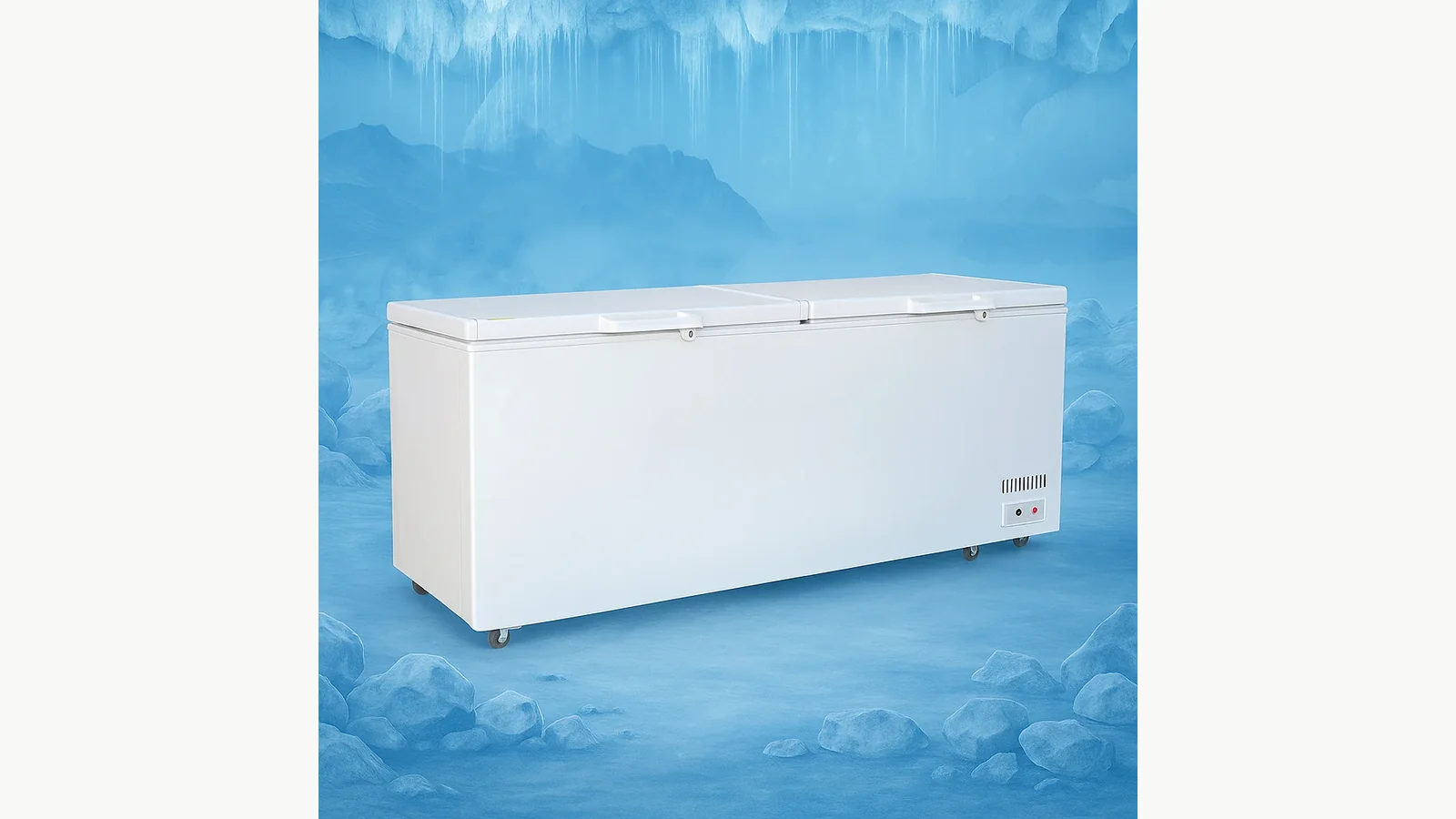
Decide Whether Stock Needs One or Two Physical Boundaries
Two cabinets create two physical storage bodies. That may help a buyer assign product groups, locations, replenishment teams, or dealer destinations separately. It does not prove temperature independence, backup performance, or reduced loss. Those outcomes depend on the actual order, operating method, stock load, controls, electrical supply, maintenance, and incident response.
One large cabinet creates one receiving and asset record and one final position. It may simplify a single-location order, but the wider and deeper body must work with the route and operating area. Buyers should map the intended product categories and replenishment frequency before choosing based on capacity alone.
If baskets, dividers, locks, drains, glass tops, solid doors, branding, or other options affect the use, list them for each cabinet. A request for “two identical IA-1960 units” should still state whether the accessories, color, logo, top, plug, and labels are identical.
Keep Rated Input Separate From Energy Cost
The listed input values provide an order and electrical-review field. One IA-2500 is shown at 580 W; two IA-1960 rows add to 440 W. This comparison cannot establish monthly kWh or operating cost because compressor cycling, ambient conditions, loading, lid openings, thermostat setting, voltage conditions, and maintenance affect real consumption.
Ask the electrical designer to review circuit quantity, protective devices, socket or connection locations, simultaneous start considerations, local code, and the actual equipment data supplied for the batch. Two cabinets may be placed on separate approved circuits, but the designer—not a blog table—must make that decision.
The chest-freezer datasheet approval guide explains how to bind model, voltage, frequency, plug, rated input, temperature band, refrigerant, dimensions, and options to the production lot. Use that approval before converting the model table into a site electrical schedule.
Compare Commercial Scope Line by Line
A fair quote comparison includes more than the cabinet price. Normalize quantity, model, capacity, dimensions, temperature band, rated input, voltage and frequency, plug, refrigerant, top or lid, baskets and dividers, branding, color, packing, spare-parts scope, warranty terms, shipment marks, documentation, inspection, destination, and delivery term.

For two IA-1960 units, check whether quoted freight, handling, accessories, labels, and documents are per unit or per order. For one IA-2500, confirm crate dimensions and handling points because the product-body dimensions cannot describe the packed route. Request the latest packing data rather than calculating freight from the cabinet size.
The lower summed rated input does not establish higher efficiency, and the larger single body does not establish a lower price or easier maintenance. Price, freight, service, energy, and operating results require order-specific evidence.
Approve a Receiving Record for Each Cabinet
The purchase order should assign an asset or unit ID to every physical freezer. On receipt, match model, serial or batch identifier, nameplate fields, plug, top, finish, logo, accessories, carton mark, and visible condition to that record. Two IA-1960 units need two identity rows even when sold as one capacity plan.
Photograph the complete unit, nameplate, plug, top or lid, interior, accessories, and any damage before the freezer moves to its final position. Hold any mismatch. A combined packing-list total does not close an exception on one cabinet.
Use a Weighted Decision Sheet
Score the options against the actual project: route fit, final floor positions, lid access, stock separation, circuit plan, staff workflow, cleaning, service access, receiving complexity, options, total landed cost, and current supplier documentation. Weight the fields before viewing prices. That makes the recommendation traceable and prevents nominal litres from controlling the entire order.
Run the same review again if the site plan, destination, plug, voltage, product mix, or cabinet option changes. A configuration approved for one store or warehouse is not automatically valid at another.
Related Reading
- IA-2200 and IA-2500 delivery-path planning shows why the large cabinet route must be checked early.
- Rated power and energy-cost evidence for chest freezers keeps watts, kWh, and cost as separate records.
- R600a or R290 batch-record control prevents a family-level refrigerant statement from replacing the exact production record.
Send Both Configurations for a Controlled Quote
Send ICEAGE the site drawing, access-route measurements, intended positions, product categories, quantity, preferred model option, voltage, frequency, plug, destination, top or lid, baskets and dividers, branding, packing, inspection, and documentation requirements. Ask for one marked quotation for the IA-2500 option and one for two IA-1960 units, each tied to the latest batch datasheet and packing information.