
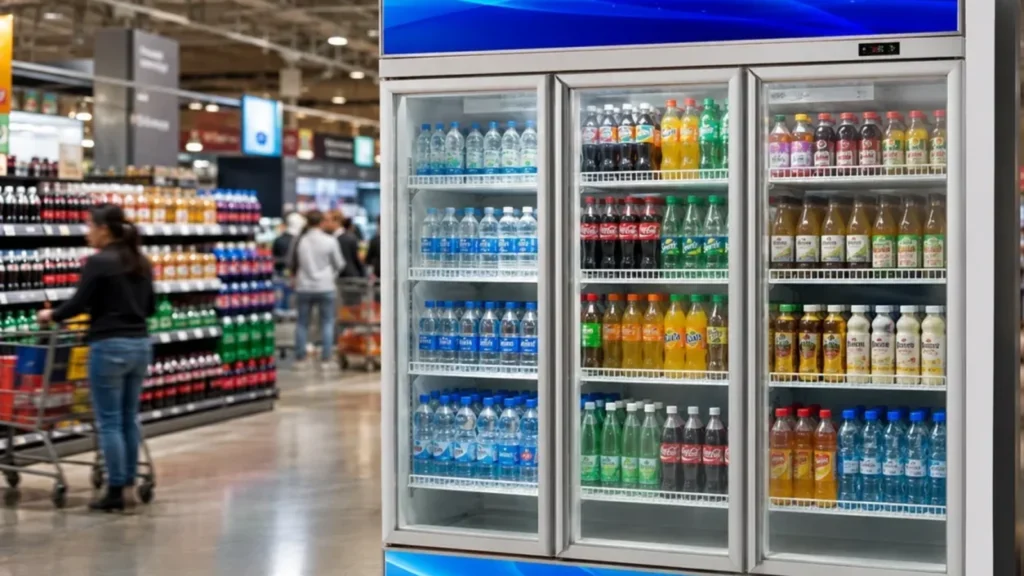
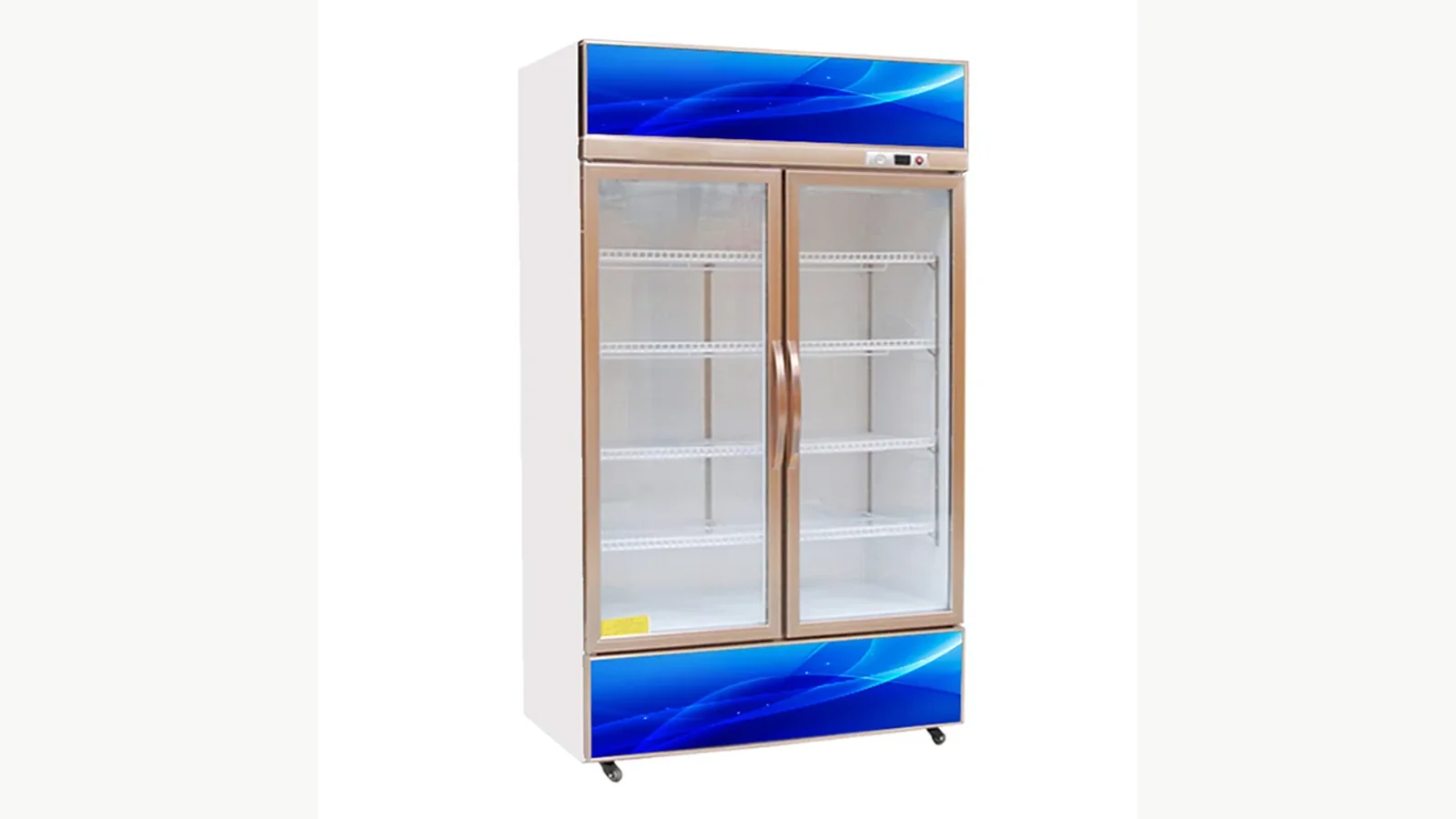
A product-page statement and a product photograph answer different questions. ICEAGE states that its upright beverage-cooler range uses full-height tempered glass doors. A photograph can show the door count, general frame and visible glazed area. It cannot prove tempering, glass thickness, pane construction, coatings, heaters, markings or the replacement part supplied for one exact order.
Importers should therefore treat “tempered glass” as a verified public product-family statement that still needs model- and order-specific evidence. The approval file should connect the quoted cabinet, each door assembly, the supplier’s material declaration, drawing, sample photos, labels and replacement identity. This protects both the first order and later service requests without adding unsupported performance claims.
Start With What the Product Page Actually Establishes
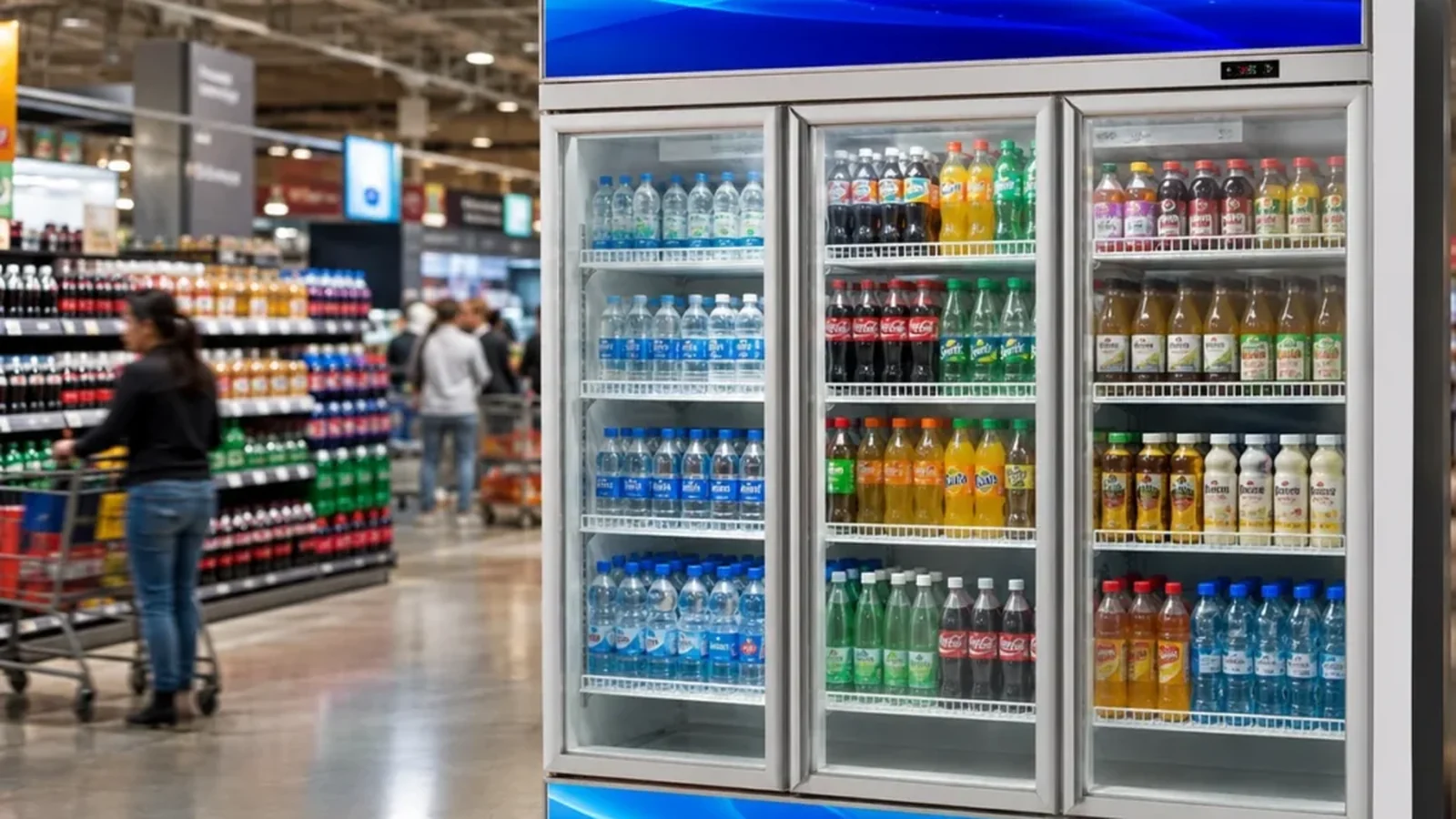
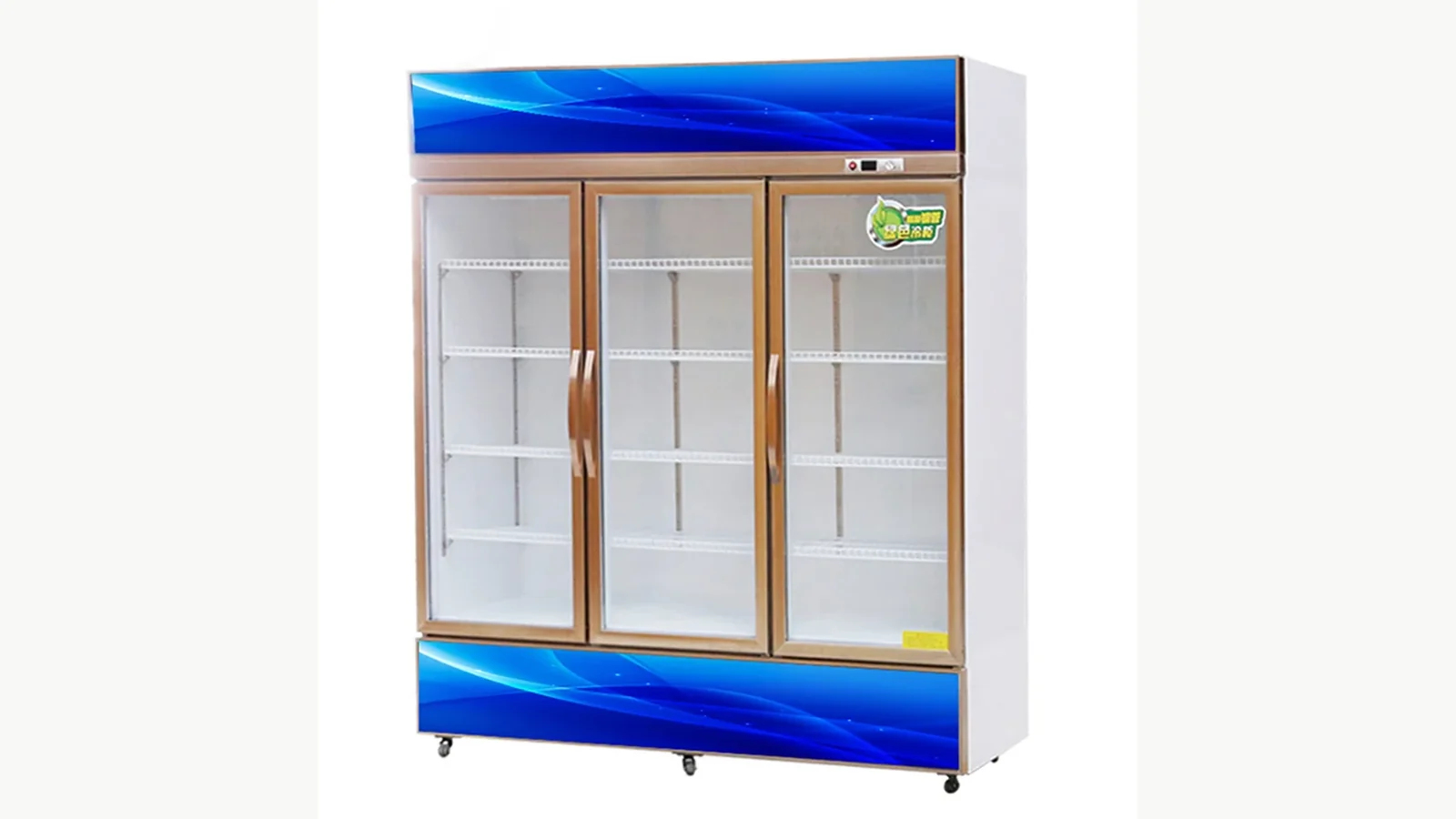
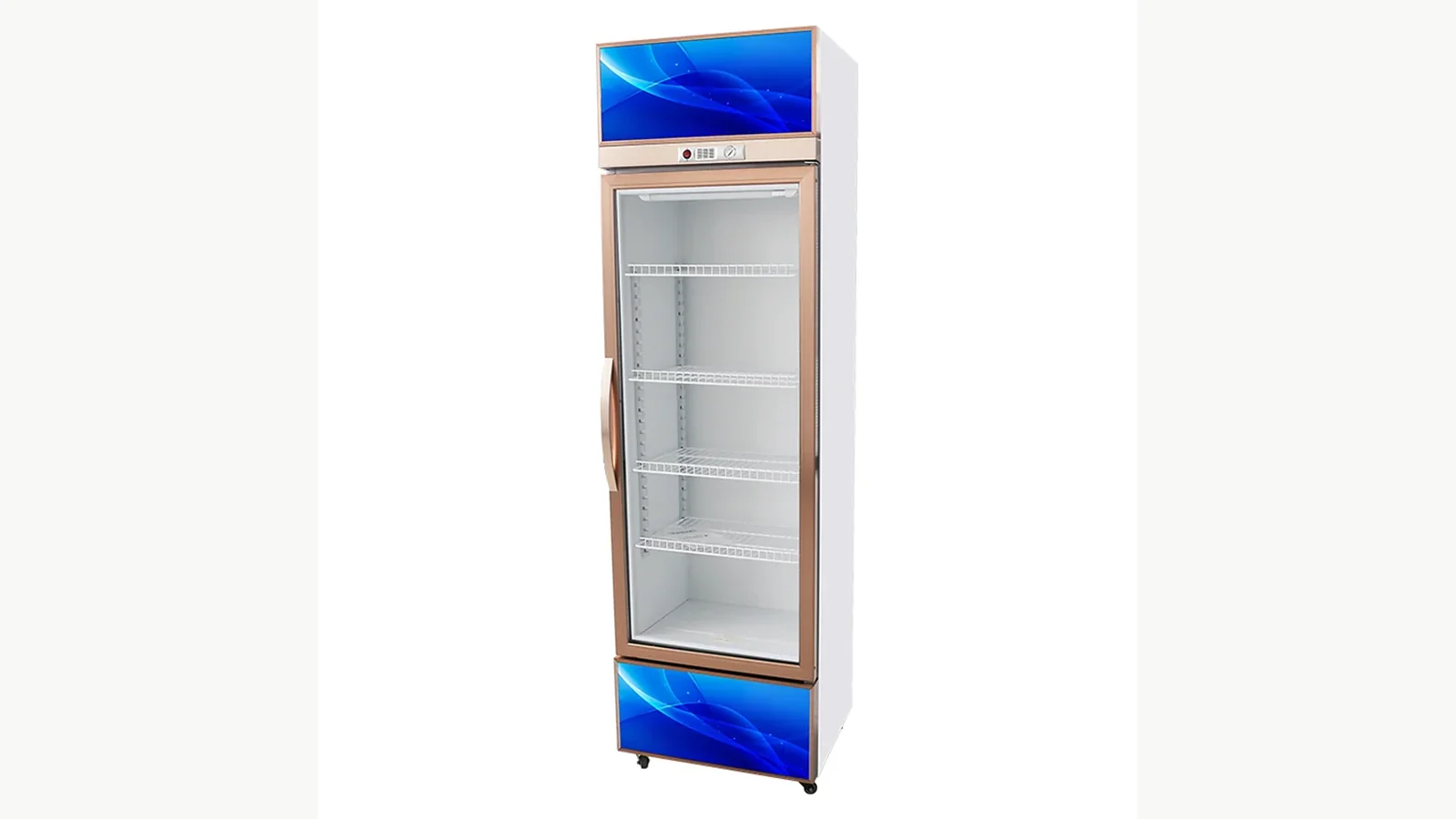
The ICEAGE commercial beverage cooler page lists 400 L single-door, 875 L double-door and 1300 L three-door models. It states full-height tempered glass doors, a 0–10 °C range, direct cooling, LED lighting and five or more adjustable shelves.
Keep those facts attached to the exact entity. They describe chilled upright display cabinets, not chest freezers. The page does not provide a complete door-construction schedule in the product record used for this article. It does not establish glass thickness, number of panes, spacer, gas fill, coating, heater, film, edge finish, frame material, hinge, closer, gasket or impact test.
Those missing fields are not defects in themselves; they are quotation questions. Mark them “supplier to confirm” instead of filling them from another brand, another model or a similar-looking photograph.
Use an Evidence Ladder Instead of One Screenshot
Build evidence from broad to specific:
- product-family page for the public tempered-glass statement;
- model-specific quotation naming 400 L, 875 L or 1300 L and door count;
- door or cabinet drawing with revision and door IDs;
- supplier material/construction statement for the quoted assembly;
- sample or pre-production photos tied to the same model and revision;
- label, marking or certificate evidence when required and applicable;
- inspection record and retained replacement-part identity.
A stronger lower-level record should not contradict the higher-level statement. If the quotation, drawing and sample use different model codes, stop and reconcile them. If the buyer requires a particular marking, standard or test, state the requirement and ask the qualified supplier or local compliance party to identify the applicable evidence. The word “tempered” alone establishes no compliance conclusion.
The beverage-cooler model identification guide explains how to capture cabinet identity before requesting a door or shelf. Add the door-position code and approved drawing revision so a service request does not depend on cabinet width alone.
Create a Door Schedule for Every Model
One line per cabinet is not enough when a two- or three-door model can have position-specific parts. Build a schedule that gives each door a stable ID viewed from the customer side.
| Cabinet | Door IDs | Evidence to request |
|---|---|---|
| 400 L single-door | D1 | complete door drawing, glass statement, frame/hinge/gasket identity and sample photos |
| 875 L double-door | D1, D2 | handed position, shared/different parts, centre meeting detail and each replacement code |
| 1300 L three-door | D1, D2, D3 | left/centre/right identity, meeting details, hardware and position-specific replacement codes |
Ask whether doors are interchangeable only if the supplier confirms it in writing. A left door, centre door and right door can look similar while using different hardware or handing. Record the cabinet model, door position, drawing revision and part code together.
Ask Construction Questions Without Inventing the Answers
The RFQ can ask for glass type, nominal thickness, pane arrangement, edge treatment, any spacer or seal system, coating or film, heater where offered, frame, handle, hinge, closer, gasket and visible marking. It should also ask which features are standard, optional or unavailable for the exact model.
These fields matter because “tempered glass door” describes one material attribute, not the whole assembly. It does not by itself prove insulation, condensation control, impact level, energy performance or breakage behaviour. Each performance claim needs its own documented basis and applicable test or standard.
If the destination market, retailer or insurer has a specific requirement, send the exact wording to the supplier and obtain qualified local review. The importer remains responsible for confirming applicable requirements. Avoid converting a supplier’s general page into a legal conclusion.
Also request the current cleaning and handling guidance for the approved door. Generic advice about abrasives, chemicals, temperature shock or repairs should not override the supplier manual and responsible service provider.
Inspect the Sample as an Identity Record
Before approving a sample, photograph the full cabinet, each closed door, each open door, hinges, handle, closer, gasket, frame corners, visible markings and labels. Use a scale where a drawing dimension is being checked, and show the instrument or reference clearly.
Compare the sample with the approved schedule rather than asking whether it “looks good.” Confirm cabinet model, door count, door positions, drawing revision, visible construction, opening and closing behaviour, alignment, gasket contact, artwork and any buyer-required marking. Record open questions separately from passes.
The inspection should not create tests that the team is not qualified to perform. Striking, loading or thermally shocking the glass is not an acceptable improvised proof. If formal material or impact evidence is required, request the correct supplier or laboratory documentation under the applicable specification.
Protective film, shipping dust or reflections can hide defects or markings. Follow the current unpacking guidance and use the published protective-film and glass-door inspection guide for receiving workflow, while keeping material verification in the approval file described here.
Control Artwork and Colour Without Losing Door Identity
ICEAGE presents colour and OEM options for the beverage-cooler range. Frame colour, light-box artwork and body finish should be approved on separate controlled files. A colour mock-up does not replace the door-construction drawing, and a door photo does not approve artwork.
Give the artwork file, colour reference and door schedule separate revision codes. On a multi-door cabinet, confirm whether graphics, labels or promotional elements cross door boundaries and whether they affect visibility or service. Ask the supplier to mark exclusions and production tolerances rather than assuming a screen image is exact.
If a sample uses a different colour solely to verify construction, state that difference in the approval. Otherwise, a later reviewer may mistake a construction sample for the final visual standard.
Preserve Replacement and Reorder Evidence
At final approval, store the quotation, door schedule, drawings, supplier statements, artwork, label files, sample photos, inspection record and accepted exceptions under one configuration revision. Record cabinet model and serial information at receipt where available.
For a replacement request, provide cabinet identity, door position, photos, drawing revision, part code and observed issue. Replace a vague “glass for the 875 L cooler” request with the exact complete door, glazing, gasket, hinge, handle or other component identity. The supplier should state whether a field repair is permitted or a complete assembly is required.
For a reorder, compare the new submittal with the retained record. If a door, hardware, glass construction or marking changes, route it through a documented approval rather than accepting the same cabinet name as proof of sameness.
Related Reading
- Beverage Cooler Dealer Sample Approval controls the broader cabinet before a bulk reorder.
- Beverage Cooler Door-Seal Observations records symptoms without diagnosing an unsupported cause.
- Beverage Cooler RFQ Details for Importers covers door count, voltage, plug and light-box fields.
Send a Door-Evidence RFQ
Send ICEAGE the exact beverage-cooler model and door count, destination market, quantity, colour and artwork requirements, buyer-required glass statement or applicable document request, door-position schedule, drawing and label needs, sample-inspection plan, packaging expectations and replacement-part controls. Ask the supplier to mark each field as confirmed, optional, unavailable or pending and to keep every answer tied to the quoted revision.