
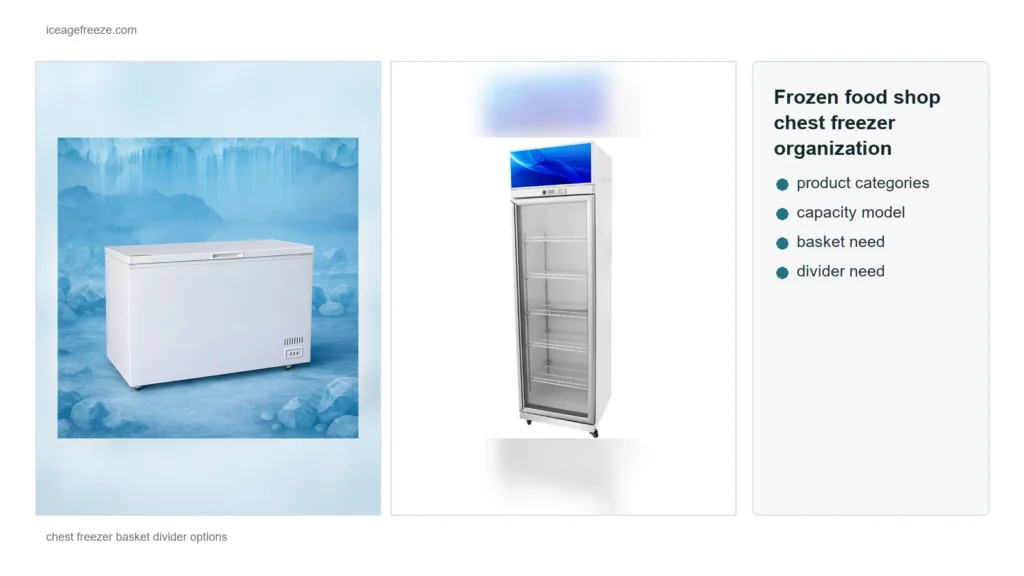
A chest freezer sitting on a dealer showroom floor is doing a job before it ever holds stock: it shows a visiting retailer what the model looks like, how the lid opens, how the baskets sit, and how the cabinet fits in a small shop. The same unit is also a piece of inventory. A distributor that loses track of whether a given cabinet is a showroom demo, a warehouse stock unit, or a sold unit has created a problem that follows the cabinet into a later sale or a return.
This guide is written for a Ghana distributor who keeps one or more demo chest freezers in a dealer showroom and needs those units to stay clearly identified and in saleable condition. It works through the records that mark a unit as a demo, how to keep the model identity attached to the cabinet, how to track visible condition and accessories, how to set sale-or-return rules before the unit leaves the warehouse, and how to keep the showroom unit presentable without turning it into used stock that no one wants. A demo cabinet is one line in a focused retail cooling range that also includes glass door beverage coolers, and the full product index is where a distributor keeps the two equipment lines separate.
What makes a showroom demo different from warehouse stock
A demo unit is a cabinet that has been unboxed, positioned in a showroom, and made available to be opened, handled, and powered for display. That single fact separates it from a sealed carton in the warehouse. The separation matters for two reasons. First, the demo unit accumulates handling that a sealed unit never sees: lids are opened and closed, baskets are lifted, and shoppers lean in to look. Second, the demo unit will later need a destination — it can be sold as ex-display, returned to the warehouse, or rotated out for a newer model — and every one of those destinations depends on knowing exactly what the unit is and what condition it is in.
A distributor avoids the ambiguity by marking the unit as a demo at the moment it is unboxed, before any handling begins. The marking is not a single sticker. It is a short record that travels with the unit from the warehouse to the showroom and back.
Start with a demo status record
The demo status record is the unit's passport. It carries, at minimum, the date the unit became a demo, the showroom it was assigned to, the model and capacity, and the nameplate details that identify the exact cabinet. The record also states the unit's intended end state — sold as ex-display, returned to stock, or reserved for a specific buyer — because that end state changes how carefully the showroom staff treat the unit.
Keeping the record as a simple, readable sheet rather than a mental note is what keeps the demo status from evaporating when a staff member changes. The sheet can be as plain as a paper form clipped to the warehouse file or a row in a spreadsheet, as long as one version of it stays with the unit and another stays with the distributor's inventory records. When the same distributor runs a rolling set of dealer stock reports, the demo unit needs a status of its own rather than being lumped in with salable sealed stock. That distinction is covered separately in the Ghana chest freezer dealer stock reporting guide, which handles stock levels and reorder evidence rather than the demo unit's identity and condition.
Keep the model identity attached to the cabinet
The single most expensive mistake on a demo unit is separating the cabinet from its model identity. A chest freezer in the commercial chest freezer range is identified by its model code — examples include IA-750, IA-990, IA-1105, IA-1460, IA-1760, IA-1960, IA-2000, IA-2200, and IA-2500 — together with its capacity and its temperature range. A demo unit that loses its model tag forces the distributor to guess whether a later customer is being quoted the right cabinet.
The model identity lives on the unit's nameplate, and the nameplate is the authority. Before the unit goes on display, the distributor reads the nameplate and copies the model, capacity, and temperature range onto the demo record. The capacity range across the listed models runs from 150 L to 1300 L, and standard temperature examples include -20 C to 0 C and -24 C to 0 C, so the model code is what pins down which capacity and which temperature a specific demo cabinet carries. A deep-freezer option — the IA-1110 at 358 L and -40 C to 0 C — is a different cabinet again, and it deserves its own line on the record when it is the unit being demonstrated.
The nameplate reading is also where voltage and plug details sit. A distributor confirming those details checks the nameplate on the specific unit and confirms with the supplier or an electrician rather than assuming one standard applies across models.
Record visible condition before and after display
Condition is easiest to protect when it is measured twice: once before the unit goes on display, and once when it leaves. The baseline record notes the state of the lid, the cabinet body, the interior liner, the basket or divider set, and any logo sticker or body colour finish. A scuff that is already there at the start gets written down so it is not mistaken later for showroom damage, and a new mark gets written down when it appears.
The baseline and the exit check are what make "saleable condition" a defensible phrase instead of a vague promise. When a demo unit is sold as ex-display, the distributor can point to the record and say what condition the buyer is receiving. When a demo unit returns to the warehouse, the same record shows what changed while it was on the floor. Photographs help here: a few clear photos of the lid, corners, and interior taken at the start and at the end cost nothing and settle disagreements that memory cannot.
Track accessories with the unit
A chest freezer demo is not only the cabinet. The accessories that ship with it — the baskets and dividers configured for the model, and any other included items the supplier packed — have to stay with the unit or the unit is incomplete when it comes time to sell or return it. The demo record lists the accessories by name and quantity, and the showroom keeps them in one place when they are not sitting in the cabinet.
Baskets and dividers are listed configuration and customization options on the chest freezer page, so two demos of the same model can carry different basket or divider layouts. Recording which layout each demo has prevents a basket from being borrowed for another cabinet and never coming back. When an accessory is missing at exit, the record makes it obvious which item and how many, so the distributor can replace it or adjust the terms rather than discovering the gap after a customer complains.
Set sale-or-return rules before the unit leaves the warehouse
A demo unit's future is a business decision, and it is cheaper to make it before the unit leaves the warehouse than after the showroom has been using it for three months. The distributor settles, in writing, what happens to the unit at the end of its showroom life: whether it may be sold as new, sold as ex-display at adjusted terms, returned to the warehouse, or reserved for a named buyer. The same note records who bears any cost of moving it and what condition is acceptable on return.
The sale-or-return rules matter because a dealer showroom and a distributor warehouse can each assume the other owns the risk. Without a written rule, a showroom that scratched the lid can argue the unit was always going to be sold at a discount, while the distributor can argue the unit was meant to come back pristine. A single agreed line — this unit returns to the warehouse unless sold as ex-display before a set date — removes the argument before it starts.
Showroom care that keeps the demo saleable
Daily care on the showroom floor is what stops a demo unit from drifting into used condition. The staff treat the demo as a working display: the lid is opened and closed with the handle rather than lifted by a corner, the interior stays clean and dry, and boxes or bags are not stacked on the lid while the unit is on display. The cabinet is kept clear of clutter on top, because a chest freezer that doubles as a shelf quickly picks up scratches on the lid and body.
Power use on the demo is a separate decision the distributor makes explicitly. A unit that is powered and holding temperature demonstrates the cooling, but it also runs continuously in a showroom. Whether the demo is run powered or unpowered, the staff keep the interior clean and check the lid and basket condition on a simple schedule, logging anything that changes on the demo record. The care routine is about protecting one unit's condition, not about choosing which models deserve the space, which is a different question covered in the chest freezer showroom comparison for Ghana distributors guide.
What to confirm before the demo goes on display
Before the unit is set on the showroom floor, a short confirmation closes the loop. The distributor checks the model and capacity against the nameplate, records the baseline condition and the accessory list, agrees the sale-or-return terms, and confirms with the supplier anything that is not clear on the unit itself — the temperature range, the basket or divider layout, and the voltage and plug details. Each of those details is confirmed against the specific unit rather than a general assumption, because a demo is only a good sales tool when it is the exact model and configuration the distributor is actually offering.
Related reading
A demo unit sits inside a wider dealer workflow. When the time comes to plan a fuller line, the commercial chest freezer buying guide for retail stores moves from protecting one unit to choosing the range. For questions that touch a specific model or configuration, the distributor can reach the team through the contact page.