
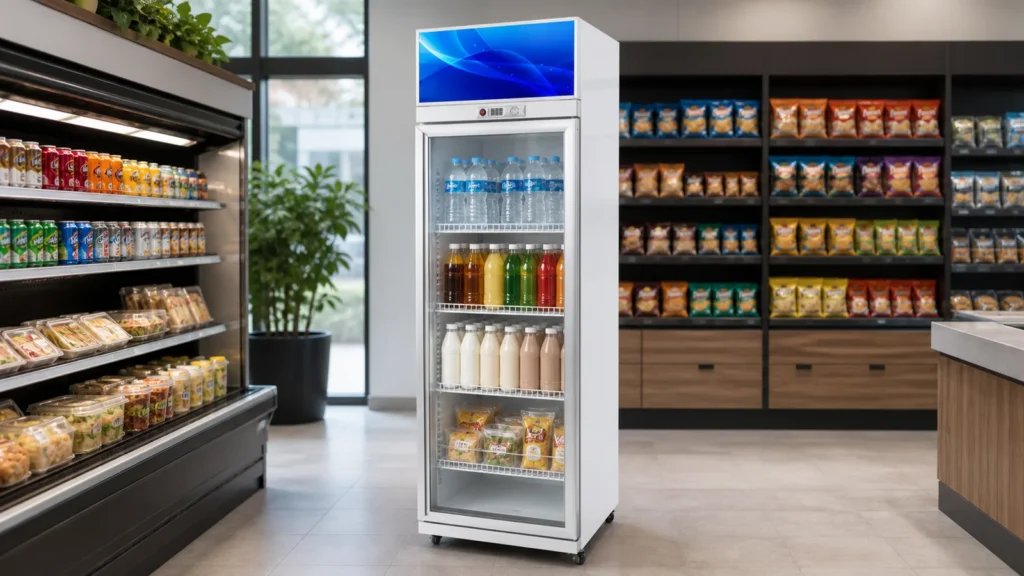
A beverage cooler can display several chilled categories, but putting every product wherever it fits makes shelf maps difficult to replenish and compare. Bottles, cans, cartons, dairy packs, juice, water, and chilled snacks differ in package height, depth, facing, label visibility, turnover, and handling requirements. The product page lists an adjustable-shelf, glass-door cooler range for chilled display at 0 to 10 C; it is not frozen-storage equipment. A useful zoning plan links real packages to a selected 400 L, 875 L, or 1300 L model, records shelf revisions, and preserves category identity through restocking.
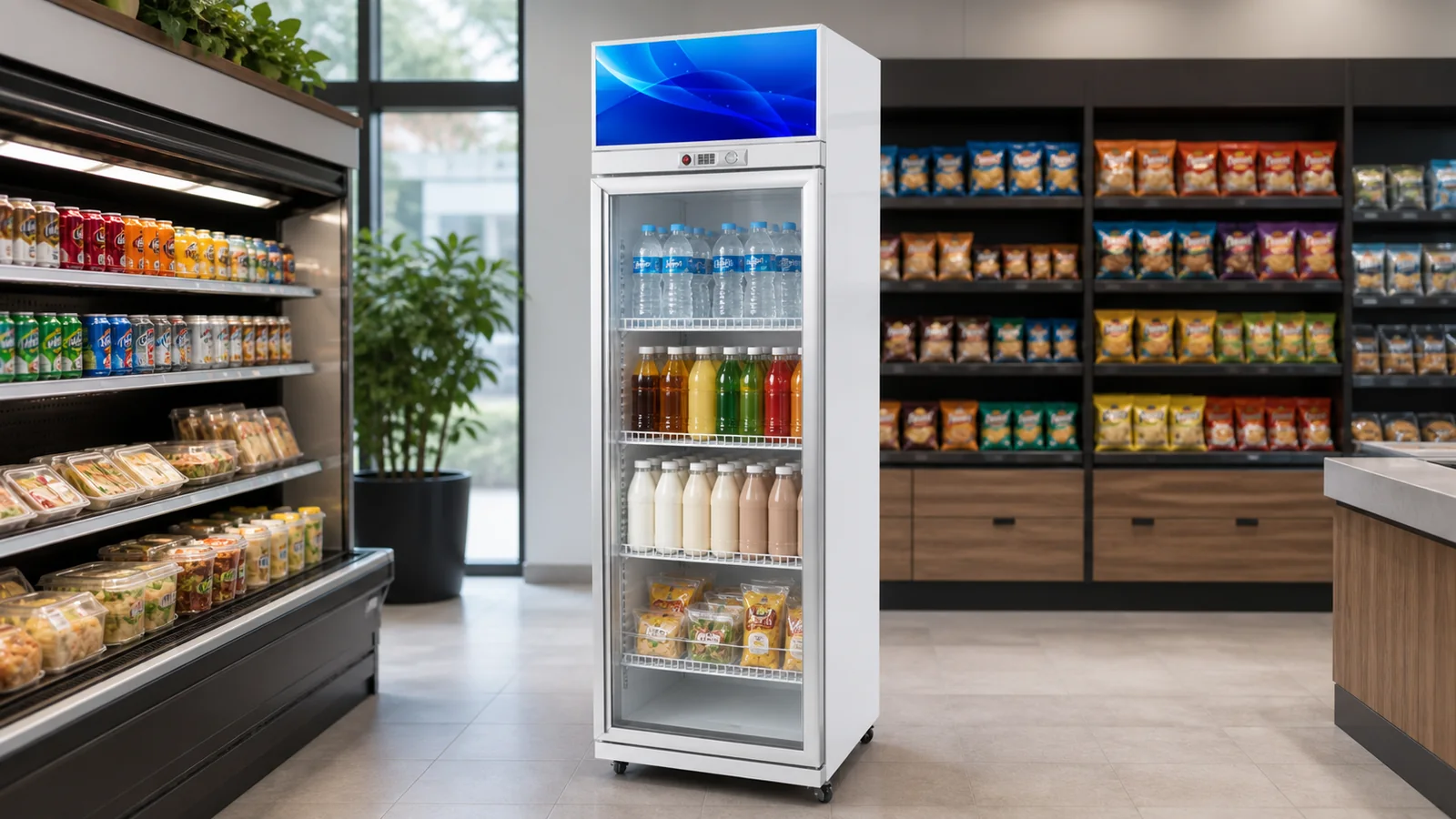
Confirm the Selected Cooler and Chilled Use
which one-, two-, or three-door beverage cooler, listed capacity, shelf set, and 0 to 10 C application the plan covers For this beverage cooler chilled category zoning task, the responsible team should collect the current model schedule and separate chilled display from chest-freezer or frozen-product requirements. At confirm the selected cooler and chilled use, verify the beverage cooler chilled category zoning condition together with its identity before the working state changes.
At the confirm the selected cooler and chilled use stage, retain model, door count, 400 L, 875 L or 1300 L listed capacity, shelf quantity, outer size, product use, and revision. Link each photograph, count, mark, drawing, or note to the beverage cooler chilled category zoning item it describes. For confirm the selected cooler and chilled use, keep the location and responsible role beside model, door count, 400 L, 875 L or 1300 L listed capacity, shelf quantity, outer size, product use, and revision so the next reviewer can repeat the check.
Range facts should not be generalized to an unconfirmed model or used to approve frozen storage. That boundary governs beverage cooler chilled category zoning, not a different product or site. When evidence supports several interpretations, route the beverage cooler chilled category zoning uncertainty through confirm the selected cooler and chilled use to the role authorized by this release condition: the category plan has the correct equipment identity.
Close confirm the selected cooler and chilled use only when the category plan has the correct equipment identity. If open, preserve the beverage cooler chilled category zoning state and name the unresolved point, owner, next evidence, and follow-up action. Pair model, door count, 400 L, 875 L or 1300 L listed capacity, shelf quantity, outer size, product use, and revision with the next confirm the selected cooler and chilled use review before custody, stock, equipment, or site work changes.
Before moving on, compare model, door count, 400 L, 875 L or 1300 L listed capacity, shelf quantity, outer size, product use, and revision with the release condition: the category plan has the correct equipment identity. This final comparison gives the beverage cooler chilled category zoning handoff its usable context. For confirm the selected cooler and chilled use, the receiving role should be able to reconstruct the decision from model, door count, 400 L, 875 L or 1300 L listed capacity, shelf quantity, outer size, product use, and revision without relying on memory.
Inventory Real Product Packages
which bottles, cans, cartons, dairy packs, juice, water, and chilled snacks need display space For this beverage cooler chilled category zoning task, the responsible team should measure representative packages and record case-to-shelf replenishment units. At inventory real product packages, verify the beverage cooler chilled category zoning condition together with its identity before the working state changes.
At the inventory real product packages stage, retain SKU, category, package height, width, depth, orientation, facing unit, outer case, label position, and handling note. Link each photograph, count, mark, drawing, or note to the beverage cooler chilled category zoning item it describes. For inventory real product packages, keep the location and responsible role beside SKU, category, package height, width, depth, orientation, facing unit, outer case, label position, and handling note so the next reviewer can repeat the check.
Brand assumptions or nominal volume cannot replace actual pack dimensions. That boundary governs beverage cooler chilled category zoning, not a different product or site. When evidence supports several interpretations, route the beverage cooler chilled category zoning uncertainty through inventory real product packages to the role authorized by this release condition: every planned facing has a physical reference.
Close inventory real product packages only when every planned facing has a physical reference. If open, preserve the beverage cooler chilled category zoning state and name the unresolved point, owner, next evidence, and follow-up action. Pair SKU, category, package height, width, depth, orientation, facing unit, outer case, label position, and handling note with the next inventory real product packages review before custody, stock, equipment, or site work changes.
Before moving on, compare SKU, category, package height, width, depth, orientation, facing unit, outer case, label position, and handling note with the release condition: every planned facing has a physical reference. This final comparison gives the beverage cooler chilled category zoning handoff its usable context. For inventory real product packages, the receiving role should be able to reconstruct the decision from SKU, category, package height, width, depth, orientation, facing unit, outer case, label position, and handling note without relying on memory.
Create Door and Shelf Zones
which categories occupy each door, vertical zone, and adjustable shelf position For this beverage cooler chilled category zoning task, the responsible team should group products by store logic while balancing visibility, package fit, replenishment, and selected-model shelf compatibility. At create door and shelf zones, verify the beverage cooler chilled category zoning condition together with its identity before the working state changes.
At the create door and shelf zones stage, retain door and shelf IDs, category, SKU range, facing count, shelf height, divider, label rail, and approved exception. Link each photograph, count, mark, drawing, or note to the beverage cooler chilled category zoning item it describes. For create door and shelf zones, keep the location and responsible role beside door and shelf IDs, category, SKU range, facing count, shelf height, divider, label rail, and approved exception so the next reviewer can repeat the check.
This workflow does not create universal shelf loads or food-handling limits. That boundary governs beverage cooler chilled category zoning, not a different product or site. When evidence supports several interpretations, route the beverage cooler chilled category zoning uncertainty through create door and shelf zones to the role authorized by this release condition: the map is practical for the selected product mix.
Close create door and shelf zones only when the map is practical for the selected product mix. If open, preserve the beverage cooler chilled category zoning state and name the unresolved point, owner, next evidence, and follow-up action. Pair door and shelf IDs, category, SKU range, facing count, shelf height, divider, label rail, and approved exception with the next create door and shelf zones review before custody, stock, equipment, or site work changes.
Before moving on, compare door and shelf IDs, category, SKU range, facing count, shelf height, divider, label rail, and approved exception with the release condition: the map is practical for the selected product mix. This final comparison gives the beverage cooler chilled category zoning handoff its usable context. For create door and shelf zones, the receiving role should be able to reconstruct the decision from door and shelf IDs, category, SKU range, facing count, shelf height, divider, label rail, and approved exception without relying on memory.
Decision and Evidence Matrix
Use this compact matrix to keep the physical item, working record, and release decision aligned.
| Review Point | What to Record | Release Question |
|---|---|---|
| Confirm the Selected Cooler and Chilled Use | model, door count, 400 L, 875 L or 1300 L listed capacity, shelf quantity, outer size, product use, and revision | the category plan has the correct equipment identity |
| Inventory Real Product Packages | SKU, category, package height, width, depth, orientation, facing unit, outer case, label position, and handling note | every planned facing has a physical reference |
| Create Door and Shelf Zones | door and shelf IDs, category, SKU range, facing count, shelf height, divider, label rail, and approved exception | the map is practical for the selected product mix |
| Separate Categories That Need Different Handling | category rule, package condition, spill response owner, shelf liner where approved, cleaning access, and exclusion | store controls and shelf map never conflict |
Separate Categories That Need Different Handling
whether open packs, dairy, allergens, fragile packaging, leaks, or local store procedures require a distinct zone For this beverage cooler chilled category zoning task, the responsible team should ask the responsible store team to define product-handling and cleaning constraints before assigning shared shelves. At separate categories that need different handling, verify the beverage cooler chilled category zoning condition together with its identity before the working state changes.
At the separate categories that need different handling stage, retain category rule, package condition, spill response owner, shelf liner where approved, cleaning access, and exclusion. Link each photograph, count, mark, drawing, or note to the beverage cooler chilled category zoning item it describes. For separate categories that need different handling, keep the location and responsible role beside category rule, package condition, spill response owner, shelf liner where approved, cleaning access, and exclusion so the next reviewer can repeat the check.
Equipment selection guidance cannot replace local food rules or product label requirements. That boundary governs beverage cooler chilled category zoning, not a different product or site. When evidence supports several interpretations, route the beverage cooler chilled category zoning uncertainty through separate categories that need different handling to the role authorized by this release condition: store controls and shelf map never conflict.
Close separate categories that need different handling only when store controls and shelf map never conflict. If open, preserve the beverage cooler chilled category zoning state and name the unresolved point, owner, next evidence, and follow-up action. Pair category rule, package condition, spill response owner, shelf liner where approved, cleaning access, and exclusion with the next separate categories that need different handling review before custody, stock, equipment, or site work changes.
Before moving on, compare category rule, package condition, spill response owner, shelf liner where approved, cleaning access, and exclusion with the release condition: store controls and shelf map never conflict. This final comparison gives the beverage cooler chilled category zoning handoff its usable context. For separate categories that need different handling, the receiving role should be able to reconstruct the decision from category rule, package condition, spill response owner, shelf liner where approved, cleaning access, and exclusion without relying on memory.
Test Replenishment and Customer Selection
whether staff can refill the mapped shelf and customers can see and remove products without dismantling neighboring zones For this beverage cooler chilled category zoning task, the responsible team should run an empty or controlled shelf setup with representative packages and observe door, cart, case, and hand paths. At test replenishment and customer selection, verify the beverage cooler chilled category zoning condition together with its identity before the working state changes.
At the test replenishment and customer selection stage, retain restocking sequence, temporary stock, door used, shelf access, facing restoration, queue effect, and observation. Link each photograph, count, mark, drawing, or note to the beverage cooler chilled category zoning item it describes. For test replenishment and customer selection, keep the location and responsible role beside restocking sequence, temporary stock, door used, shelf access, facing restoration, queue effect, and observation so the next reviewer can repeat the check.
A showroom arrangement may not represent actual case replenishment or peak store activity. That boundary governs beverage cooler chilled category zoning, not a different product or site. When evidence supports several interpretations, route the beverage cooler chilled category zoning uncertainty through test replenishment and customer selection to the role authorized by this release condition: the plan works as a repeatable store task.
Close test replenishment and customer selection only when the plan works as a repeatable store task. If open, preserve the beverage cooler chilled category zoning state and name the unresolved point, owner, next evidence, and follow-up action. Pair restocking sequence, temporary stock, door used, shelf access, facing restoration, queue effect, and observation with the next test replenishment and customer selection review before custody, stock, equipment, or site work changes.
Before moving on, compare restocking sequence, temporary stock, door used, shelf access, facing restoration, queue effect, and observation with the release condition: the plan works as a repeatable store task. This final comparison gives the beverage cooler chilled category zoning handoff its usable context. For test replenishment and customer selection, the receiving role should be able to reconstruct the decision from restocking sequence, temporary stock, door used, shelf access, facing restoration, queue effect, and observation without relying on memory.
Control Seasonal and SKU Changes
how new package sizes, discontinued SKUs, promotions, and category expansion change shelf positions For this beverage cooler chilled category zoning task, the responsible team should issue a shelf-map revision and recheck package fit and category boundaries before rollout. At control seasonal and sku changes, verify the beverage cooler chilled category zoning condition together with its identity before the working state changes.
At the control seasonal and sku changes stage, retain old and new map, affected doors and shelves, package change, approval, effective date, temporary label, and restoration. Link each photograph, count, mark, drawing, or note to the beverage cooler chilled category zoning item it describes. For control seasonal and sku changes, keep the location and responsible role beside old and new map, affected doors and shelves, package change, approval, effective date, temporary label, and restoration so the next reviewer can repeat the check.
Adjustable shelves support flexibility but not undocumented or incompatible configurations. That boundary governs beverage cooler chilled category zoning, not a different product or site. When evidence supports several interpretations, route the beverage cooler chilled category zoning uncertainty through control seasonal and sku changes to the role authorized by this release condition: the physical cooler and current category map remain aligned.
Close control seasonal and sku changes only when the physical cooler and current category map remain aligned. If open, preserve the beverage cooler chilled category zoning state and name the unresolved point, owner, next evidence, and follow-up action. Pair old and new map, affected doors and shelves, package change, approval, effective date, temporary label, and restoration with the next control seasonal and sku changes review before custody, stock, equipment, or site work changes.
Before moving on, compare old and new map, affected doors and shelves, package change, approval, effective date, temporary label, and restoration with the release condition: the physical cooler and current category map remain aligned. This final comparison gives the beverage cooler chilled category zoning handoff its usable context. For control seasonal and sku changes, the receiving role should be able to reconstruct the decision from old and new map, affected doors and shelves, package change, approval, effective date, temporary label, and restoration without relying on memory.
Buyer Checklist
- Select the exact beverage cooler model and keep it separate from frozen storage.
- Measure real packages because nominal product volume does not define shelf fit.
- Assign stable door and shelf IDs.
- Group chilled categories with store handling and cleaning rules in mind.
- Test customer selection and case-to-shelf replenishment.
- Record shelf changes when package sizes or promotions change.
- Keep the displayed range inside the listed 0 to 10 C beverage-cooler use and model guidance.
Frequently Asked Questions
Can frozen products be stored in the beverage cooler?
The verified beverage cooler range is listed for chilled display at 0 to 10 C. Frozen products belong in equipment selected and documented for frozen storage.
Should dairy always be placed on the bottom shelf?
No universal shelf rule is supplied here. Use product labels, responsible store procedures, package fit, cleaning access, and the selected cooler plan.
Can adjustable shelves be moved for every new SKU?
They support model-permitted adjustment, but the current shelf map, product fit, access, and store controls should be reviewed and revised.
Related Product or Reading
Use the detailed beverage cooler shelf-planning guide when package height and facing count need a deeper model-specific review.
Discuss the Exact Project
Send ICEAGE the beverage-cooler model, door count, listed capacity, shelf set, product categories, SKU package dimensions, facing plan, replenishment cases, store handling rules, and change frequency.