
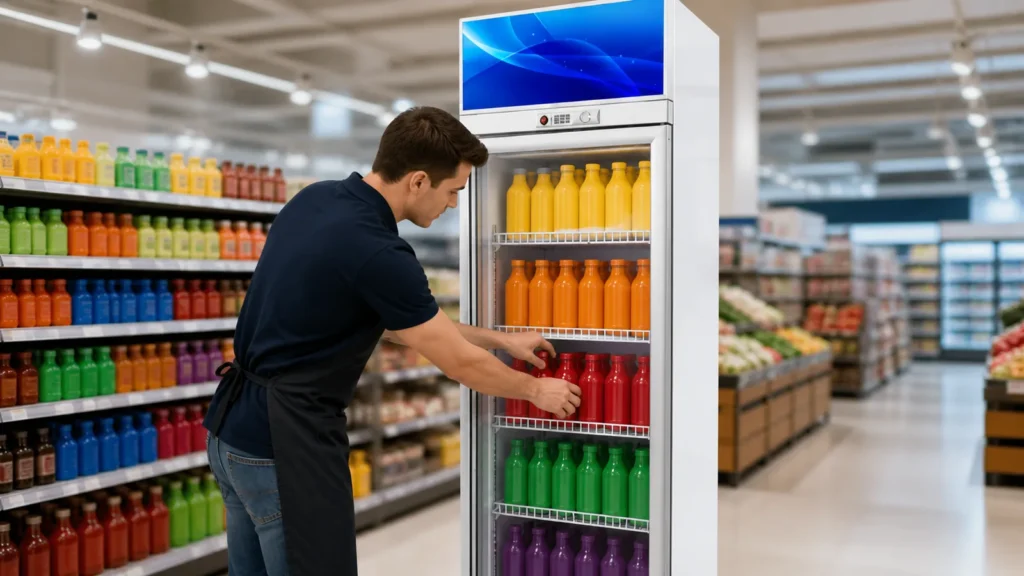
A glass-door beverage cooler can be technically present but commercially hard to read. Bottles may hide behind shelf rails, mixed package heights break category blocks, stickers intrude on the glass, a nearby fixture blocks the approach, or reflections change with store lighting and viewing angle. Simply photographing the cooler head-on misses the shopper path.
Audit from several real approach points. Confirm the exact one-door or multi-door model, map shelves and product facings, photograph the closed glass at shopper height, note reflections without promising optical performance, check that approved artwork and price information stay in their assigned areas, and separate merchandising corrections from cleaning or qualified service needs.
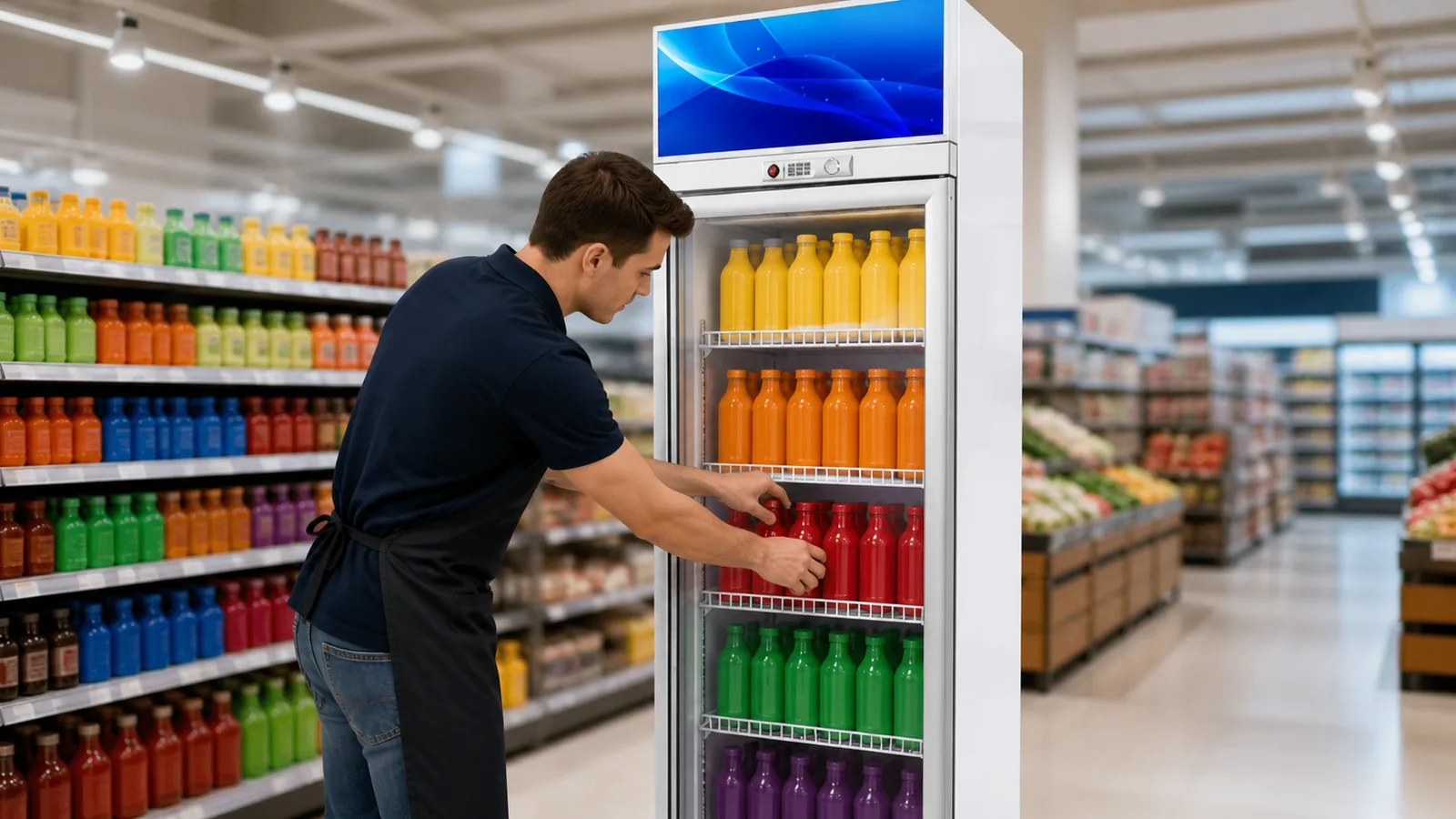
Define Shopper Approach Points
Mark where customers first see, approach, stop, and reach the cooler. For the beverage cooler glass door visibility workflow, this checkpoint joins cooler location, approach direction, viewing distance, and queue or aisle to a named status and responsible role.
Traceable Records
- cooler location: Link cooler location to the physical beverage cooler glass door visibility item; note evidence, custody, date, exception state, and authorized follow-up.
- approach direction: Link approach direction to the physical beverage cooler glass door visibility item; note evidence, custody, date, exception state, and authorized follow-up.
- viewing distance: Link viewing distance to the physical beverage cooler glass door visibility item; note evidence, custody, date, exception state, and authorized follow-up.
- queue or aisle: Link queue or aisle to the physical beverage cooler glass door visibility item; note evidence, custody, date, exception state, and authorized follow-up.
- adjacent fixture: Link adjacent fixture to the physical beverage cooler glass door visibility item; note evidence, custody, date, exception state, and authorized follow-up.
- shopper height range observation: Link shopper height range observation to the physical beverage cooler glass door visibility item; note evidence, custody, date, exception state, and authorized follow-up.
Control risk: Auditing only from directly in front when most shoppers arrive from the side. Use cooler location and approach direction to reconstruct this beverage cooler glass door visibility event. If viewing distance conflicts with queue or aisle, protect the affected item and name the reviewer.
Authorized release: The audit includes the store's real sightlines and obstructions. Record the beverage cooler glass door visibility outcome beside adjacent fixture, shopper height range observation, and photo point; unresolved evidence keeps the stage open.
Confirm Cabinet and Door Structure
Record model, door count, glass panels, frame, light box, and opening path. For the beverage cooler glass door visibility workflow, this checkpoint joins model, door count, glass area, and frame to a named status and responsible role.
Evidence to Capture
- model: For beverage cooler glass door visibility, capture model at its source; connect model to an owner, current status, location, and date.
- door count: For beverage cooler glass door visibility, capture door count at its source; connect door count to an owner, current status, location, and date.
- glass area: For beverage cooler glass door visibility, capture glass area at its source; connect glass area to an owner, current status, location, and date.
- frame: For beverage cooler glass door visibility, capture frame at its source; connect frame to an owner, current status, location, and date.
- handle: For beverage cooler glass door visibility, capture handle at its source; connect handle to an owner, current status, location, and date.
- light box: For beverage cooler glass door visibility, capture light box at its source; connect light box to an owner, current status, location, and date.
Exception analysis: Comparing visibility across different structures without naming the physical difference. In the beverage cooler glass door visibility file, compare model with door count; use glass area and frame to locate the break. Keep handle visible while the assigned role investigates.
Release evidence: The visibility record is tied to one exact cabinet configuration. For beverage cooler glass door visibility, connect that result to light box and door swing, including any open owner and next review date.
Map Shelves, Facings, and Pack Heights
Record product rows as merchandising geometry rather than judging brands. For the beverage cooler glass door visibility workflow, this checkpoint joins shelf ID, category block, facing count, and pack height to a named status and responsible role.
Owner's Working Record
- shelf ID: Locate the evidence for shelf ID, then place it in the beverage cooler glass door visibility record with responsibility and timing visible.
- category block: Locate the evidence for category block, then place it in the beverage cooler glass door visibility record with responsibility and timing visible.
- facing count: Locate the evidence for facing count, then place it in the beverage cooler glass door visibility record with responsibility and timing visible.
- pack height: Locate the evidence for pack height, then place it in the beverage cooler glass door visibility record with responsibility and timing visible.
- shelf rail: Locate the evidence for shelf rail, then place it in the beverage cooler glass door visibility record with responsibility and timing visible.
- empty gap: Locate the evidence for empty gap, then place it in the beverage cooler glass door visibility record with responsibility and timing visible.
Failure path: Filling every available space while front rows hide products or information behind them. Test the beverage cooler glass door visibility sequence through shelf ID, category block, and facing count. A mismatch should remain attached to pack height, not disappear inside a general comment.
Closeout point: Each shelf has a readable facing plan from the intended approach. Close this beverage cooler glass door visibility stage only when shelf rail, empty gap, and rear-row visibility support the same status.
Observe Closed-Glass Reflections and Cleanliness
Photograph the closed door at the defined viewpoints and route cleaning or lighting observations appropriately. For the beverage cooler glass door visibility workflow, this checkpoint joins closed-door photo, reflection source, smear or residue, and condensation observation to a named status and responsible role.
Decision Fields
- closed-door photo: Treat closed-door photo as a decision field for beverage cooler glass door visibility; preserve the observed value, its source, reviewer, and unresolved status.
- reflection source: Treat reflection source as a decision field for beverage cooler glass door visibility; preserve the observed value, its source, reviewer, and unresolved status.
- smear or residue: Treat smear or residue as a decision field for beverage cooler glass door visibility; preserve the observed value, its source, reviewer, and unresolved status.
- condensation observation: Treat condensation observation as a decision field for beverage cooler glass door visibility; preserve the observed value, its source, reviewer, and unresolved status.
- lighting condition: Treat lighting condition as a decision field for beverage cooler glass door visibility; preserve the observed value, its source, reviewer, and unresolved status.
- time: Treat time as a decision field for beverage cooler glass door visibility; preserve the observed value, its source, reviewer, and unresolved status.
Reason for control: Claiming a glass defect or lighting failure from one angle without a repeatable observation. The beverage cooler glass door visibility reviewer uses closed-door photo to identify the item, reflection source to confirm context, and smear or residue to show responsibility. Any conflict stays linked to condensation observation.
Decision gate: The record states where and when visibility changed without unsupported diagnosis. The beverage cooler glass door visibility decision cites lighting condition, records time, and leaves responsible role open if follow-up remains.
Keep Artwork and Signage Within Boundaries
Check light-box art, decals, price information, and temporary promotions against the approved placement. For the beverage cooler glass door visibility workflow, this checkpoint joins artwork revision, glass coverage, light-box panel, and price rail to a named status and responsible role.
Handover Evidence
- artwork revision: The beverage cooler glass door visibility handoff names artwork revision, where it was checked, who checked it, and what must happen next.
- glass coverage: The beverage cooler glass door visibility handoff names glass coverage, where it was checked, who checked it, and what must happen next.
- light-box panel: The beverage cooler glass door visibility handoff names light-box panel, where it was checked, who checked it, and what must happen next.
- price rail: The beverage cooler glass door visibility handoff names price rail, where it was checked, who checked it, and what must happen next.
- temporary sign: The beverage cooler glass door visibility handoff names temporary sign, where it was checked, who checked it, and what must happen next.
- required product view: The beverage cooler glass door visibility handoff names required product view, where it was checked, who checked it, and what must happen next.
Review trigger: Adding promotional material until the glass display function is undermined. When that trigger appears, the beverage cooler glass door visibility owner checks artwork revision against glass coverage, preserves light-box panel, and routes price rail to the proper authority.
Handover test: Current approved information and product view remain clearly separated. The next beverage cooler glass door visibility role receives temporary sign, required product view, and the current state of campaign owner rather than a verbal assurance.
Assign Corrective Actions by Type
Separate shelf reset, stock facing, cleaning, artwork removal, store layout, and service review. For the beverage cooler glass door visibility workflow, this checkpoint joins finding, action type, owner, and due date to a named status and responsible role.
Traceable Records
- finding: Link finding to the physical beverage cooler glass door visibility item; note evidence, custody, date, exception state, and authorized follow-up.
- action type: Link action type to the physical beverage cooler glass door visibility item; note evidence, custody, date, exception state, and authorized follow-up.
- owner: Link owner to the physical beverage cooler glass door visibility item; note evidence, custody, date, exception state, and authorized follow-up.
- due date: Link due date to the physical beverage cooler glass door visibility item; note evidence, custody, date, exception state, and authorized follow-up.
- before photo: Link before photo to the physical beverage cooler glass door visibility item; note evidence, custody, date, exception state, and authorized follow-up.
- after photo: Link after photo to the physical beverage cooler glass door visibility item; note evidence, custody, date, exception state, and authorized follow-up.
Control risk: Sending every visibility issue to service or every glass observation to merchandising. Use finding and action type to reconstruct this beverage cooler glass door visibility event. If owner conflicts with due date, protect the affected item and name the reviewer.
Authorized release: Each action reaches the role able to close it and evidence returns to the audit. Record the beverage cooler glass door visibility outcome beside before photo, after photo, and closure; unresolved evidence keeps the stage open.
Beverage Cooler Glass-Door Visibility Audit for Retail Merchandising Control Matrix
This beverage cooler glass door visibility matrix keeps each checkpoint beside its own evidence and release question. Use a separate row whenever the physical item, location, responsible role, or decision status changes.
| Beverage Cooler Glass Door Visibility checkpoint | Evidence for this decision | Question before movement |
|---|---|---|
| Define Shopper Approach Points | cooler location, approach direction, viewing distance, and queue or aisle | the audit includes the store's real sightlines and obstructions. |
| Confirm Cabinet and Door Structure | model, door count, glass area, and frame | the visibility record is tied to one exact cabinet configuration. |
| Map Shelves, Facings, and Pack Heights | shelf ID, category block, facing count, and pack height | each shelf has a readable facing plan from the intended approach. |
| Observe Closed-Glass Reflections and Cleanliness | closed-door photo, reflection source, smear or residue, and condensation observation | the record states where and when visibility changed without unsupported diagnosis. |
| Keep Artwork and Signage Within Boundaries | artwork revision, glass coverage, light-box panel, and price rail | current approved information and product view remain clearly separated. |
| Assign Corrective Actions by Type | finding, action type, owner, and due date | each action reaches the role able to close it and evidence returns to the audit. |
Beverage Cooler Glass-Door Visibility Audit for Retail Merchandising Release Checklist
- Route any define shopper approach points discrepancy through the beverage cooler glass door visibility record linked to cooler location.
- Route any confirm cabinet and door structure discrepancy through the beverage cooler glass door visibility record linked to model.
- Route any map shelves, facings, and pack heights discrepancy through the beverage cooler glass door visibility record linked to shelf ID.
- Route any observe closed-glass reflections and cleanliness discrepancy through the beverage cooler glass door visibility record linked to closed-door photo.
- Route any keep artwork and signage within boundaries discrepancy through the beverage cooler glass door visibility record linked to artwork revision.
- Route any assign corrective actions by type discrepancy through the beverage cooler glass door visibility record linked to finding.
Questions About Beverage Cooler Glass-Door Visibility Audit for Retail Merchandising
What is the minimum purpose of beverage cooler glass door visibility?
Its purpose is to make shopper approach points auditable alongside closed-door sightline. It also shows how shelf and facing map leads to package-height obstruction without an undocumented shortcut.
How should the opening evidence be checked?
Review cooler location; approach direction; viewing distance; queue or aisle; adjacent fixture; shopper height range observation; photo point against the physical situation. A beverage cooler glass door visibility reviewer should mark uncertainty explicitly instead of filling gaps with an expected value.
Which issue blocks routine release?
This issue blocks the ordinary path: claiming a glass defect or lighting failure from one angle without a repeatable observation. The beverage cooler glass door visibility record remains open until the correct authority accepts evidence for the next step.
Are performance or compliance results promised?
No. No visibility score, lighting output, anti-reflection performance, cleaning method, or sales improvement is claimed. Only verified project documents and accountable roles can establish the final beverage cooler glass door visibility outcome.
Related Product or Reading
- Glass-door beverage cooler range: provides the verified cooler identity needed before shelf facings, door sightlines, or artwork boundaries are reviewed
- Beverage Cooler Door Count Guide: Single, Double and Three Door Models for Retail Stores: explains how door quantity changes the available display plane and should be read separately from the field visibility audit
- Commercial chest freezer range: offers enclosed frozen-stock storage as a distinct equipment choice when an upright chilled-drink display is not the intended retail job
Prepare the Review File
Send shopper approach points, closed-door sightline, shelf and facing map, package-height obstruction, artwork boundary, reflection observation, corrective owner to ICEAGE. For this beverage cooler glass door visibility request, those records let the team review the selected glass-door beverage cooler retail unit against the buyer task and verified product scope.