
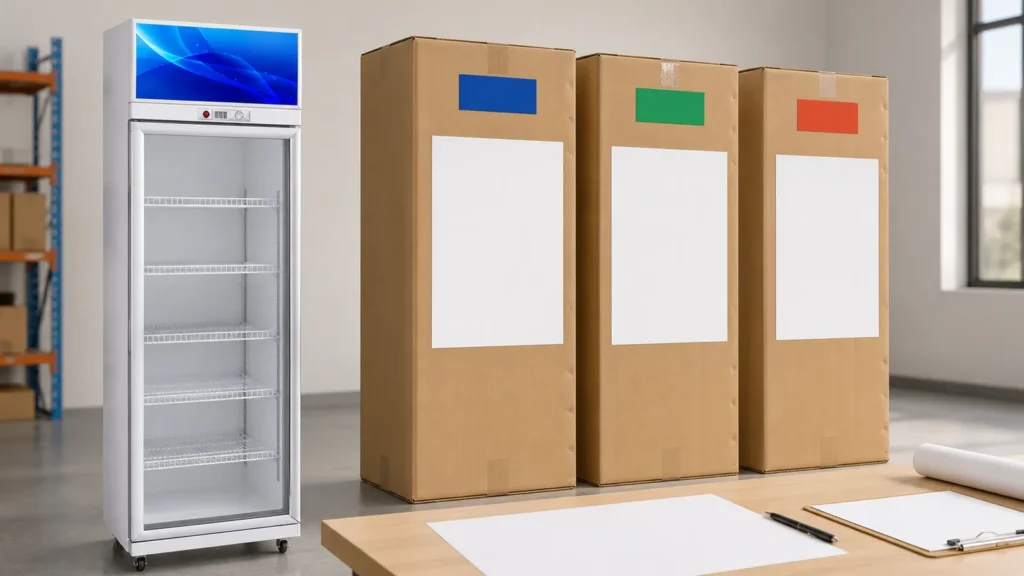
A beverage cooler carton has two jobs: protect the equipment and identify exactly what is inside. OEM or ODM orders add importer names, market text, shipping marks, barcodes, campaign references, or private model codes. If those fields are assembled independently from the purchase order and cabinet artwork, a correct cooler can arrive inside a misleading carton.
The carton label should be managed as controlled order data. Buyer and supplier agree which fields are supplier-generated, which are buyer-supplied, which are required by the destination or contract, and which must remain variable for production. The proof is checked against the exact model and packing configuration, then a packed-unit photograph confirms placement and readability before the shipment record is closed.
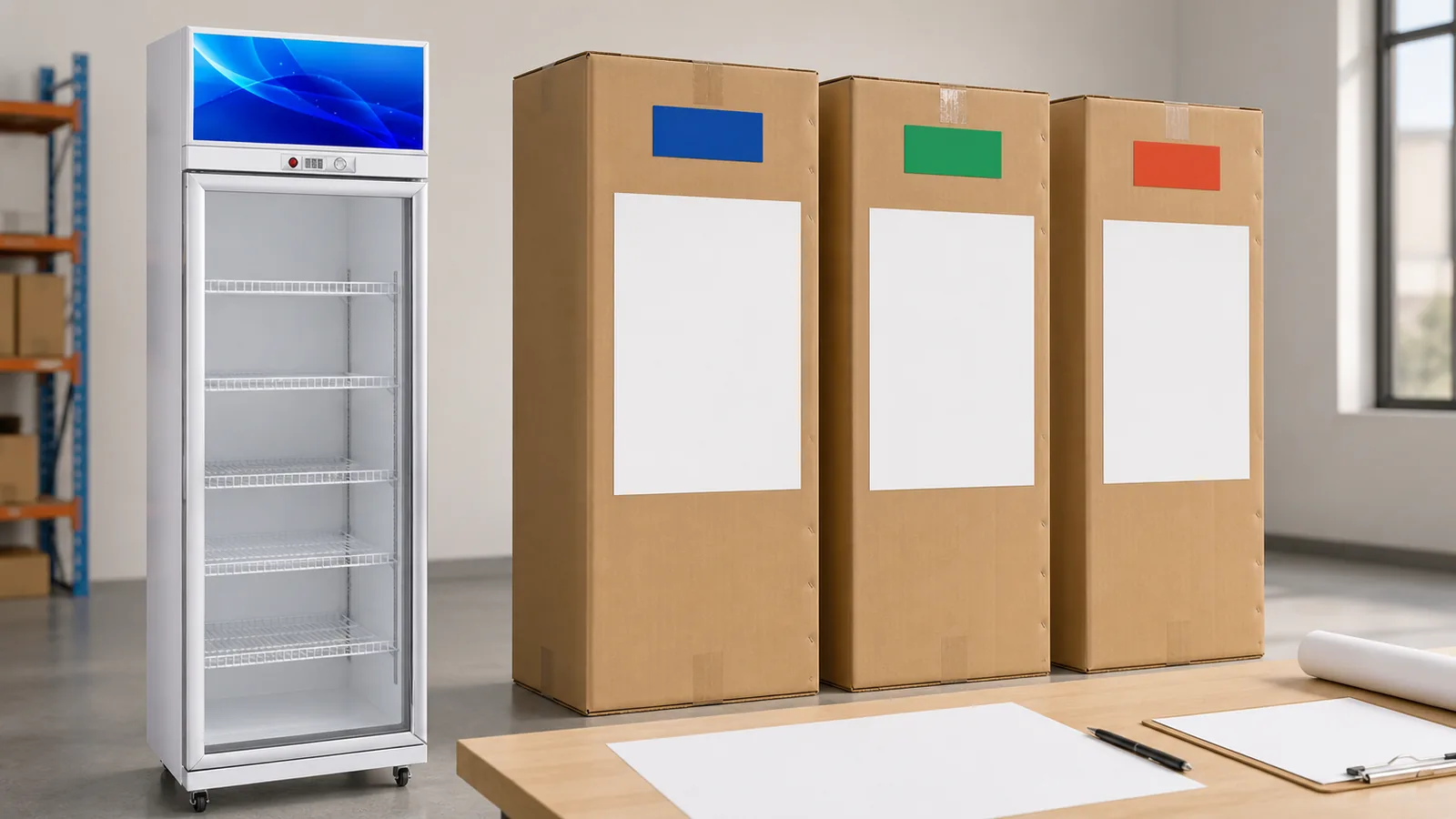
Build a Carton Field Ownership List
Assign every fixed and variable field to the party that supplies and approves it. The working record for this stage covers supplier model, buyer model, product description, importer or consignee data when required, destination mark, barcode, and order reference.
Records for this stage
- supplier model: source, location, owner, status, and date.
- buyer model: source, location, owner, status, and date.
- product description: source, location, owner, status, and date.
- importer or consignee data when required: source, location, owner, status, and date.
- destination mark: source, location, owner, status, and date.
- barcode: source, location, owner, status, and date.
Why this stage can fail: Combining copied fields from an earlier order without confirming their current owner or purpose. Use supplier model, buyer model, and product description to document the exception, and keep importer or consignee data when required with the reviewer's decision.
Release condition: Each field has a source, approver, language or market version, and change owner. Record any exception against barcode, name its owner and next action, and keep order reference open until resolved.
Map Labels to the Exact Packed Model
Link carton proof, cabinet model, door configuration, supplied accessories, and packing unit. The working record for this stage covers purchase-order line, cabinet model, door count, color or artwork variant, accessory pack, carton number, and quantity per carton.
Records for this stage
- purchase-order line: source, location, owner, status, and date.
- cabinet model: source, location, owner, status, and date.
- door count: source, location, owner, status, and date.
- color or artwork variant: source, location, owner, status, and date.
- accessory pack: source, location, owner, status, and date.
- carton number: source, location, owner, status, and date.
Why this stage can fail: Using one carton design across visually similar coolers whose model or supplied contents differ. Use purchase-order line, cabinet model, and door count to document the exception, and keep color or artwork variant with the reviewer's decision.
Release condition: The proof identifies one packed configuration and any shared-carton logic is explicitly documented. Record any exception against carton number, name its owner and next action, and keep quantity per carton open until resolved.
Separate Verified Marks From Decorative Content
Review required identification and handling information independently from branding or promotional graphics. The working record for this stage covers required identification, contract shipping mark, handling symbols, orientation, private logo, campaign graphic, and keep-clear label area.
Records for this stage
- required identification: source, location, owner, status, and date.
- contract shipping mark: source, location, owner, status, and date.
- handling symbols: source, location, owner, status, and date.
- orientation: source, location, owner, status, and date.
- private logo: source, location, owner, status, and date.
- campaign graphic: source, location, owner, status, and date.
Why this stage can fail: Adding certification, performance, compliance, or handling statements because they appeared on an unrelated template. Use required identification, contract shipping mark, and handling symbols to document the exception, and keep orientation with the reviewer's decision.
Release condition: Every mark is supported by the order requirement, verified product record, or approved buyer requirement. Record any exception against campaign graphic, name its owner and next action, and keep keep-clear label area open until resolved.
Control Barcodes and Variable Data
Test the buyer-supplied code, human-readable reference, print location, and revision before mass application. The working record for this stage covers barcode owner, encoded value, printed value, label size, quiet area, scan test by responsible party, and serial or batch variable.
Records for this stage
- barcode owner: source, location, owner, status, and date.
- encoded value: source, location, owner, status, and date.
- printed value: source, location, owner, status, and date.
- label size: source, location, owner, status, and date.
- quiet area: source, location, owner, status, and date.
- scan test by responsible party: source, location, owner, status, and date.
Why this stage can fail: Creating or editing a barcode value at the factory without approval from the data owner. Use barcode owner, encoded value, and printed value to document the exception, and keep label size with the reviewer's decision.
Release condition: The code owner accepts the value and sample, and variable fields are generated from a controlled source. Record any exception against scan test by responsible party, name its owner and next action, and keep serial or batch variable open until resolved.
Verify the First Packed Unit
Photograph label placement, carton faces, closure, accessories, and cabinet identity for the released packing configuration. The working record for this stage covers front and side carton, label close-up, model identity, accessory pack, carton condition, proof revision, and inspector and date.
Records for this stage
- front and side carton: source, location, owner, status, and date.
- label close-up: source, location, owner, status, and date.
- model identity: source, location, owner, status, and date.
- accessory pack: source, location, owner, status, and date.
- carton condition: source, location, owner, status, and date.
- proof revision: source, location, owner, status, and date.
Why this stage can fail: Approving a flat artwork file without confirming orientation and placement on the actual packed unit. Use front and side carton, label close-up, and model identity to document the exception, and keep accessory pack with the reviewer's decision.
Release condition: First-unit evidence matches the released proof and exceptions are corrected before the wider packing run continues. Record any exception against proof revision, name its owner and next action, and keep inspector and date open until resolved.
Carton Label Data Matrix
A field-by-field register prevents supplier data, buyer data, variable codes, and decorative artwork from being approved as one undifferentiated image.
| Review Point | Evidence to Keep | Release Question |
|---|---|---|
| Build a Carton Field Ownership List | supplier model, buyer model, product description, and importer or consignee data when required | each field has a source, approver, language or market version, and change owner. |
| Map Labels to the Exact Packed Model | purchase-order line, cabinet model, door count, and color or artwork variant | the proof identifies one packed configuration and any shared-carton logic is explicitly documented. |
| Separate Verified Marks From Decorative Content | required identification, contract shipping mark, handling symbols, and orientation | every mark is supported by the order requirement, verified product record, or approved buyer requirement. |
| Control Barcodes and Variable Data | barcode owner, encoded value, printed value, and label size | the code owner accepts the value and sample, and variable fields are generated from a controlled source. |
| Verify the First Packed Unit | front and side carton, label close-up, model identity, and accessory pack | first-unit evidence matches the released proof and exceptions are corrected before the wider packing run continues. |
Carton Label Approval Checklist
- Assign ownership and approval for every fixed and variable label field.
- Map the proof to one exact cooler model, artwork variant, accessory set, and packing unit.
- Remove unsupported certification, performance, compliance, and handling content from inherited templates.
- Have the barcode owner verify encoded and printed values on a production-representative sample.
- Compare first packed-unit photographs with the released proof before continuing the packing run.
Cooler Carton Label Questions
Can the buyer supply a finished label file?
Yes, but both sides still need to confirm model mapping, dimensions, print area, variable fields, rights, and the revision released for the order.
Who creates the barcode?
The commercial data owner should supply or approve the encoded value. The printer or supplier should not invent a replacement when the source is missing.
Should carton artwork match cabinet artwork?
They should map to the same order variant, but their purposes differ. Cabinet graphics support retail presentation; cartons need accurate packing and logistics identity.
Related Product or Reading
- Beverage cooler product category: anchors the carton proof to the real cooler range
- Custom cooler artwork approval: keeps cabinet graphics and packaging identity under coordinated revision control
Send the Carton Data Sheet
Share the cooler model, buyer and supplier model codes, artwork variant, destination and importer fields, shipping marks, barcode source, label dimensions, language version, packing unit, and approving contacts with ICEAGE. That project evidence lets ICEAGE review the selected glass-door beverage cooler shipment for this buyer task: Help importers approve outer-carton labels and shipping marks that identify the correct beverage cooler without inventing or obscuring required information.