
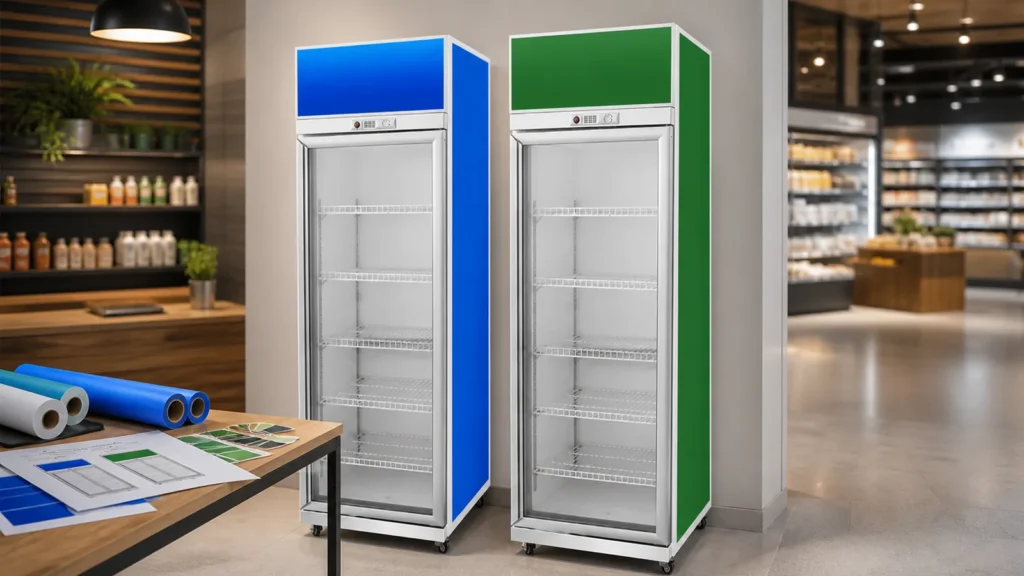
A retail campaign may end long before the beverage cooler does. Side decals, headers, promotional panels, or other approved graphics then need removal or replacement across dealer showrooms and stores. Without a unit register, different cabinet models can receive the wrong kit, an expired offer can remain visible, and old adhesive or surface marks can be hidden under the next campaign.
A controlled changeover starts with cabinet identity and the currently installed artwork. The retailer confirms the new campaign revision and rights, the responsible team follows the graphic and surface guidance, protected functional zones remain clear, and photographs document the surface before and after application. Unused, damaged, and obsolete kits receive separate inventory status so they cannot return to circulation by mistake.
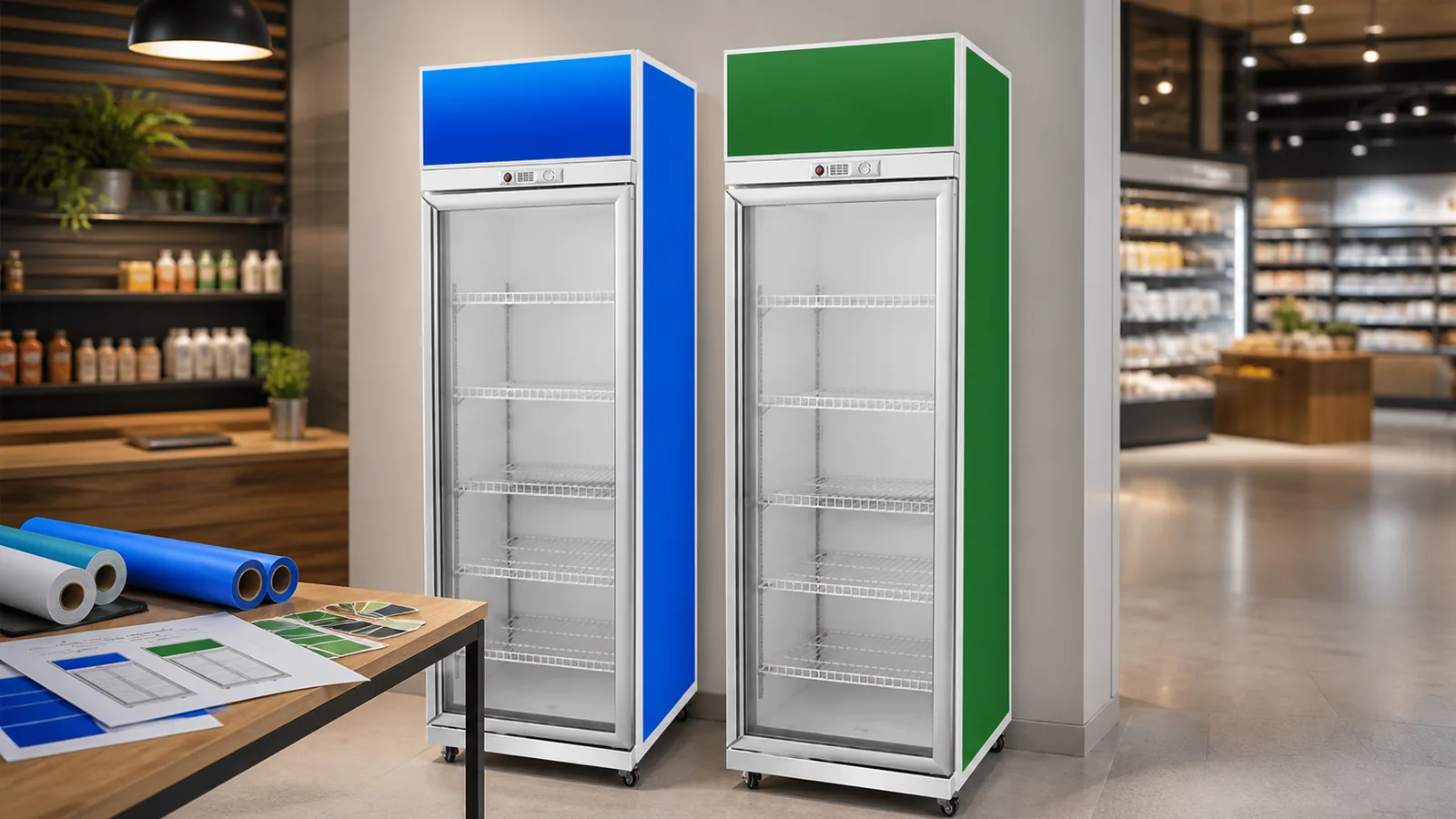
Create a Cooler and Campaign Register
List every field unit, exact model, location, current artwork, and responsible store contact. The working record for this stage covers asset code, model and door count, store location, current campaign, artwork kit revision, installation date when known, and contact.
Records for this stage
- asset code: source, location, owner, status, and date.
- model and door count: source, location, owner, status, and date.
- store location: source, location, owner, status, and date.
- current campaign: source, location, owner, status, and date.
- artwork kit revision: source, location, owner, status, and date.
- installation date when known: source, location, owner, status, and date.
Why this stage can fail: Shipping replacement kits from a campaign list that does not identify the actual cabinet at each location. Use asset code, model and door count, and store location to document the exception, and keep current campaign with the reviewer's decision.
Release condition: Every target unit maps to one compatible kit and exceptions remain outside the release list. Record any exception against installation date when known, name its owner and next action, and keep contact open until resolved.
Approve the New Revision and Withdrawal Date
Confirm rights, market version, start date, old-campaign removal timing, and current artwork proof. The working record for this stage covers new campaign code, authorized assets, market or language, start date, old-art withdrawal date, proof revision, and approving role.
Records for this stage
- new campaign code: source, location, owner, status, and date.
- authorized assets: source, location, owner, status, and date.
- market or language: source, location, owner, status, and date.
- start date: source, location, owner, status, and date.
- old-art withdrawal date: source, location, owner, status, and date.
- proof revision: source, location, owner, status, and date.
Why this stage can fail: Installing the new design from an informal preview while older revisions remain active in storage. Use new campaign code, authorized assets, and market or language to document the exception, and keep start date with the reviewer's decision.
Release condition: One current proof and schedule govern distribution, installation, and removal of obsolete kits. Record any exception against proof revision, name its owner and next action, and keep approving role open until resolved.
Record the Surface Before New Application
Remove old material only with the method appropriate to the graphic and cabinet surface, then inspect and document the result. The working record for this stage covers old graphic material, removal method, responsible installer, surface photograph, residue, scratch or finish observation, and cleaning method.
Records for this stage
- old graphic material: source, location, owner, status, and date.
- removal method: source, location, owner, status, and date.
- responsible installer: source, location, owner, status, and date.
- surface photograph: source, location, owner, status, and date.
- residue: source, location, owner, status, and date.
- scratch or finish observation: source, location, owner, status, and date.
Why this stage can fail: Covering residue, damage, or an unidentified prior layer without recording the underlying condition. Use old graphic material, removal method, and responsible installer to document the exception, and keep surface photograph with the reviewer's decision.
Release condition: The prepared surface is accepted for the specified new application or held for further review. Record any exception against scratch or finish observation, name its owner and next action, and keep cleaning method open until resolved.
Protect Functional and Identity Areas
Compare the new placement proof with handles, controls, glass view, ventilation, labels, lighting, and service boundaries. The working record for this stage covers door operation, handle, control, required label, identification plate, ventilation area, service access, and product view.
Records for this stage
- door operation: source, location, owner, status, and date.
- handle: source, location, owner, status, and date.
- control: source, location, owner, status, and date.
- required label: source, location, owner, status, and date.
- identification plate: source, location, owner, status, and date.
- ventilation area: source, location, owner, status, and date.
Why this stage can fail: Aligning artwork by eye and allowing it to migrate over a protected area on a different cabinet revision. Use door operation, handle, and control to document the exception, and keep required label with the reviewer's decision.
Release condition: Completed placement matches the model-specific proof and all functional areas remain visible and usable. Record any exception against ventilation area, name its owner and next action, and keep service access open until resolved.
Close Installation and Remaining-Kit Inventory
Capture completed views and classify unused, damaged, removed, and obsolete graphics by revision. The working record for this stage covers front and side completion views, installer, date, exception, unused kit, damaged kit, removed material, and disposal or return status.
Records for this stage
- front and side completion views: source, location, owner, status, and date.
- installer: source, location, owner, status, and date.
- date: source, location, owner, status, and date.
- exception: source, location, owner, status, and date.
- unused kit: source, location, owner, status, and date.
- damaged kit: source, location, owner, status, and date.
Why this stage can fail: Returning unmarked old and new graphics to one shelf where the obsolete design can be issued again. Use front and side completion views, installer, and date to document the exception, and keep exception with the reviewer's decision.
Release condition: Each field unit has completion evidence and every remaining kit has a controlled identity and status. Record any exception against damaged kit, name its owner and next action, and keep removed material open until resolved.
Campaign Artwork Change Register
Use one row per cooler so campaign timing, cabinet compatibility, surface condition, and kit status stay connected.
| Review Point | Evidence to Keep | Release Question |
|---|---|---|
| Create a Cooler and Campaign Register | asset code, model and door count, store location, and current campaign | every target unit maps to one compatible kit and exceptions remain outside the release list. |
| Approve the New Revision and Withdrawal Date | new campaign code, authorized assets, market or language, and start date | one current proof and schedule govern distribution, installation, and removal of obsolete kits. |
| Record the Surface Before New Application | old graphic material, removal method, responsible installer, and surface photograph | the prepared surface is accepted for the specified new application or held for further review. |
| Protect Functional and Identity Areas | door operation, handle, control, and required label | completed placement matches the model-specific proof and all functional areas remain visible and usable. |
| Close Installation and Remaining-Kit Inventory | front and side completion views, installer, date, and exception | each field unit has completion evidence and every remaining kit has a controlled identity and status. |
Artwork Changeover Checklist
- Verify every field cooler by asset code, exact model, door count, location, and current artwork.
- Release one authorized campaign proof, market version, installation window, and withdrawal date.
- Follow applicable removal and surface guidance and photograph the clean underlying condition.
- Check handles, doors, controls, glass, labels, ventilation, lighting, and service boundaries after application.
- Separate unused current kits, damaged kits, removed material, and obsolete revisions in inventory.
Cooler Artwork Changeover Questions
Can the new decal be applied over the old one?
That depends on the material system and approved method. Layering can hide surface condition and alter fit, so use the graphic and cabinet guidance accepted for the project.
How can a distributor prevent old campaign reuse?
Use a revision-controlled kit register, withdrawal date, separate status labels, installation evidence, and a defined return or disposal route.
Should the cabinet be moved for the changeover?
Evaluate access, power, floor, door operation, and model documentation for the actual site. Avoid moving equipment solely by assumption; define the safe work area and responsible role.
Related Product or Reading
- Beverage cooler category: keeps kit compatibility tied to the real product range
- Initial custom artwork approval: provides the file and placement controls needed before a later campaign change
Plan the Campaign Changeover
Share the field-unit register, exact cooler models, current and new campaign revisions, authorized assets, schedule, removal and surface guidance, keep-clear zones, installer roles, completion evidence, and remaining-kit disposition with ICEAGE. That project evidence lets ICEAGE review the selected glass-door beverage cooler campaign unit for this buyer task: Help distributors and retailers replace beverage-cooler graphics between campaigns while preserving product structure, condition, and revision traceability.