
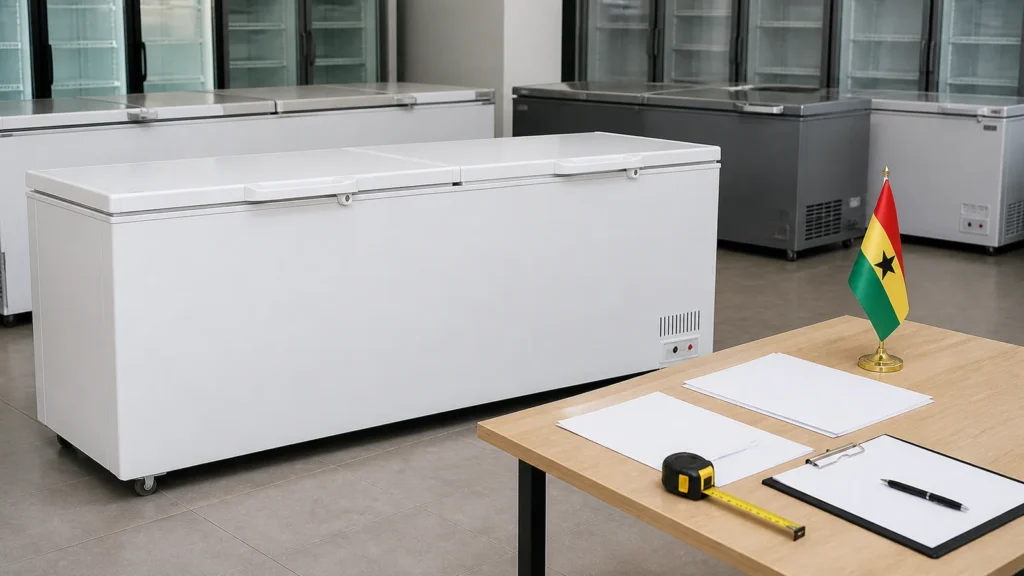
A Ghana chest-freezer order needs two coordinated files. The supplier file establishes the exact product, model, cabinet, capacity option, temperature option where listed, baskets or dividers, electrical configuration, branding, packing, quantity, and commercial terms. The importer file establishes Ghana market-access responsibilities, applicable appliance rules, standards and inspection steps, customs documents, local delivery, installation, service, and receiving control. A supplier quotation cannot replace the importer's current local checks, and a customs entry cannot prove that the shipped freezer matches the approved model.
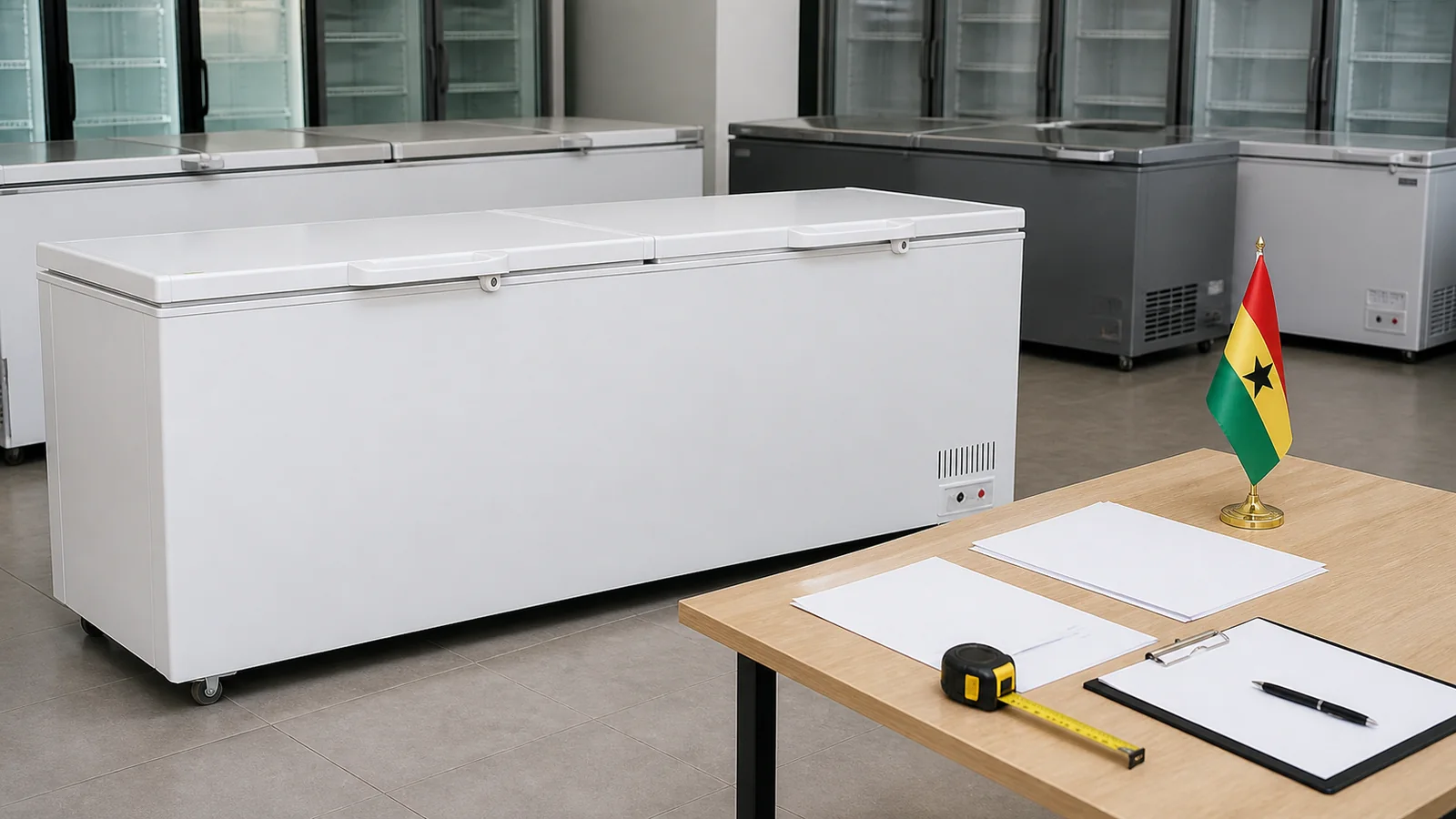
Define the Ghana Buyer and Use Case
Identify whether the buyer is an importer, distributor, retail chain, frozen-food shop operator, deli, small supermarket, or project contractor. State the intended frozen product groups, store type, expected stock rotation, customer-access versus staff-access workflow, lid preference, basket plan, available floor area, delivery route, and local service arrangement.
This is genuine market intent because the operating and import responsibilities are part of the decision. Avoid unsupported statements about Ghana customer behavior, electricity stability, ambient conditions, prices, or national demand. Use the buyer's actual site and current official requirements instead.
Anchor the RFQ to the Current Product Scope
ICEAGE's current commercial chest freezer page lists a focused chest-freezer range with capacity and model information, temperature-range options, baskets or dividers, body-color and logo-sticker options, voltage and plug customization, and packaging-related information. Copy only the exact fields shown for the candidate model and ask the supplier to confirm the quotation revision.
An ordinary chest-freezer request stays separate from the specifically listed minus-40 option unless the application requires that product and the model is confirmed. Likewise, a generic freezer photograph cannot establish capacity, lid type, voltage, plug, or temperature. The model schedule and approved technical documents remain the source of truth.
Check Ghana Appliance Requirements Before Ordering
Ghana has official standards, import-inspection, customs, and appliance-regulation processes. The Ghana Standards Authority import inspection page is an official starting point for current conformity and inspection information. The Energy Commission notice on electrical-appliance regulations provides official regulatory context.
The importer should confirm the exact product classification, applicable standard, registration or conformity route, labeling, testing or documentation, responsible agency, effective dates, and any transitional arrangements with the current authorities or qualified Ghana professionals. Rules can change, and a general article cannot determine a shipment's legal status. Put confirmed requirements into the purchase order before production rather than trying to add them at the port.
Confirm Electrical and Site Information
Send the required destination voltage, frequency, plug, cord, and any labeling or documentation fields only after local confirmation. Ask the supplier to identify the quoted configuration on the model schedule and production approval. The buyer's electrician or responsible local professional confirms socket, circuit, protective devices, earthing, placement, ventilation, and installation for the actual site.
Record store door widths, stairs, turns, vehicle unloading, floor conditions, final position, lid-opening space, wall and neighboring-fixture clearances, cleaning access, and service access. The freezer's listed cabinet dimensions belong to a named model and need to be checked against the full delivery path.
Build a Ghana Import Document Register
The Ghana Revenue Authority import-procedures page provides official customs guidance. The importer and licensed or qualified logistics parties should confirm the current process and documents for the shipment. A working register can track commercial invoice, packing list, transport document, insurance or freight data where applicable, product classification, origin documents when required, conformity or regulatory records, model list, serial or batch information, and responsible owner.
Keep supplier documents consistent. Product description, model, quantity, package count, gross and net weight, dimensions, destination electrical configuration, and marks should reconcile across invoice, packing list, labels, and approved schedule. Differences discovered before dispatch are easier to correct than differences discovered during entry.
Approve a Physical Sample and Packing Plan
For a new model or significant customization, agree on sample evidence before bulk production. Verify cabinet structure, lid count and operation, baskets or dividers, exterior finish, light or indicator features only where listed, cable and plug, labels, logo placement if ordered, packaging, and document set. Record observations without inventing performance claims.
The packing plan should identify unit protection, corners, lid restraint, accessories, document pouch, carton or crate information, handling marks, package dimensions, weights, and container-loading plan as supplied and approved. Ghana destination alone does not justify a made-up packing claim. The supplier and logistics team need to design and confirm the real shipment.
Control Receiving and Local Distribution
At arrival, preserve container and package condition, counts, labels, seals, handling damage, and document identity before distribution. Match units to the model schedule. Inspect cabinet, lids, hinges, handles, wheels or feet, accessories, cord and plug, labels, and visible damage under the buyer's receiving process. Keep uncertain units quarantined.
Before retail use, follow the manufacturer documentation and local professional requirements for placement, settling or handling as applicable, electrical connection, commissioning, cleaning, and operation. Give distributors and service partners the exact model documents rather than a generic chest-freezer manual.
Prepare Repeat Orders From Ghana Evidence
After the first shipment, review receiving damage, document mismatches, model mix, sales channel feedback, store fit, service requests, packaging, and spare-part information. Separate product facts from market observations. A few customer comments cannot support a national claim.
Freeze the approved model, revision, electrical configuration, plug, color, logo, baskets, labels, packaging, and documents for repeat orders. Any change goes through a revised sample or written approval. This preserves both supplier consistency and Ghana importer compliance records.
Buyer Checklist
- Define the Ghana importer, channel, frozen-product use case, and site workflow.
- Copy exact ICEAGE model, capacity, options, and cabinet structure from current records.
- Confirm applicable Ghana standards, appliance rules, inspection, labeling, and responsible agency.
- Approve destination voltage, frequency, plug, cord, and local electrical plan.
- Build a current customs and shipment document register with qualified Ghana parties.
- Approve sample, packaging, labels, and model schedule before bulk production.
- Verify shipment and unit identity before local distribution.
- Use first-order evidence to control repeat-order revisions.
Frequently Asked Questions
Does ICEAGE approval replace Ghana import compliance?
No. Supplier product approval and Ghana importer compliance are separate responsibilities that need consistent records.
Can the supplier choose the Ghana plug and voltage automatically?
The buyer should confirm the current local and project requirements, then require the supplier to state the exact destination configuration in the quotation and production approval.
Is every chest freezer subject to the same Ghana process?
Product classification, model, technical attributes, shipment route, and current regulations matter. Confirm the exact case with official authorities or qualified professionals.
What makes a Ghana article more than a generic guide?
It addresses Ghana authorities, importer responsibilities, local market-access checks, customs records, destination electrical confirmation, and distribution workflow without inventing local market claims.
Related Product or Reading
Ghana retailers that also need chilled display for bottled drinks, dairy, juice, or packaged snacks can review ICEAGE's separate glass-door beverage cooler. Keep frozen and chilled applications on different model schedules.
Discuss the Exact Project
Use the ICEAGE contact page to share the Ghana importer profile, exact store use, candidate model and capacity, lid and basket needs, confirmed electrical configuration, compliance document list, labels, branding, packing, quantity, delivery route, service plan, and sample requirements.