
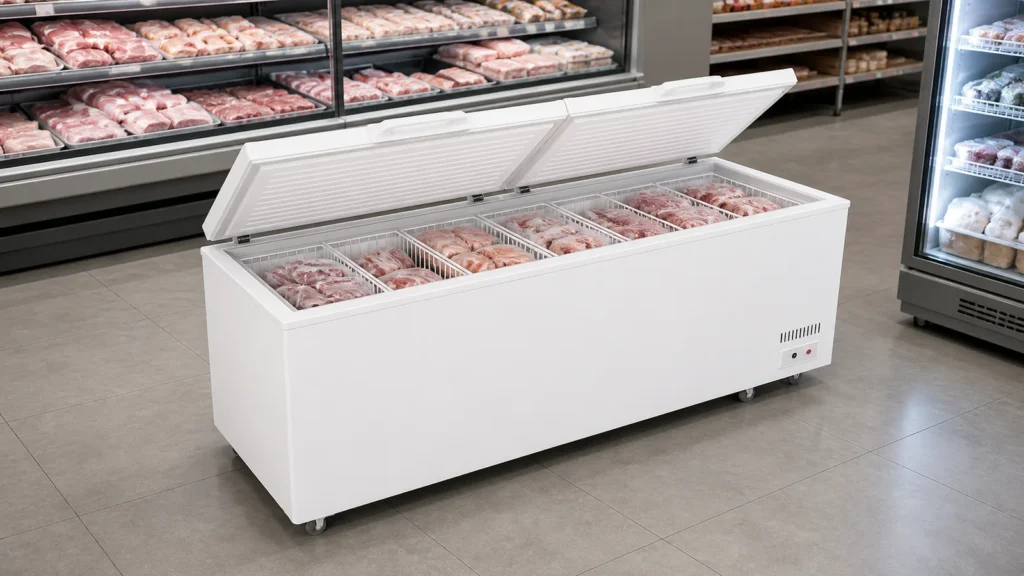
A frozen-meat shop can fill a chest freezer quickly without creating a usable storage system. Cartons, vacuum packs, trays, and mixed cuts may occupy similar volume while requiring different handling, labeling, rotation, and retrieval. A strong equipment plan begins with the assortment and staff workflow, then selects the exact freezer model, capacity, lid arrangement, baskets, dividers, placement, and stock record. Nominal liters alone cannot show whether staff can find and rotate the real packages.
Build the Product and Package List
List every planned frozen-meat group, package length, width, height, weight class, case quantity, label position, expected stock depth, replenishment frequency, and whether the item needs rapid access. Use physical sample packages or accurate packaging data. Separate retail-ready packs from bulk stock and identify products that can be confused visually.
The purpose is not to estimate sales without evidence. The list converts a real assortment into storage geometry. Mark slow-moving, high-frequency, bulky, fragile, and leak-risk packages so their positions can be tested deliberately.
Use Baskets for Access, Not for Imaginary Capacity
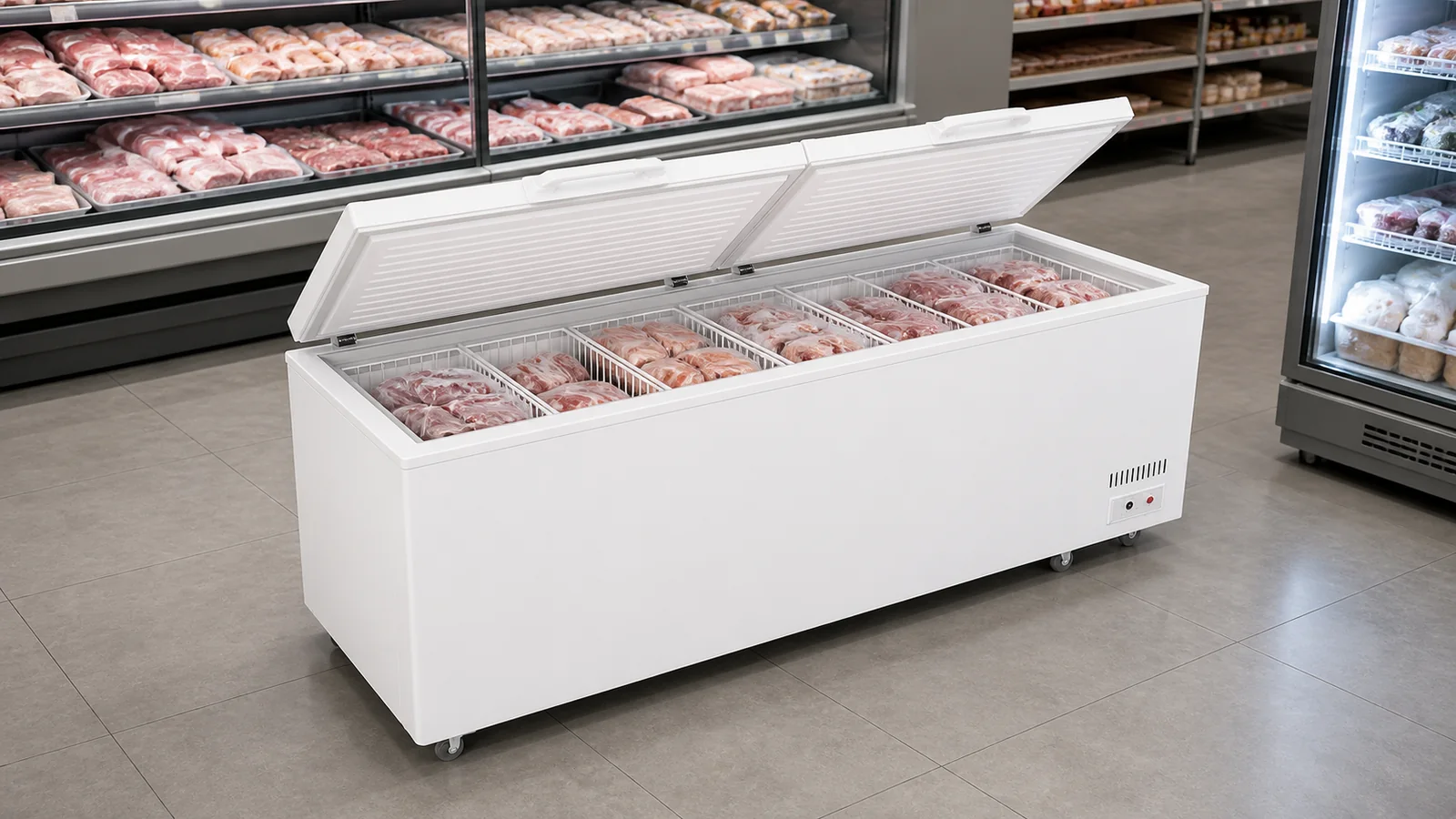
ICEAGE lists baskets and dividers among chest-freezer options on its current product page. Ask which basket quantity, dimensions, support positions, and divider arrangement apply to the exact quoted model. Map high-frequency packs to accessible baskets and reserve lower zones for identified stock that staff can retrieve safely under the approved operating method.
Baskets consume some interior space but can reduce searching and mixed stock. Compare a package map rather than claiming that one basket layout increases capacity. The basket and divider planning article provides a wider option checklist.
Create a Simple Location Code
Divide the freezer by lid, basket, and lower zone. A code such as Lid 1, Basket A, Lower Zone A can connect shelf labels, stock counts, and restocking sheets without putting readable claims on the equipment. Use product categories and dates according to the shop's food-control procedures.
Keep the map simple enough for busy staff. Update it when products change instead of allowing unofficial overflow. If two freezers contain similar packages, add an equipment code. The location system supports retrieval and stock rotation; it does not replace required food labeling or inventory controls.
Test Lid and Staff Access
Place the candidate footprint on the store plan and include the full solid-lid opening path, handles, walls, shelving, counters, doors, customer queue, cleaning cart, and staff standing zone. The lid-opening clearance article provides a detailed measurement sequence.
Simulate receiving a carton, opening the correct lid, removing a basket, retrieving lower stock, returning the basket, and closing the lid. Check whether another staff member can pass and whether packages block full closure. Use the exact model drawing; lid count and hinge arrangement can change the workflow.
| Workflow Step | Planning Question | Evidence |
|---|---|---|
| Receive cartons | Where is the temporary sorting point? | Marked floor plan |
| Load baskets | Which products need fast access? | Package and basket map |
| Retrieve lower stock | Can staff access it without mixing zones? | Timed observation without performance claim |
| Close lid | Are packages, baskets, labels, or walls in the path? | Closure photos and recurrence log |
| Clean and service | Can approved tasks be reached? | Model manual and access plan |
Separate Receiving, Back Stock, and Selling Stock
Avoid unloading warm or unverified product directly into the planned selling zones without following the shop's approved food-handling process. Define where incoming cartons are checked, counted, labeled, and routed. Keep damaged, leaking, unidentified, or questionable packages under the applicable food-safety and business procedure.
The equipment supplier does not set the shop's food-control plan. Local requirements and qualified professionals govern product acceptance and handling. The freezer plan can support that system by providing clear zones and preserving access.
Coordinate Cleaning and Defrost Work
Record who moves stock, where it goes under the approved frozen-product procedure, which baskets and dividers are removable, how components are labeled, and how the empty cabinet is inspected. Use the manufacturer documentation for isolation, cleaning, drainage, defrost, restart, and service. Avoid improvised tools or heating methods.
Plan enough surrounding space for safe lid opening, basket removal, floor cleaning, and service. Keep cleaning tools away from food packages. A recurring ice, seal, lid, or operating issue belongs in an observation record for qualified service rather than being hidden by repeated rearrangement.
Select and Approve the Exact Model
Send the product and package list, basket plan, required stock grouping, footprint, lid access, destination electrical configuration, store route, service access, capacity candidate, options, branding, and packing needs. Request the exact model schedule and drawing from ICEAGE.
Conduct a model-specific review or sample process for lid operation, basket fit, package map, cord and plug, labels, exterior, and documentation. Freeze the accepted configuration for repeat orders. If the assortment changes materially, revisit the map before assuming the old model remains suitable.
Buyer Checklist
- List real frozen-meat packages, labels, case quantities, and access frequency.
- Confirm basket and divider dimensions for the exact model.
- Create lid, basket, and lower-zone location codes.
- Simulate receiving, restocking, retrieval, and full lid closure.
- Keep customer, staff, cleaning, and service paths clear.
- Coordinate food handling, cleaning, and defrost with approved procedures.
- Approve and retain the exact model, options, drawing, and package map.
Frequently Asked Questions
Should fast-moving products stay in baskets?
They often benefit from accessible organized zones, but the final plan depends on package size, basket dimensions, stock depth, staff workflow, and the model documentation.
Can liters determine how many frozen-meat packs will fit?
Capacity is one model field. Real fit needs package dimensions, baskets, internal geometry, access, and permitted loading.
Can different meat products share one basket?
The shop's food-control, labeling, traceability, and stock-rotation procedures determine separation. The equipment plan should make the approved method easy to follow.
Related Product or Reading
A frozen-meat shop that also sells bottled drinks or chilled packaged foods can evaluate the separate ICEAGE glass-door beverage cooler for upright chilled display.
Discuss the Exact Project
Use the ICEAGE contact page to share the frozen-meat package list, stock groups, basket and divider needs, floor plan, lid access, candidate capacity, electrical destination, delivery route, branding, packing, service plan, and sample requirements.