
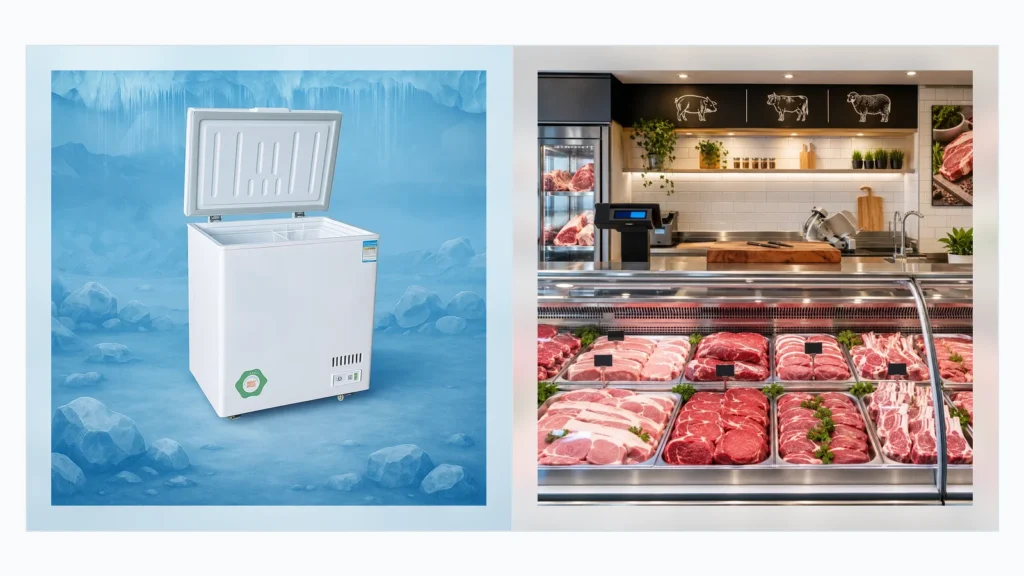
A commercial chest freezer should be selected around the way a store actually sells frozen products. A convenience store may need a compact freezer for ice cream and prepared frozen meals. A frozen food shop may need more loading volume and easier product separation. A small supermarket may need several cabinets placed so customers can browse without blocking the aisle.
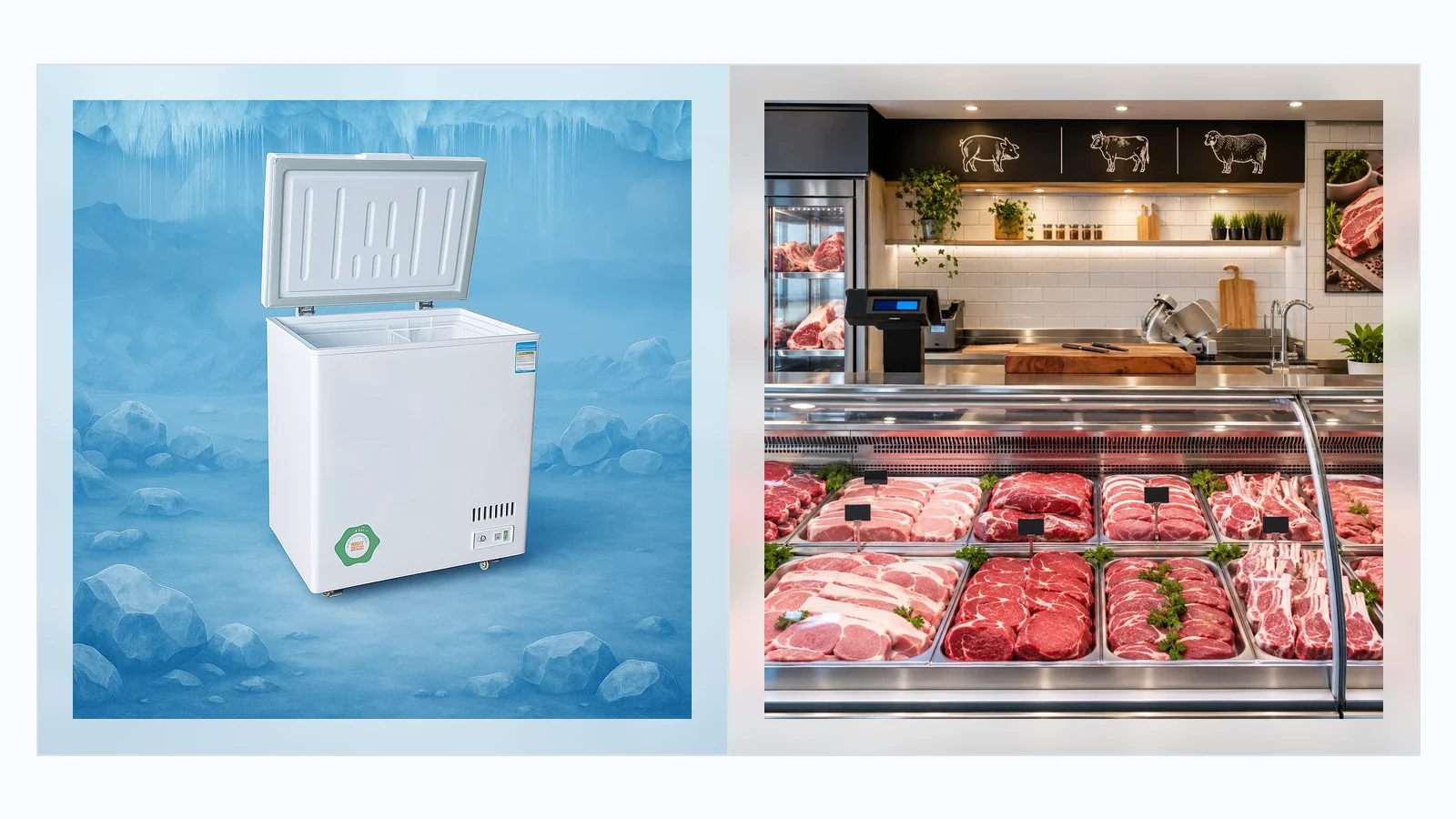
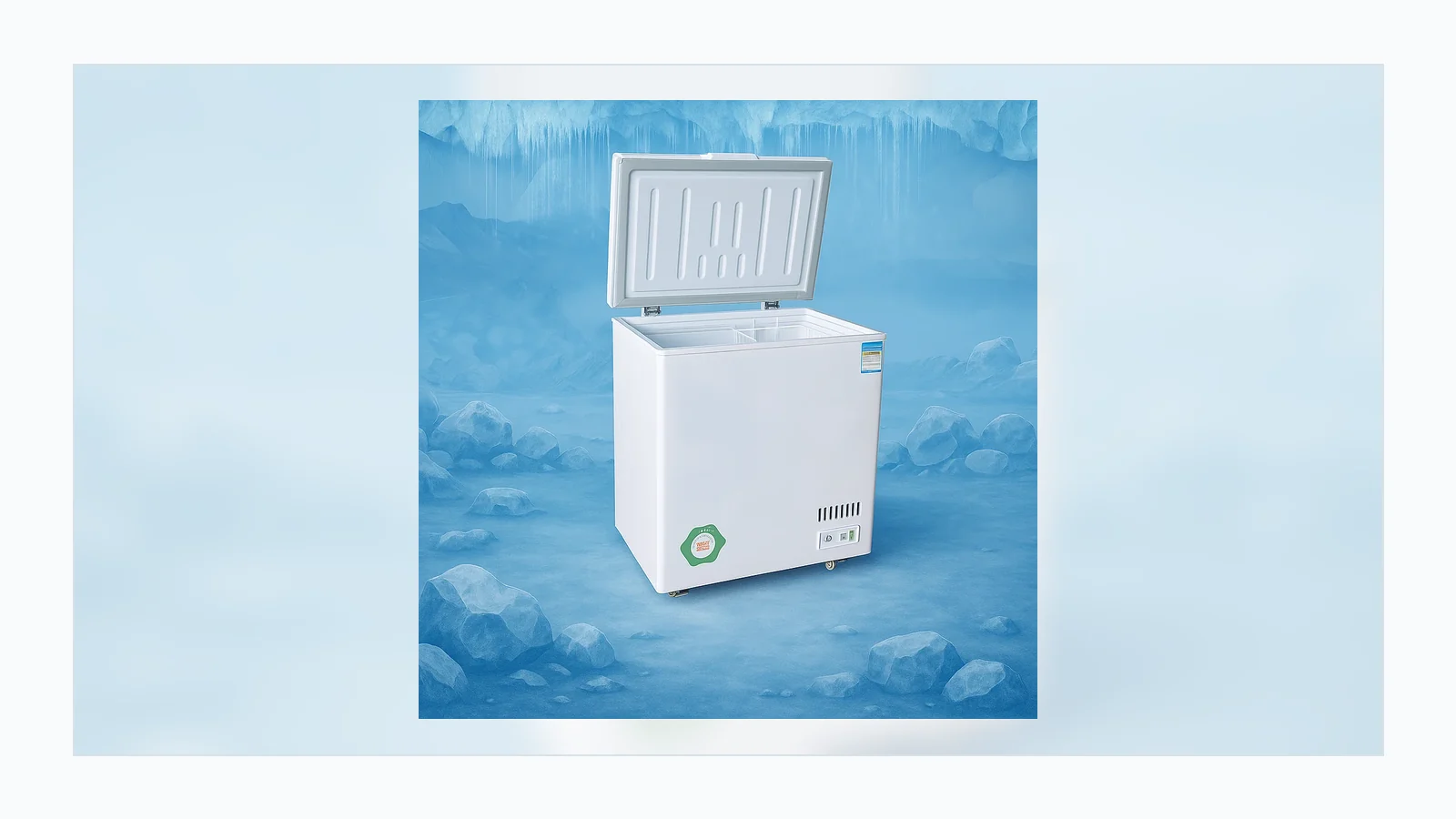
Ice Age focuses its current product range on commercial chest freezers and beverage coolers. For chest freezers, the product page lists models from 150 L to 1300 L, standard model temperature ranges such as -20 C to 0 C and -24 C to 0 C, plus an optional -40 C deep-freezer model. The right choice depends on capacity, product type, store workflow and quotation details, not only on the lowest unit price.
Start With the Store Format
Before comparing models, define the store format. A narrow convenience store, a deli shop, a frozen dumpling store and a supermarket frozen section do not use a chest freezer in the same way. The buyer should describe the selling area, the expected product categories, the number of daily customers and how often staff refill the cabinet.
For a small store, the cabinet may need to fit near the checkout or along a wall without blocking movement. For a frozen food shop, product access and organization may matter more than compact footprint. For a supermarket, the freezer may be part of a larger route where customers compare frozen meat, seafood, ice cream and prepared food.
Match Capacity to Real Stock
Capacity should reflect daily stock volume and restocking rhythm. A larger cabinet is not automatically better if it takes too much floor space or makes products difficult to organize. A smaller cabinet is not automatically cheaper if it needs constant refilling during busy hours.
| Store Situation | Capacity Direction to Discuss | Buyer Notes |
|---|---|---|
| Compact convenience store | 150 L to 250 L range | Useful when floor space is limited and product variety is simple |
| Growing frozen food shop | 350 L to 560 L range | More room for frozen meals, meat, seafood or ice cream categories |
| Small supermarket frozen area | 650 L and above | Suitable when turnover and category separation are more important |
| Bulk or distribution use | Larger commercial models | Confirm loading plan, access route and delivery restrictions |
These are planning ranges, not a substitute for a final model recommendation. Send Ice Age your store dimensions and intended stock mix before confirming the model.
Choose by Product Type and Temperature Requirement
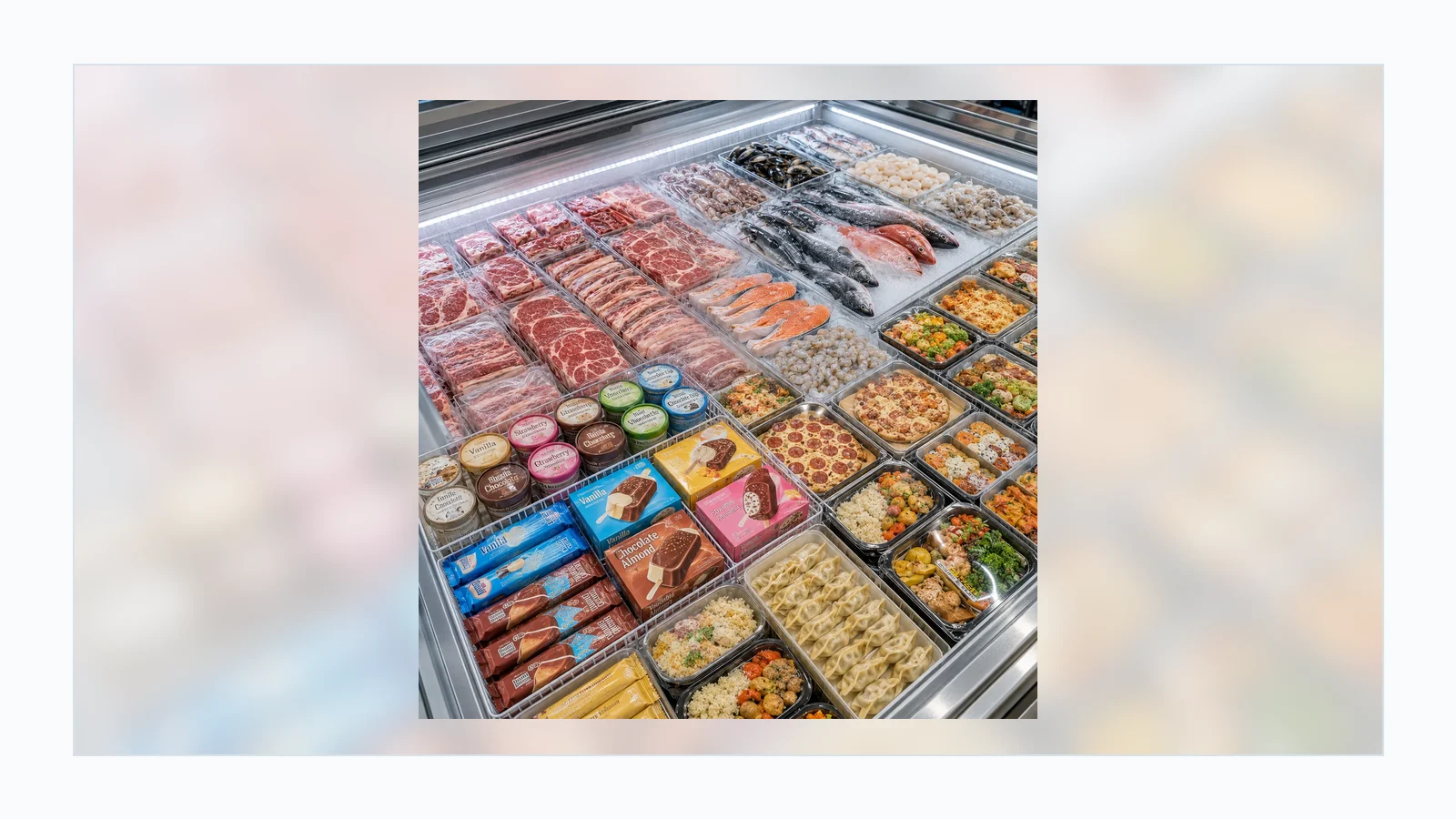
The product page lists common uses such as frozen meat, seafood, ice cream, prepared frozen food and daily retail storage. These categories can have different handling needs. A store selling mostly packaged frozen meals may care about easy customer browsing. A seafood shop may care about deeper frozen storage and frequent staff handling. An ice cream retailer may care about stable display and quick access.
Do not assume every frozen product needs the same freezer model. Standard chest freezer models listed on the site include -20 C to 0 C and -24 C to 0 C ranges, while the IA-1110 deep-freezer model is listed at -40 C to 0 C. If your products require a specific storage condition, confirm the exact model and operating requirement with the supplier instead of relying on a general product name.
Plan Access, Baskets and Product Separation
Top-opening chest freezers are practical because staff and customers can load and access frozen products from above. The buyer should still think about how products will be separated inside the cabinet. Baskets, dividers and product grouping can reduce the time customers spend searching and reduce staff mistakes during restocking.
If the freezer will be used by staff only, internal organization can follow storage logic. If customers will browse directly, organize the cabinet around shopping behavior. Ice cream, seafood, frozen meat and prepared meals should not become one mixed pile.
Check Floor Space and Daily Workflow
The outer size matters because a freezer becomes part of the store route. A cabinet that fits on paper may still be inconvenient if the lid opens into a crowded area, if customers cannot stand beside it, or if staff cannot restock it without blocking the aisle.
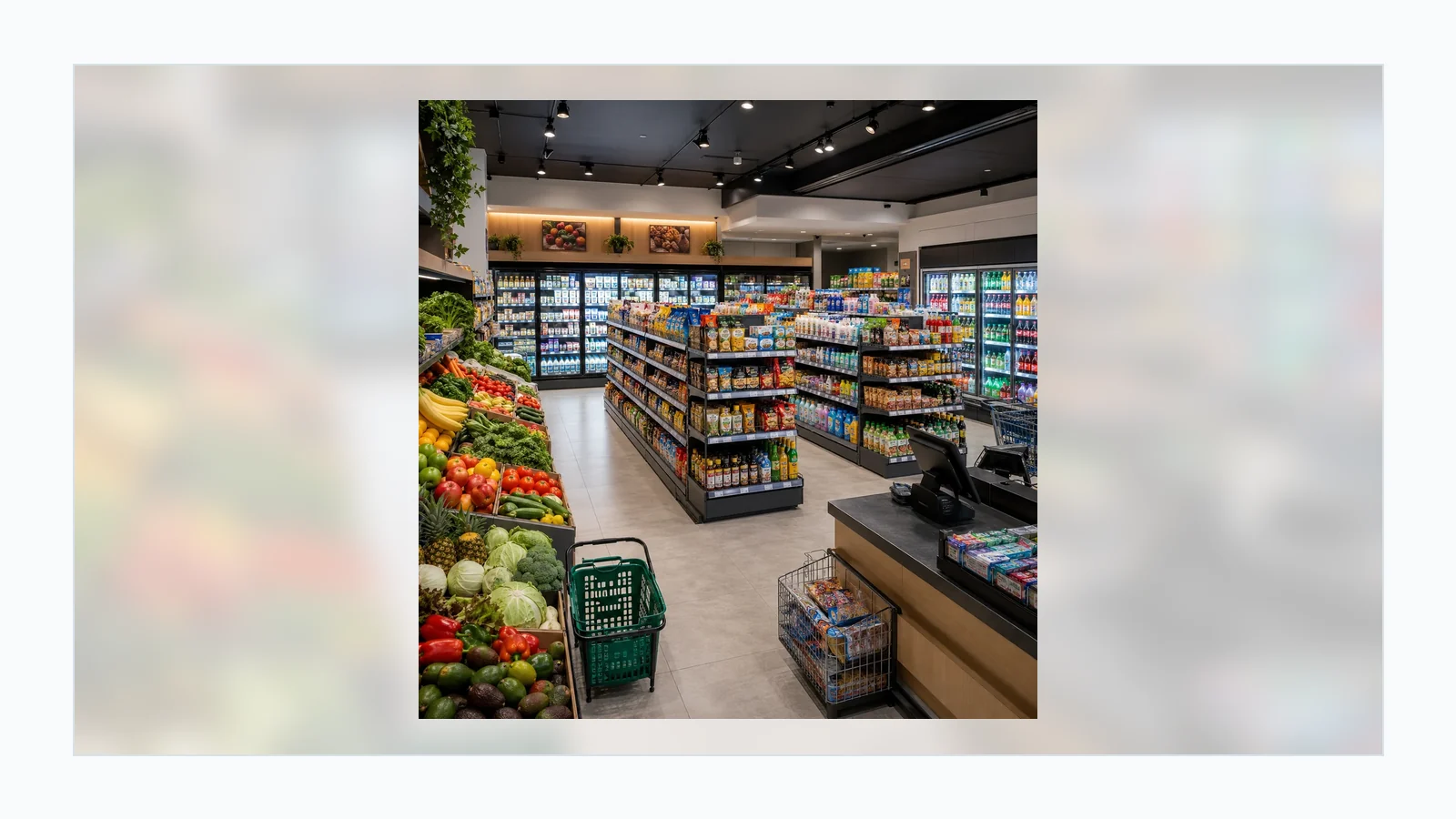
Before ordering, prepare site photos and measure the available floor area. Check the delivery path, doorway width, placement near power access and the distance from other fixtures. If the cabinet will sit near a beverage cooler or checkout counter, leave enough room for customers to move naturally.
Prepare a Useful RFQ
A clear RFQ should include store type, product category, expected capacity, voltage and plug requirement, destination port, quantity, body color or logo need, packing request and whether any deep-freezing option is being considered.
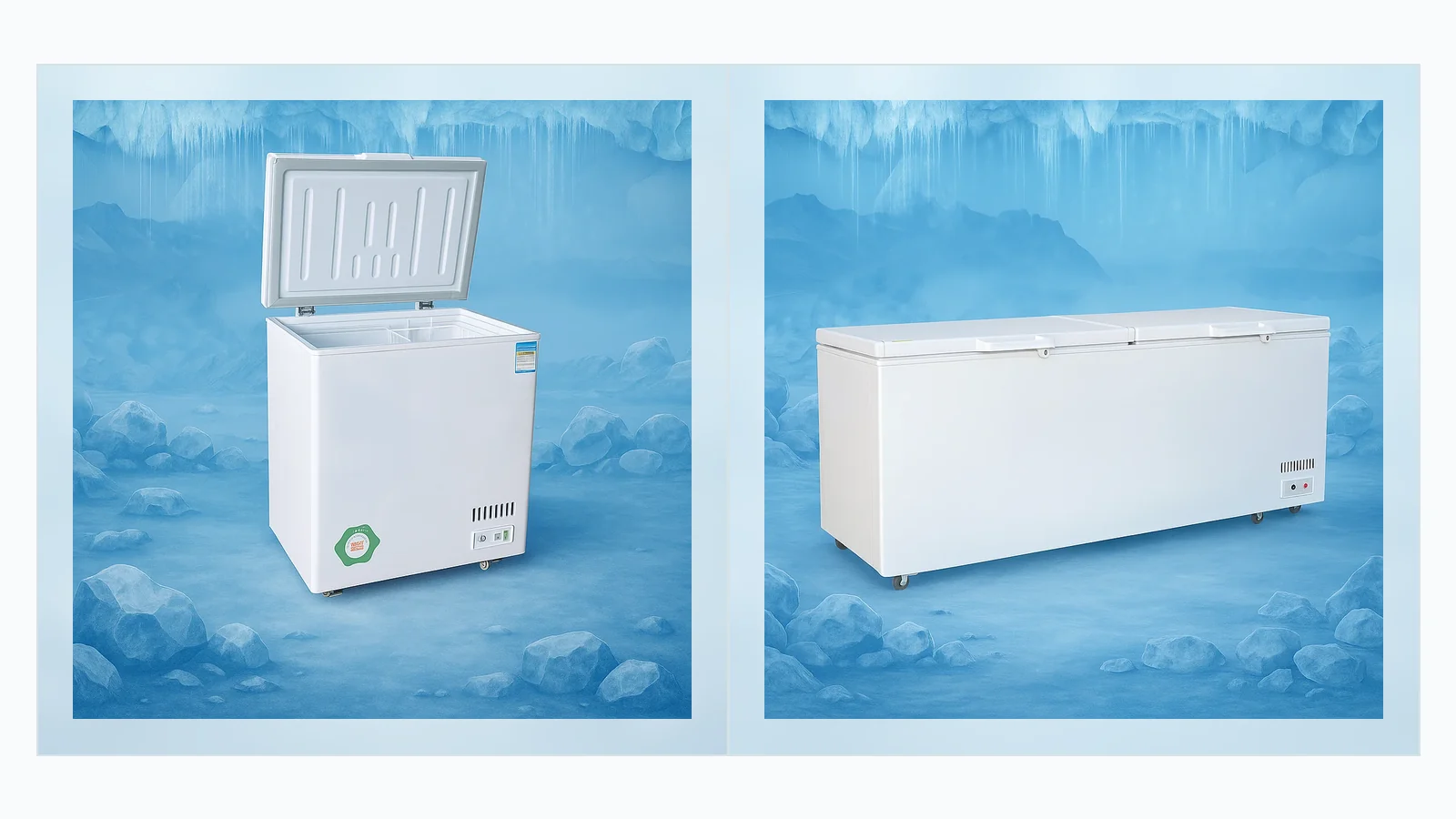
Ice Age lists customization options such as logo sticker, body color, capacity and model selection, voltage and plug options, packaging customization, temperature range options, basket or divider options and OEM/ODM support. These details should be discussed before quotation because they can affect model choice and order preparation.
Common Buying Mistakes
The first mistake is choosing only by liter volume. The second is ignoring the actual product mix. The third is forgetting delivery and placement restrictions. The fourth is comparing prices without checking whether the models have the same capacity, temperature range, power, voltage and customization details.
A useful comparison puts specification and store workflow side by side. When buyers send more complete information, suppliers can recommend fewer wrong options.
FAQ
Is a larger commercial chest freezer always better?
No. Larger capacity helps when turnover and product variety require it, but the freezer must still fit the store layout, delivery route and daily restocking workflow.
Can one chest freezer store all frozen products?
It can store different frozen products if the model and temperature range fit the products, but retail stores should still separate categories clearly for browsing and stock control.
What information should I send before asking for a quotation?
Send your store type, product use, preferred capacity, quantity, voltage, plug type, destination port, customization needs and any site photos or layout details.
Send Store Details Before Final Selection
If you are planning a frozen food area, send your store type, product category, quantity, voltage and destination port through the Ice Age contact page. A clearer request makes it easier to match the chest freezer to real retail use.