
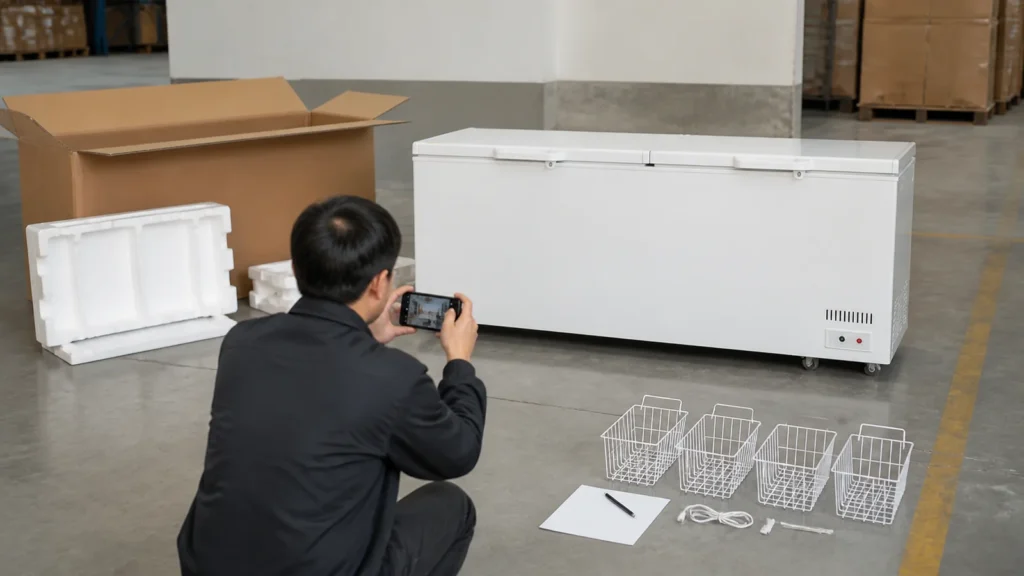
Transit damage is easiest to understand while the packaging, handling marks, model identity, and original cabinet condition remain connected. Once a chest freezer has been moved through several rooms, cleaned, stocked, or switched on, it becomes harder to separate delivery condition from later handling. A staged receiving inspection records the outside package, controlled unpacking, cabinet and lid, accessible interior, loose accessories, and any exception before the equipment is released for qualified commissioning and normal retail operation.
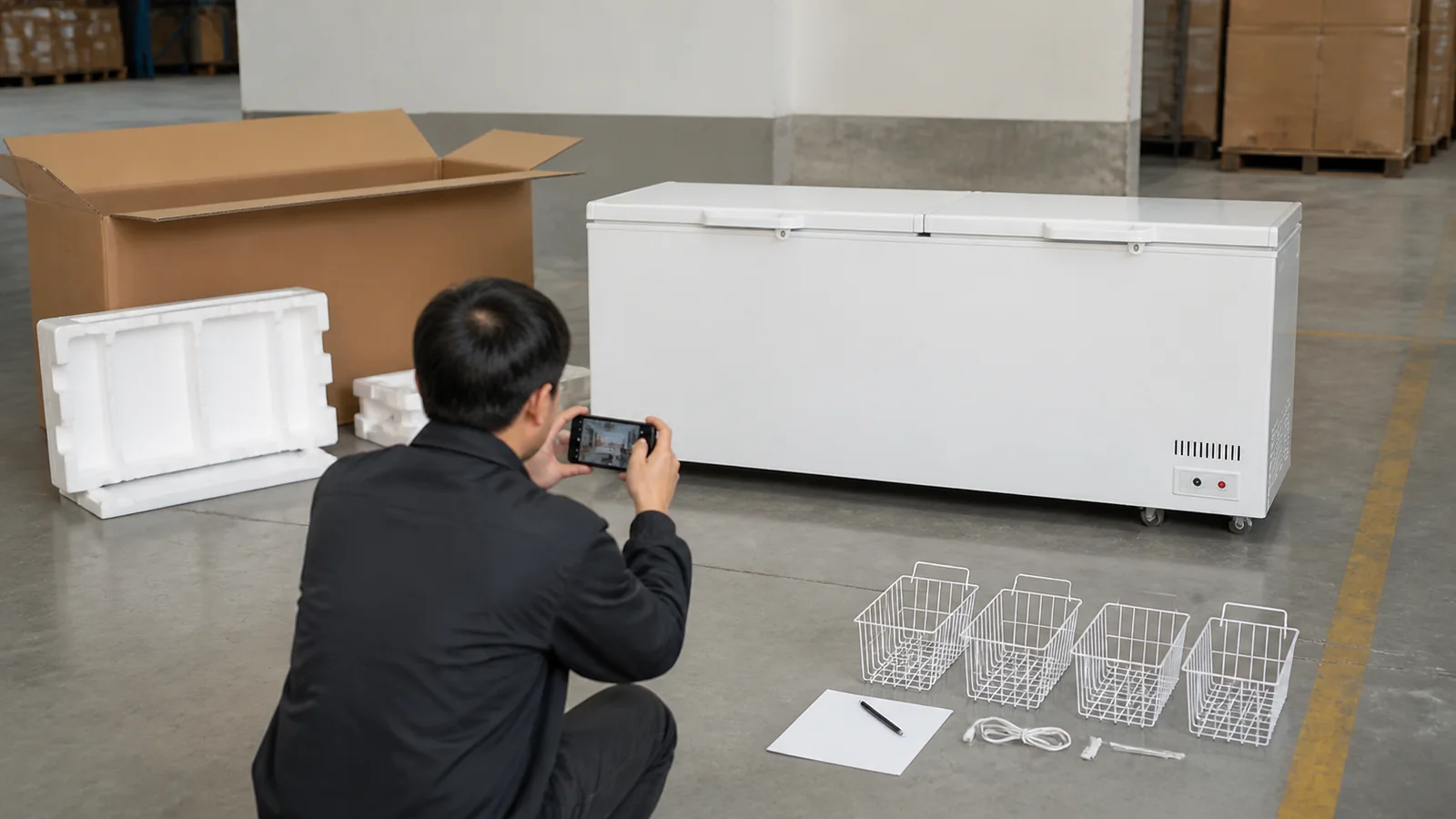
Prepare the Receiving Zone and Records
Confirm purchase order, packing list, shipment or delivery reference, carton count, model and capacity, serial or product identity where present, requested color, logo, voltage, plug, accessories, and packaging option. Assign an internal receiving ID before unpacking.
Use a level, adequately lit area with enough space to photograph all sides and open the lid only when safe under handling guidance. Keep aisles and required routes clear. Follow package orientation and handling labels rather than improvising cabinet movement.
Inspect the Packaging Before It Is Removed
Photograph front, rear, both sides, top, base, labels, straps, corners, and any puncture, crush, wet area, tilt sign, torn wrap, or pallet issue. Record whether damage aligns with a cabinet side. Never discard packaging until the receiving decision and claim process allow it.
A damaged carton does not prove the cabinet is damaged, and a clean carton does not prove the cabinet is perfect. Record both package and product stages separately.
Unpack With Traceability
Follow the manufacturer, supplier, carrier, and site procedure. Record each layer removed and keep accessories, keys, baskets, dividers, plugs, documents, and loose parts identified. Avoid using blades where they can scratch the cabinet, lid, seal, or wiring.
If severe impact, unstable packing, broken glass where applicable, exposed wiring, leaking fluid, or another safety concern appears, stop and use the responsible escalation process. Receiving staff should not dismantle the cabinet to investigate.
Check Cabinet and Lid Condition
Inspect cabinet faces, corners, base, feet or casters as supplied, handles, hinges, lid panels, lock, seal, control area, grille or vent openings, and visible fasteners. Use reflections along a panel to reveal dents but avoid describing normal panel form as damage. Check that the lid can be observed through its intended motion only when the cabinet is stable and guidance permit.
Record gaps, rubbing, misalignment, cracks, chips, distortion, loose components, or finish damage by exact location. Never adjust hinges, electrical controls, or refrigeration components during receiving unless authorized and qualified.
| Stage | Required Views | Decision Link |
|---|---|---|
| Packed | Six sides, labels, base, damage | Carrier and packing condition |
| Unpacked exterior | Cabinet faces, corners, lid, controls | Product appearance and structure |
| Accessible interior | Liner, baskets, dividers, drain parts | Completeness and visible condition |
| Handover | Model identity, exceptions, final location | Commissioning and claim record |
Inspect Accessible Interior and Accessories
Open the lid under the approved handling method and inspect the accessible liner, rim, seal contact area, baskets, dividers, drain plug or accessible parts listed for the selected model. Compare quantities with the order; basket and divider options are configurations that must be confirmed, not assumed for every freezer.
Photograph accessories together with their labels or receiving ID. Never treat promotional photography as a packing list. A missing optional basket and a missing included component are different commercial issues.
Route Exceptions and Release Commissioning
Create an exception record with location, description, photos, package context, affected quantity, responsible party, and current status. Keep the cabinet and packing controlled until the seller, carrier, insurer, or buyer process determines the next step. Never conceal damage with touch-up before evidence is accepted.
After visual receiving passes, move and commission the equipment only under the selected model guidance and qualified requirements, including any standing period or site checks specified by the responsible supplier. Record final location and handover. This article does not set universal commissioning times or technical settings.
Create a Photo Sequence That Supports a Claim
Photographs are strongest when they show progression and location. Begin with the delivery vehicle or receiving context where permitted, then the complete packed unit, shipping and model labels, each face, base, top, and any visible damage. During unpacking, photograph protective layers before removal and show where an impact aligns with the cabinet. Finish with full exterior, detailed exception, accessible interior, accessories, and the retained packaging.
Give files a receiving ID, stage, side, and sequence number. A close-up of a dent without a wider view cannot establish which panel it belongs to. A wet carton photo without label or arrival context may be hard to connect to the order. Keep original metadata and avoid edits that change appearance. If a scale is used, place it beside the damage without scratching or covering the area.
The exception description should remain visual: right side panel, upper rear quadrant, inward deformation visible under side light is stronger than cabinet badly damaged. Add packaging alignment, dimensions where safely measurable, affected accessory, and whether movement or unpacking stopped. Leave technical function and repairability for qualified assessment.
Ask the responsible commercial or carrier process what packaging, documents, deadlines, and inspection rights must be preserved. Never discard or repair before that evidence route is clear. When the case closes, link resolution, replacement part or cabinet, credit, repair authorization, and final acceptance to the original receiving record. This sequence supports both supplier learning and a fair claim without exaggerating what photographs alone can prove.
Reconcile Multiple Units Without Losing Individual Condition
Large deliveries need one line per physical freezer, even when cartons appear identical. Connect model, serial or product identity where supplied, package number, pallet position, receiving ID, visible condition, accessories, exception, and final location. Batch photos can document the shipment context, but each damaged or held unit needs identifiable views. If accessories are packed separately, record distribution to the exact cabinet. This prevents one complete sample from being treated as proof that all units contain the same parts and lets replacements, claims, commissioning, and store allocation follow the correct freezer.
Buyer Checklist
- Verify order, model, capacity, electrical option, color, logo, accessories, and packaging.
- Assign a receiving ID and photograph the package before movement or unpacking.
- Keep packing layers and accessories traceable during controlled unpacking.
- Inspect cabinet, lid, hinge, handle, lock, seal, base, and visible control areas.
- Inspect accessible liner and ordered baskets, dividers, keys, and documents.
- Record every exception by exact location with package context.
- Release movement and commissioning only through the selected model and qualified process.
Frequently Asked Questions
Does a damaged carton mean the freezer must be rejected?
It triggers careful documentation and product inspection; disposition depends on the actual condition and agreed receiving process.
Can receiving staff switch the freezer on immediately?
Follow the selected model, supplier, site, and qualified commissioning guidance; this article does not set a universal time or procedure.
Are baskets included with every model?
Basket and divider options must be confirmed for the exact model and order.
Related Product or Reading
For planning how the cabinet will be used after acceptance, review chest freezer basket and divider options.
Discuss the Exact Project
Send IceAgeFreeze the order and model details, packing and cabinet photos, exception locations, accessory list, receiving status, and requested claim or replacement evidence.