
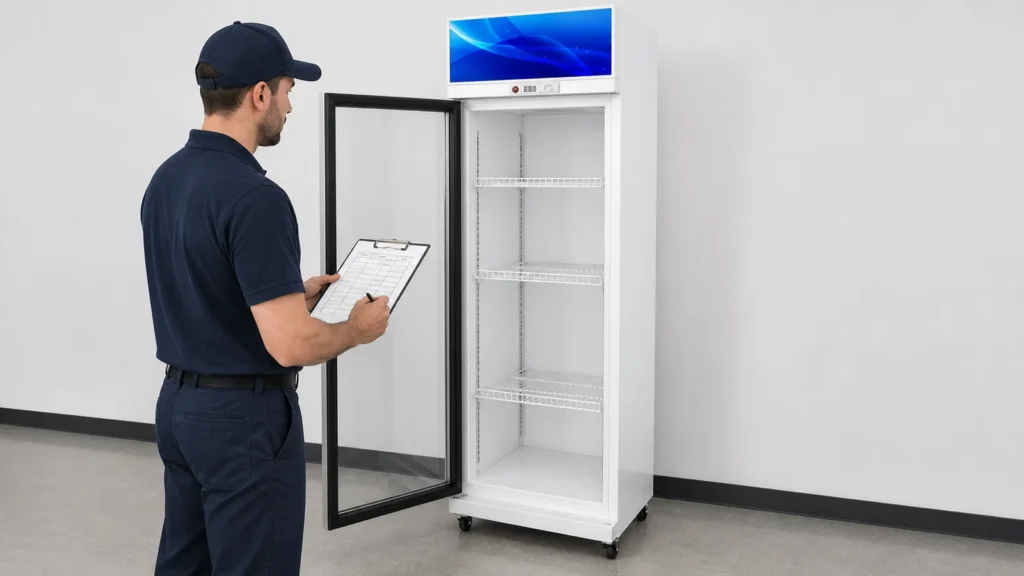
Adjustable shelves make a beverage cooler flexible, but unrecorded changes create inconsistency. One store may move a shelf for tall bottles, another may remove it, and a third may copy the arrangement into the wrong door bay. A change log preserves the reason, exact shelf and support positions, product fit, before and after states, and approval. It complements the original shelf plan rather than replacing it.
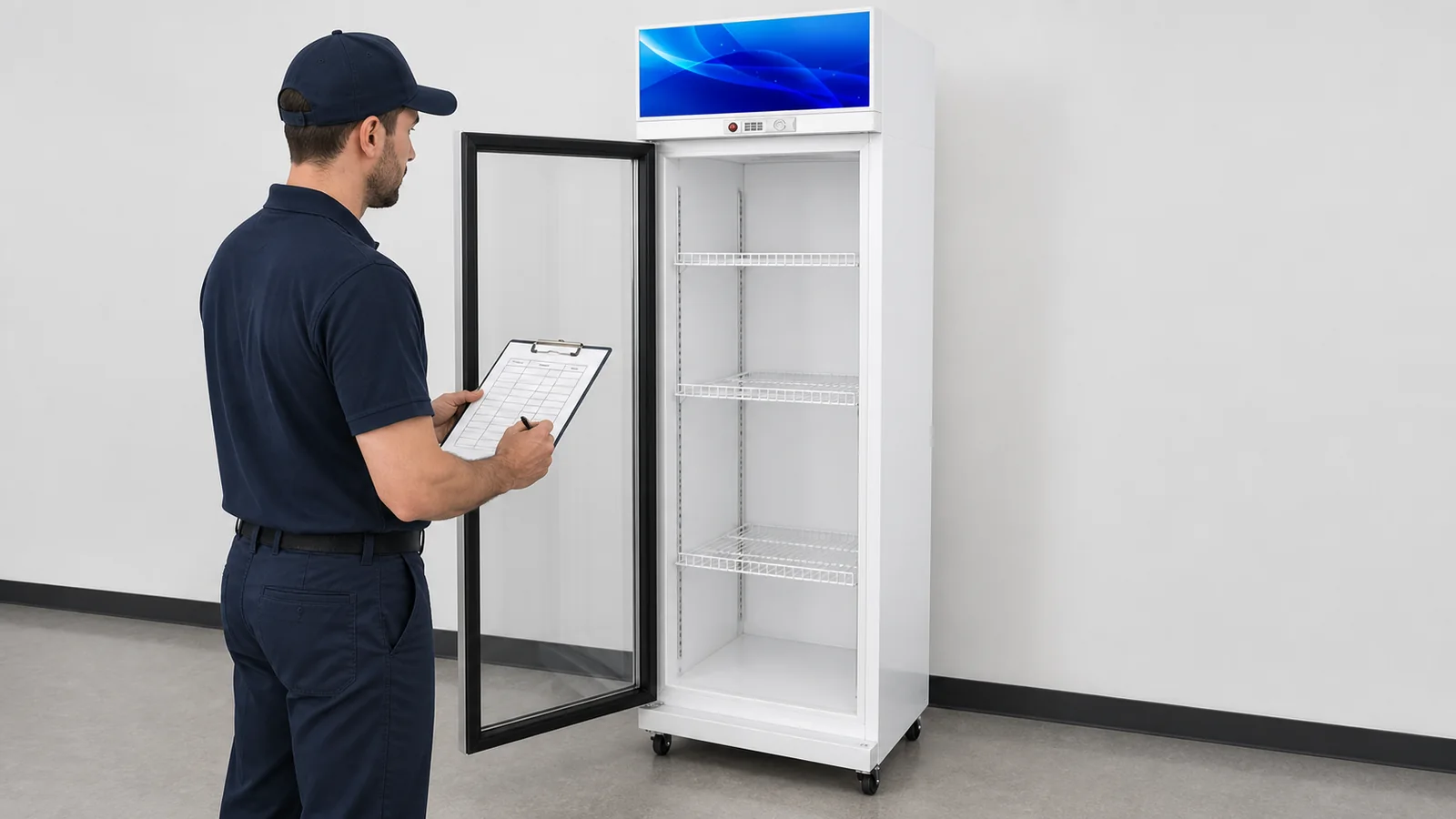
Identify Cabinet, Door Bay, and Shelf
The current beverage cooler range lists single-door 400 L, double-door 875 L, and three-door 1300 L models with adjustable shelves, glass doors, LED lighting, direct cooling, and a listed 0 to 10 C range. Use the actual model and order record. Assign cabinet ID, door or bay ID, and shelf IDs from bottom to top.
Never assume shelf count, spacing, or support parts are identical across models or orders. Record the current configuration before removing product or clips.
Open a Change Request
State requester, date, business reason, affected products, pack dimensions, target facing, current problem, proposed shelf moves, and desired effective store or date. Distinguish a merchandising request from a damaged shelf, missing clip, door interference, cleaning issue, or technical concern.
Attach a current front photo and bay map. If the request applies to several stores, identify which cabinets share the same model and revision before declaring it standard.
Record Shelf and Support Positions
Use the cabinet's supported adjustment method and manufacturer guidance. Record shelf ID, left and right support or clip positions, orientation, angle if the model permits one, and any removed component. Keep small supports in identified containers. Never modify, drill, bend, or substitute shelves or supports without approval.
A photo should show the whole bay plus close-ups of both sides. Count adjustment positions from one defined datum rather than describing a shelf as 'a little higher.'
| Change Field | Before | Proposed/After |
|---|---|---|
| Cabinet and bay ID | Exact asset location | Same verified location |
| Shelf ID | Current vertical position | New documented position |
| Left/right supports | Position and part identity | Matched final positions |
| Product fit | Pack, facing, clearance observation | Trial result |
| Approval | Current plan revision | New effective revision |
Trial Product Fit Without Overloading the Decision
Use representative packaged products and the store's handling procedures. Check whether packs sit fully on the shelf, labels remain visible, doors close without contact, and staff can restock the bay. Keep space and load within the selected model documentation; never invent a universal shelf capacity or clearance.
A merchandising improvement should not conceal damage, block visible interior features, or become an unauthorized technical change. Route damaged shelves, supports, lighting, doors, or cooling concerns separately.
Approve, Reproduce, or Roll Back
Take final empty and stocked photos, record all support positions, update the shelf map revision, and obtain the responsible retail approval. For rollout, issue the exact model and bay scope; a one-door example may not transfer directly to a three-door cooler.
Keep the prior configuration so the store can roll back if product assortment changes or the trial does not work. Record the reason for rollback rather than allowing another undocumented arrangement.
Inspect Changes During Store Use
At handover and after normal restocking, check shelf seating, support presence, product fit, door path, visibility, and unauthorized moves. Use the beverage cooler shelf-planning article for initial product-category and spacing decisions.
If shelves repeatedly migrate, investigate the store task or product mix instead of tightening or modifying parts outside the approved method. The log should reveal patterns across shifts and locations.
Control Rollout Across Several Coolers or Stores
A successful change in one cooler is a pilot, not automatic approval for every cabinet. Build a rollout list with store, asset, model, door count, bay, current shelf map, product assortment, and site differences. Confirm that shelf and support structures match the pilot. A similar white glass-door cabinet can still have different dimensions, shelf quantities, or supplied parts.
Issue a change kit containing effective map revision, affected assets, shelf and support positions, representative product dimensions, before/after examples, approved exceptions, rollback map, and responsible contact. Keep wording visual and task-specific. Technical operating requirements remain in the model documentation and should not be copied from the pilot as invented universal settings.
Ask each location to return completion evidence: asset label, empty shelf configuration, both-side support close-ups, stocked bay, door-closure observation, and any mismatch. Use a status register so stores that cannot reproduce the pilot remain open rather than being marked complete through a bulk email. Missing or damaged supports need the approved component route.
Review results after normal replenishment. A shelf map that works during initial setup may fail when cases arrive in another package format or shifts cannot maintain facings. Collect product-fit exceptions and unauthorized moves by asset. Decide whether the map, assortment, training, or supplied shelf option needs revision. This controlled rollout turns local merchandising knowledge into repeatable distributor support while preserving model identity and a clear path back to the prior configuration.
Protect the Change During Cleaning and Service
A later cleaning or service visit can disturb shelf positions even when merchandising staff follow the map. Add the current configuration to the asset handover and identify which shelves or supports may be removed during approved work. Before return to operations, compare positions, seating, parts, and bay map. Service staff should record any model-required change rather than restoring a visually similar arrangement. This makes the configuration log part of asset control, not only merchandising, and helps the store distinguish a deliberate technical action from an accidental shelf move.
Keep Spare Supports Traceable
Record spare shelves, clips, supports, and their approved model association in a small parts register. Store them by part identity rather than in an unlabelled maintenance box. When a configuration changes, reconcile removed and installed parts and photograph any damage. This prevents a later store from using a visually similar support from another cabinet. The register can also show which part shortages block rollout and which assets remain on the earlier map. Supplier questions then include exact model, asset, bay, shelf, support position, part photo, and order history instead of a vague request for more clips.
Buyer Checklist
- Record exact model, cabinet ID, bay ID, and shelf IDs.
- Capture the approved current configuration before change.
- State product dimensions, business reason, and requested shelf moves.
- Record left and right support positions from one datum.
- Trial packaged-product fit and normal door/restocking use.
- Approve a new map revision and retain the previous version.
- Scope rollout only to verified matching cabinets and bays.
Frequently Asked Questions
Can the same shelf map be used for all door counts?
No. Verify the actual model, bay structure, shelf count, and support positions for each configuration.
Can a missing clip be replaced with a similar part?
Use the model's approved component and supplier or service guidance rather than an unverified substitute.
Does moving a shelf require changing the cooling setting?
A merchandising shelf change should not lead staff to alter technical settings without authorization and model-specific qualified guidance.
Related Product or Reading
Use beverage cooler shelf planning to establish the first approved display; use this change log only for later controlled revisions.
Discuss the Exact Project
Send IceAgeFreeze the model, door count, cabinet and bay IDs, current shelf map, product pack dimensions, proposed positions, support-part questions, and OEM shelf needs.