
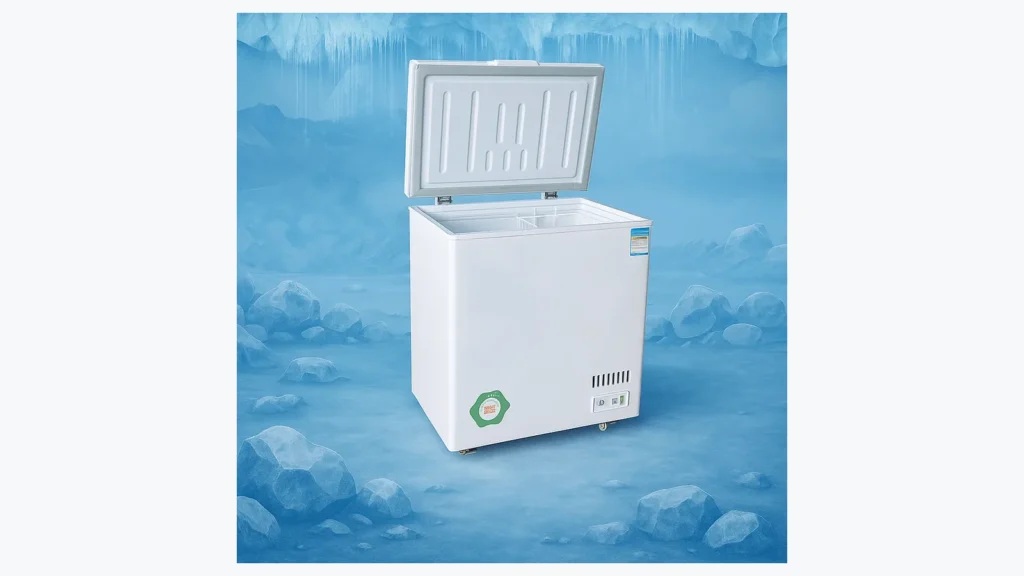
"Double temperature" can sound like a complete specification, but it is only the beginning of an importer conversation. A buyer still needs to know what the option means for the quoted model, how the storage areas are arranged, which temperature requirements apply, how usable capacity changes, and which controls, lids, baskets, electrical details, and documents are included.
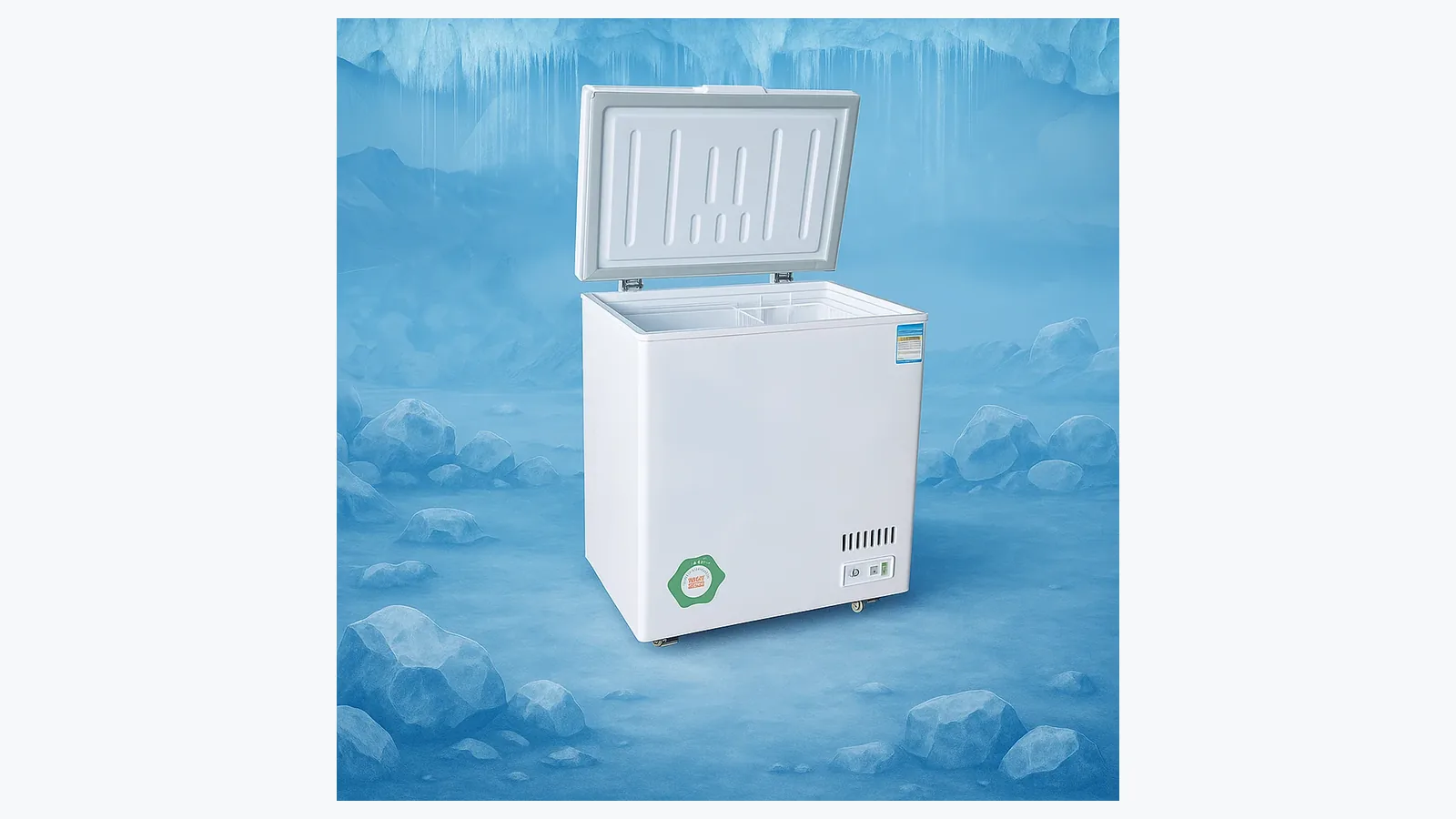
ICEAGE lists a double-temperature model option and the model example IA-DOUBLE TEMP 1460 within its commercial chest-freezer range. The product-family reference below confirms the chest-freezer category; it does not claim to show the exact double-temperature compartment design.
Begin With the Listed Scope
The ICEAGE commercial chest freezer page lists capacity examples from 150 L to 1300 L, standard temperature-range examples of -20 C to 0 C and -24 C to 0 C, a separate IA-1110 deep-freezer option listed at -40 C to 0 C, and customization options that include a double-temperature model. It also lists IA-DOUBLE TEMP 1460 as a model example.
These facts establish that the option exists within the current page scope. They establish neither the exact compartment volume nor the independent control arrangement, temperature combination, external dimensions, electrical data, or included accessories for a buyer's order. Those items need supplier confirmation in the quotation and approval documents.
Keep the double-temperature option separate from the -40 C deep-freezer option. One label cannot be used as evidence for the other.
Define the Retail Use Case Before Asking for a Model
List the products intended for each storage area: frozen meat, seafood, ice cream, prepared frozen food, or another product within the chest-freezer application. State the target operating requirement for each product group based on the buyer's food-safety, market, and merchandising plan.
Estimate stock volume, package dimensions, case quantities, turnover, and loading frequency. A split arrangement can affect the usable space available to each product group, so total headline capacity alone may not answer the buyer's question.
Explain whether staff need frequent access to both areas, whether products are picked from baskets, and whether the freezer sits in a customer-facing retail area or a staff-managed storage zone. This context helps the supplier discuss a suitable listed configuration without guessing.
Ask What "Double Temperature" Means for the Quoted Unit
Request a written description or drawing of the exact architecture. Questions can include whether there are physically separated storage areas, how each area is accessed, whether controls are independent, how setpoints are displayed, and whether one side can operate differently from the other within the confirmed design.
Ask for the net or usable capacity of each area, not only the overall capacity label. Confirm external dimensions, internal dimensions where available, divider or wall arrangement, lid arrangement, basket compatibility, and how service access is provided.
| RFQ Topic | Exact Question | Approval Evidence |
|---|---|---|
| Compartment arrangement | How are the storage areas physically separated? | Drawing or clear product photos |
| Temperature operation | What confirmed range and control apply to each area? | Quotation and technical sheet |
| Capacity | What is the usable volume of each area? | Model-specific specification |
| Access | Which lid or opening serves each area? | Layout drawing or approved sample photos |
| Accessories | Which baskets, dividers and locks are included or optional? | Itemized option list |
| Electrical configuration | What voltage, frequency, plug and rated data apply? | Market-specific technical document |
Avoid filling missing cells with assumptions from another freezer model. Similar exterior length does not prove an identical interior or control system.
Confirm Temperature Requirements in Writing
State the required product categories and target ranges in the RFQ, then ask the supplier to identify a suitable listed configuration. Keep the confirmed range attached to each storage area. Avoid describing the entire freezer with a single range when the order depends on separate operation.
Request the control method, display arrangement, adjustment authority, alarm or indicator information if offered, and any operating limitations relevant to the design. The buyer's market may require specific labeling or documentation, which needs separate confirmation.
The -40 C image and IA-1110 deep-freezer details belong only to the specifically listed deep-freezer option. They are not evidence that a double-temperature model includes a -40 C area.
Review Capacity and Product Organization Together
A double-temperature configuration may be valuable only when both areas match the retailer's real stock. Create a product-to-compartment schedule with package dimensions, required quantity, basket or divider needs, and replenishment frequency.
Ask how optional baskets and dividers fit each area and whether they reduce usable product height or width. Review lifting and reach for staff. The general basket and divider guide can support organization planning, while the exact accessory arrangement still belongs in the option schedule.
Check how stock will be separated during delivery, initial loading, counting, cleaning, and defrost. A layout that works on a quotation page may create unnecessary handling if the store workflow is missing.
Lock Electrical and Market Details
Specify destination country, voltage, frequency, plug type, cable expectation, language, and any buyer-required regulatory documents. Ask the supplier to confirm which details are standard, configurable, or unavailable for the chosen model.
Request rated information and label artwork for approval where part of the order process. The buyer and importer remain responsible for confirming market requirements. Avoid assuming that a configuration for one destination is valid in another.
Brand components, performance claims, energy figures, certifications, and refrigerant details need documentary support from the actual supplier file before they enter a purchase specification.
Itemize OEM and Packaging Decisions
ICEAGE lists logo sticker, body color, capacity or model selection, voltage and plug, packaging, temperature-range, basket or divider, and OEM/ODM options for chest freezers. Put each requested item on a quotation schedule with an approval status.
For packaging, ask for the package type, dimensions, gross and net weight where available, handling marks, accessory placement, loading information, and protection for lids, controls, corners, and finished panels. Confirm whether customized branding affects artwork lead time, package identification, or spare labels.
Avoid a general line such as "OEM as requested." An itemized schedule gives both sides a stable record.
Approve Evidence Before the Main Order
Agree on the evidence required before production or shipment: quotation, model-specific specification, dimensional drawing, control description, compartment photos, label artwork, accessory list, package information, and inspection points. A sample or pre-production approval may be appropriate depending on the order and supplier process.
Record open items separately from approved items. A supplier response that says an option is "available" is not the same as approval of the exact configuration, performance requirement, and market details.
After approval, preserve the files under a revision or configuration code. The chest freezer model documentation guide explains how this protects repeat orders.
Related Reading
- Chest Freezer Model and Capacity Documentation supports repeat-order control.
- OEM Commercial Freezer Customization Checklist covers broader branding and importer decisions.
Common Questions
Does double temperature always mean two independently controlled compartments?
The option name alone cannot prove the architecture. Request a model-specific description, drawing, control explanation, and capacity split.
Is IA-DOUBLE TEMP 1460 the same as the minus-40 model?
The public product page lists IA-DOUBLE TEMP 1460 and IA-1110 deep-freezer details separately. Treat them as separate references unless supplier documentation explicitly states otherwise.
Can total capacity be divided equally in the RFQ?
Only a confirmed model specification can establish the split. Ask for usable capacity and dimensions for each area.
Which document matters most for a reorder?
A complete approved configuration record matters more than one isolated document. Keep the model, drawings, temperature requirements, electrical details, options, artwork, accessories and packaging revision together.
Related Product Recommendation: Beverage Cooler
The double-temperature chest-freezer discussion remains within frozen-product storage. A retailer that also needs upright visibility for bottled drinks, dairy, juice, water or chilled snacks can evaluate the separate ICEAGE glass door beverage cooler, listed in single-, double- and three-door models with a 0~10 C range.
Send a Configuration-Based RFQ
Use the ICEAGE contact page to share destination market, product categories, required temperature targets, expected stock, compartment questions, capacity needs, voltage and plug, accessories, branding, packaging, and approval evidence. Ask for each response against the exact quoted model.